
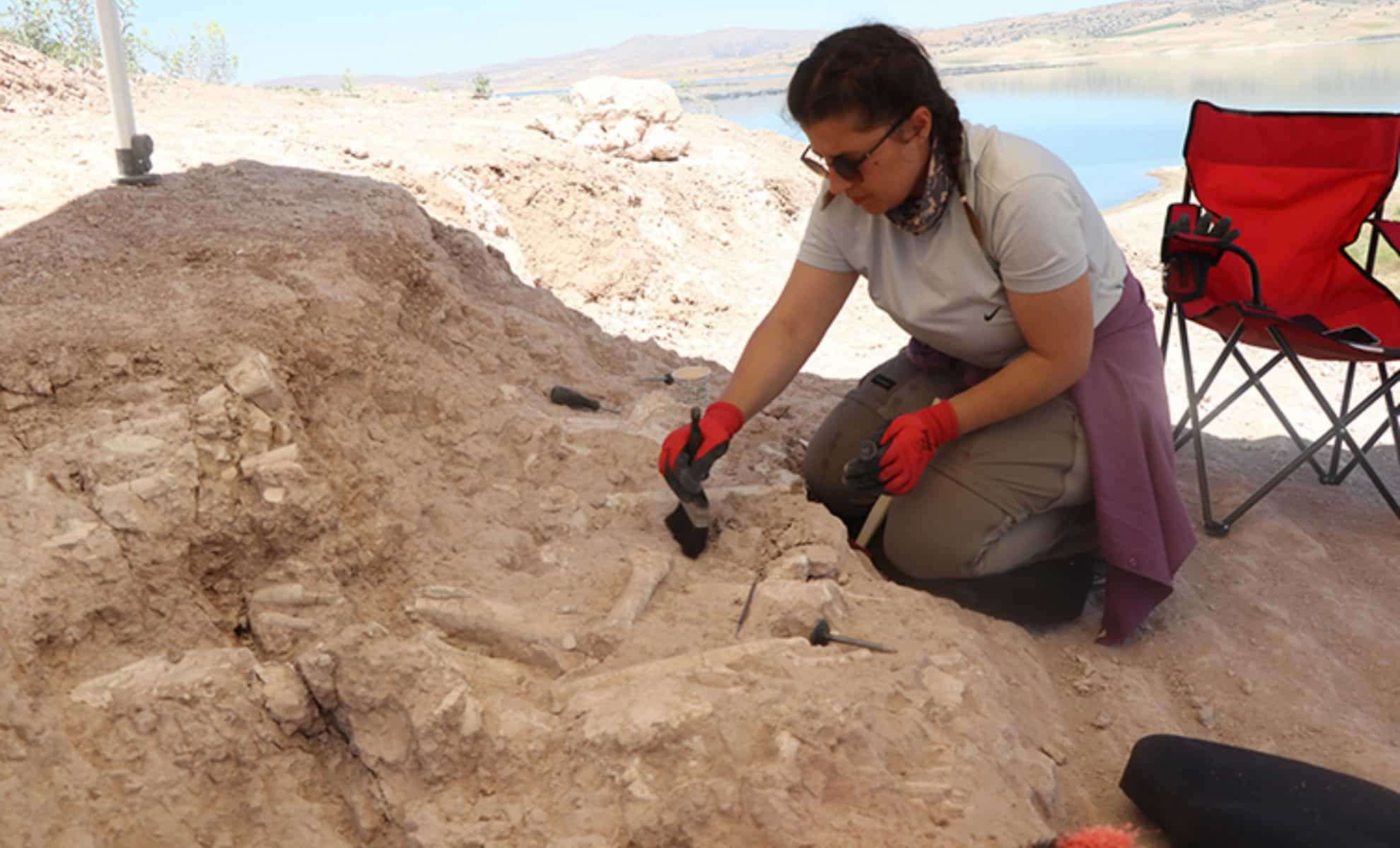
Researchers have discovered an extensive collection of fossils dating back 7.7 million years near the Yamula Dam region in central Turkey, offering fresh insights into the area's ancient environment. This archaeological project, which started in 2018, was inspired by a local herder’s fossil discovery in 2017.
An Abundant Array of Prehistoric Remains
As reported by Türkiye Today, the dig site along the Kızılırmak River, situated within the Kocasinan district of Kayseri, has yielded an impressive diversity of ancient species. Fossils of giraffes, mammoths, elephants, rhinoceroses, three-toed horses, bovids, turtles, and pigs have been uncovered, hinting at a once-thriving ecosystem teeming with herbivores and carnivores.
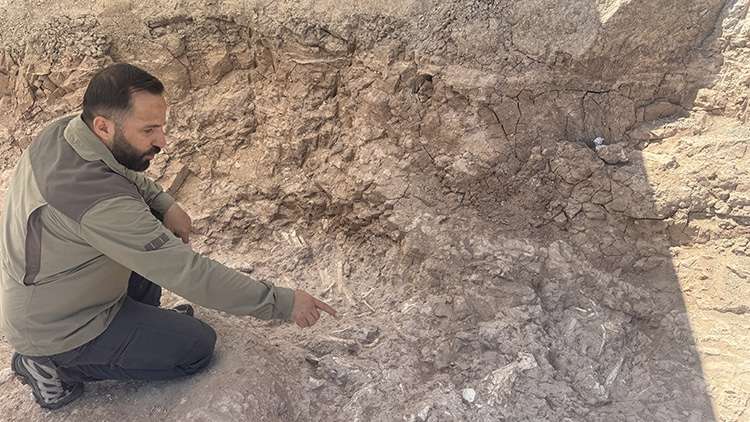
Anthropologist Ömer Dağ, an essential member of the research team, highlighted the significance of the find. “The Yamula Dam region hosts exceptionally dense fossil deposits, particularly in areas such as Çevril, Taşhan, Hırka, and Emmiler,” Dağ explained. Their concentrated investigations focus on spots where fossils are densely grouped, following extensive surface surveys.

Investigating Possible Mass Mortality Incidents
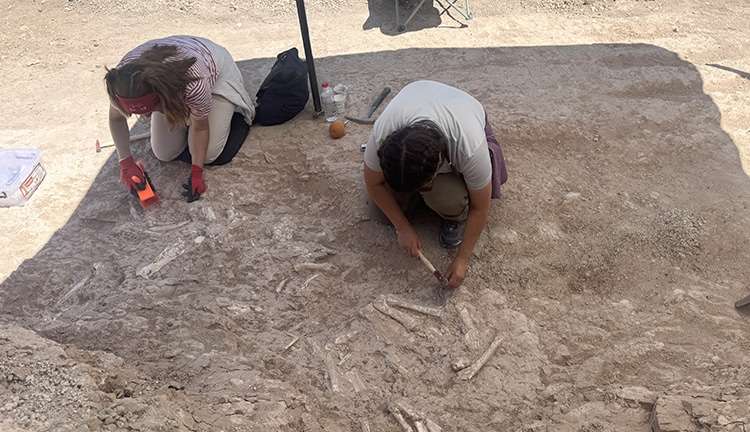
A fascinating aspect of this dig involves the discovery of clustered fossils potentially linked to a mass death event. “We now understand this area supported large herbivores and a complex habitat,” Dağ noted. “The richness and concentration of the fossils imply either gradual accumulation or an abrupt mass mortality episode, and we’re working to unravel the cause.”
In 2019, the team discovered a fossil older than the mammoth, previously regarded as an elephant ancestor. Many fossils, notable for their size and completeness, point towards these creatures possibly perishing in a single catastrophic event, though the precise reason remains unknown.
“Each excavation season brings new surprises,” added Dağ. Last year, the team found a well-preserved pig skull. The discovery of large interconnected fossils, nicknamed “intestines,” indicates the site might have served as an ancient burial ground for diverse species.
Advancing Dating Techniques Enhance Understanding
Determining the age of fossils in Turkey has long been challenging, with earlier estimates relying on geological and faunal comparisons. However, recent improvements in argon dating have enabled more accurate dating of Yamula Dam’s fossils. The remains from the Çevril site have been dated to 7.7 million years ago, while a neighboring location is about 7.4 million years old.
Applying precise stratigraphic dating makes this site a vital benchmark for upcoming paleontological investigations in the region. “Our refined layer dating offers a definitive geological timeline for the Middle Kızılırmak Basin, establishing this location as a key reference for paleontology,” said Dağ.
This innovative approach not only sharpens the fossil ages but also strengthens the scientific rigor of the findings, promising significant benefits for future research in prehistoric biology.
- Categories:
- News







0 comments
Sign in to Comment