
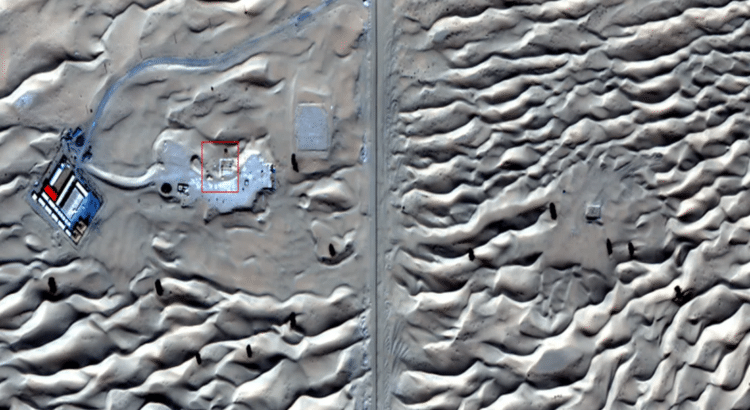
Expansive desert landscapes conceal a wealth of archaeological wonders hidden beneath their sandy surfaces. A cutting-edge blend of artificial intelligence (AI) and satellite radar technology is transforming archaeological methods, especially in dry, difficult-to-access regions. This approach has successfully detected ancient relics and structures that have eluded traditional digging techniques.
Revealing concealed artifacts using AI with radar data
A team from Khalifa University in Abu Dhabi, along with Sorbonne University Abu Dhabi and Mohamed bin Zayed University of Artificial Intelligence, has pioneered a method to tackle the unique obstacles archaeological sites face in desert environments. Their system leverages satellite-based radar imagery combined with advanced AI models to identify sites buried beneath shifting sand dunes.
The methodology employs Synthetic Aperture Radar (SAR), capable of penetrating dense sand layers, integrated with machine learning algorithms. This combination offers a detection accuracy within half a meter, enabling precise location of obscured structures.

Diana Francis, a lead researcher, states, “We’ve uncovered previously unknown regions, offering rich insights to guide upcoming archaeological exploration.” This technological breakthrough provides scientists a powerful means to probe areas formerly inaccessible, accelerating the unearthing of long-hidden historical sites.
Saruq Al-Hadid: A proving ground for AI-driven digs
Saruq Al-Hadid, located in the vast Rub al-Khali—the planet’s largest sand desert—has served as an essential testing site for this innovative technology. Renowned for its 5,000-year-old metallurgical artifacts, the location represents a unique archaeological laboratory.
Utilizing SAR data paired with AI analysis, researchers have pinpointed fresh zones of archaeological interest, potentially housing buried remnants of early human habitation. Haifa Ben-Romdhane, contributing author, highlights that SAR has facilitated not only the detection of these new areas but also detailed mapping of metallurgical and ceramic artifacts across an area spanning one square kilometer.
The advances at Saruq Al-Hadid suggest promising opportunities for deploying this approach at other desert sites in regions like Saudi Arabia and Egypt. This technology promises to extend archaeological investigations in harsh terrains where standard excavation proves challenging.
Revolutionizing archaeological exploration with artificial intelligence
AI is reshaping archaeological workflows by improving efficiency in resource use and time management. Deep learning models enable rapid interpretation of vast satellite data collections. Steven Griffiths, Vice President at Khalifa University, notes that AI directs excavations to precise targets, reducing the need for random, costly digs.
This capability fundamentally transforms expedition strategies, minimizing expensive, unsuccessful fieldwork. AI’s value is especially pronounced in arid zones where conventional tools reach their limits. Amina Jambajanstsan, who specializes in hunting medieval burial sites in Mongolia, looks forward to applying this method in the expansive Gobi Desert.
The technology’s scope extends beyond the Middle East to continents like Africa, where large areas remain unexplored due to extreme environments. An important goal is building geospatial regional databases to underpin AI-powered predictive models that forecast the location of undiscovered archaeological sites.
Technology Advantages Applications SAR Imaging Sand penetration capabilities, effective under all weather Desert site detection, detailed mapping AI Algorithms Fast processing, advanced pattern recognition Locating artifacts, predictive analytics Combined Approach Enhanced accuracy, operational efficiency, cost benefits Wide-area surveys, focused excavations
Looking ahead: challenges and opportunities
Although the early outcomes are encouraging, implementing this technology widely comes with hurdles:
- Significant investment is needed for acquiring data and training personnel
- Techniques must be adapted for diverse environmental conditions
- Models require ongoing refinement to improve accuracy
- Validation through continued field excavation remains essential
Diana Francis stresses the necessity of improving the models continuously to maintain reliability across varied landscapes. As excavation at Saruq Al-Hadid advances, it will offer crucial verification for AI-based discoveries, potentially establishing this method as a pioneer in archaeological exploration.
The convergence of artificial intelligence and archaeology signifies a transformative leap for uncovering history. By revealing ancient artifacts beneath extensive sand covers, this approach not only deepens knowledge of past civilizations but also unlocks exciting prospects for future investigations in some of Earth’s most formidable environments.
- Categories:
- Tech






0 comments
Sign in to Comment