
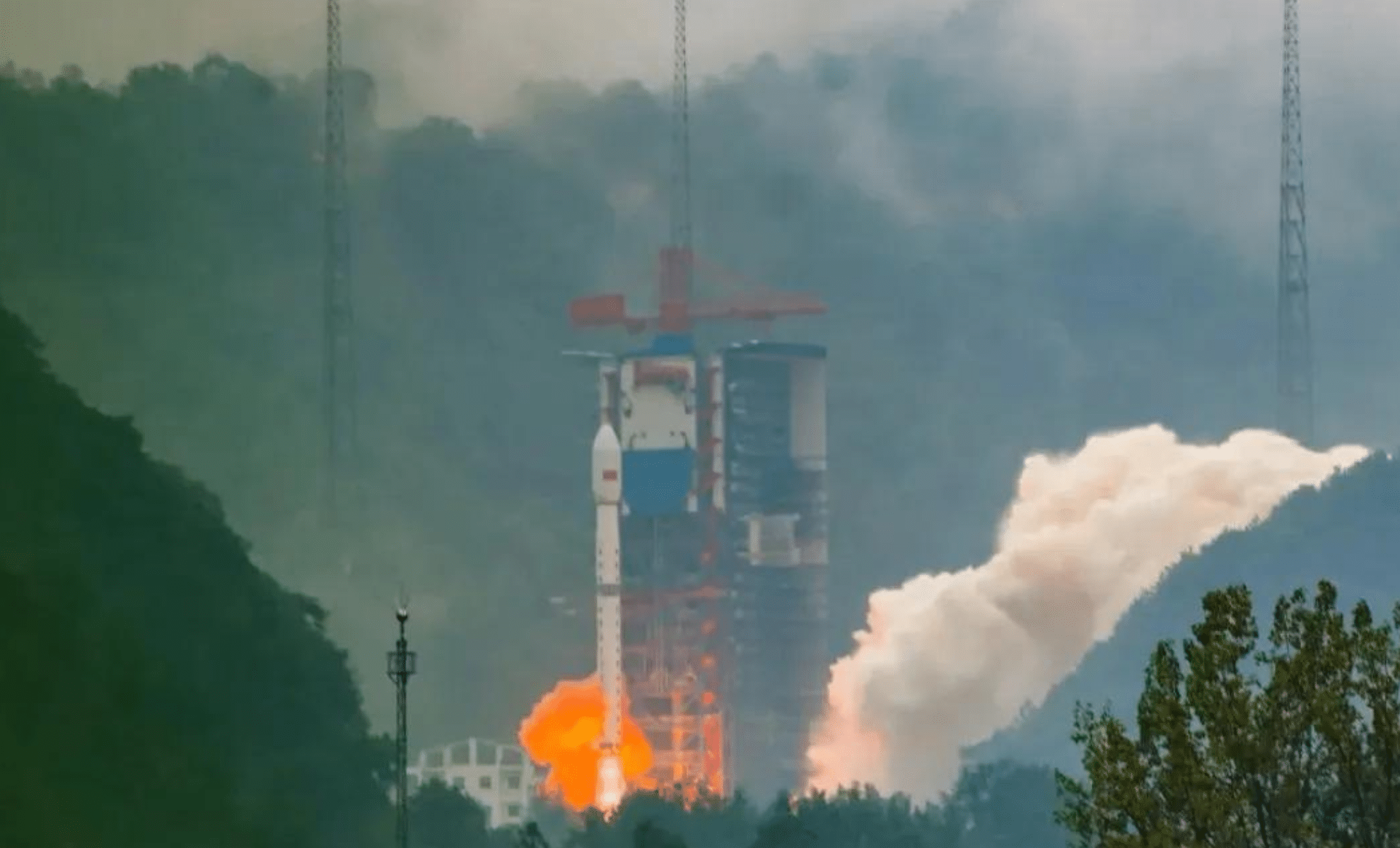
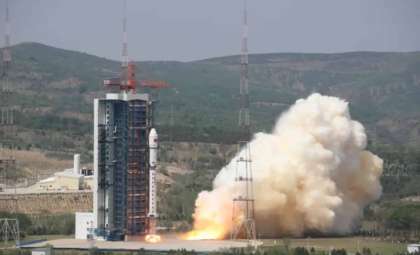
On September 3, 2024, China successfully deployed a fresh batch of classified Yaogan-43 remote sensing satellites from the Xichang Satellite Launch Center, nestled in Sichuan Province’s rugged terrain in southwest China.
This mission marked an important progression in China's efforts to boost its space reconnaissance abilities, with a particular focus on remote sensing technologies that likely have military applications. The payload was delivered by a Long March-4B rocket, a stalwart in the Chinese space fleet, making this the 533rd flight in the legacy of the Long March launch vehicles.
Launching the Yaogan-43: Insights into a Classified Operation
The lift-off took place precisely at 9:22 a.m. Beijing Time (1:22 UTC), successfully placing the Yaogan-43 (02) satellites into their intended orbits. Powered by liquid fuel across three stages, the Long March-4B rocket can transport payloads up to 2.5 tonnes into sun-synchronous orbits, optimal for Earth observation missions. Its longstanding track record highlights its adaptability and dependability for a broad range of satellite launches.

Information released by the China Aerospace Science and Technology Corporation (CASC) and state media was limited, describing these satellites primarily as platforms to test new technologies for low Earth orbit constellations. The intentionally vague wording and the covert nature of the mission hint at a dual-use design, likely incorporating sensitive military functions. Historically, the Yaogan series has supported a wide array of uses, ranging from civilian tasks like land surveying and environmental monitoring to intelligence collection for defense purposes.
The secretive profile of the Yaogan-43 satellites reflects China’s strategic focus on space-driven surveillance and intelligence gathering. It's believed these satellites possess enhanced optical imaging systems, synthetic aperture radar (SAR), and electronic intelligence (ELINT) tools, enabling them to capture detailed imagery, conduct persistent all-weather monitoring, and intercept various electronic emissions, including radar and communication signals.
Growing the Yaogan Constellation: Strategic Ramifications
The Yaogan-43 (02) satellites expand an already sizeable network of Yaogan spacecraft in low Earth orbit. Following the initial Yaogan-43 deployment in August 2024, this launch continues China’s expansion of its Earth-imaging and signal intelligence capabilities. These satellites occupy orbits similar to those of other Yaogan units, such as Yaogan-35, 36, 39, and 42, maintaining nearly circular paths roughly 500 kilometers above Earth with inclinations around 35 degrees.
The broadening constellation carries significant strategic weight. The Yaogan satellites offer extensive coverage over terrestrial and maritime zones, delivering vital intelligence data beneficial to both military operations and civilian applications. Combining optical, radar, and electronic surveillance systems enables China to maintain comprehensive, real-time situational awareness globally, bolstering its defense and reconnaissance capacities. This satellite network plays a key role in tracking maritime activities and gathering critical intelligence information worldwide, reinforcing China’s emerging prominence in space-based monitoring.
Additionally, the collaboration between commercial and academic players—such as GalaxySpace and the Harbin Institute of Technology—illustrates China's integrated strategy to develop its space sector. This partnership accelerates innovation and supports the nation’s grand vision for comprehensive satellite constellations and advanced space infrastructure.
The Long March Rockets: Core of China's Space Endeavors
The mission’s success with the Long March-4B rocket underscores the strength and flexibility of China’s Long March rocket family, a foundational element of its space program. Created by the Shanghai Academy of Spaceflight Technology (SAST), the Long March-4B is tailored for a variety of payloads and orbital deployments, making it essential for deployments like the Yaogan-43 constellation. Its ability to launch multiple satellites in one mission and reach sun-synchronous orbits makes it especially suitable for Earth observation initiatives.
Featuring a broader 4.2-meter payload fairing on this flight, the Long March-4B can accommodate larger and more complex satellite groups, a critical capability for precise multi-satellite deployments. This successful launch enhances the reputation of the Long March series as a reliable vehicle underpinning China’s expanding space footprint.
China's launch ambitions include approximately 70 missions during 2024, with the Long March rockets at the forefront of these endeavors. The upcoming debut of the new Long March 12 rocket scheduled for later this month emphasizes China’s commitment to strengthening its autonomy and launch architecture in space exploration.





0 comments
Sign in to Comment