
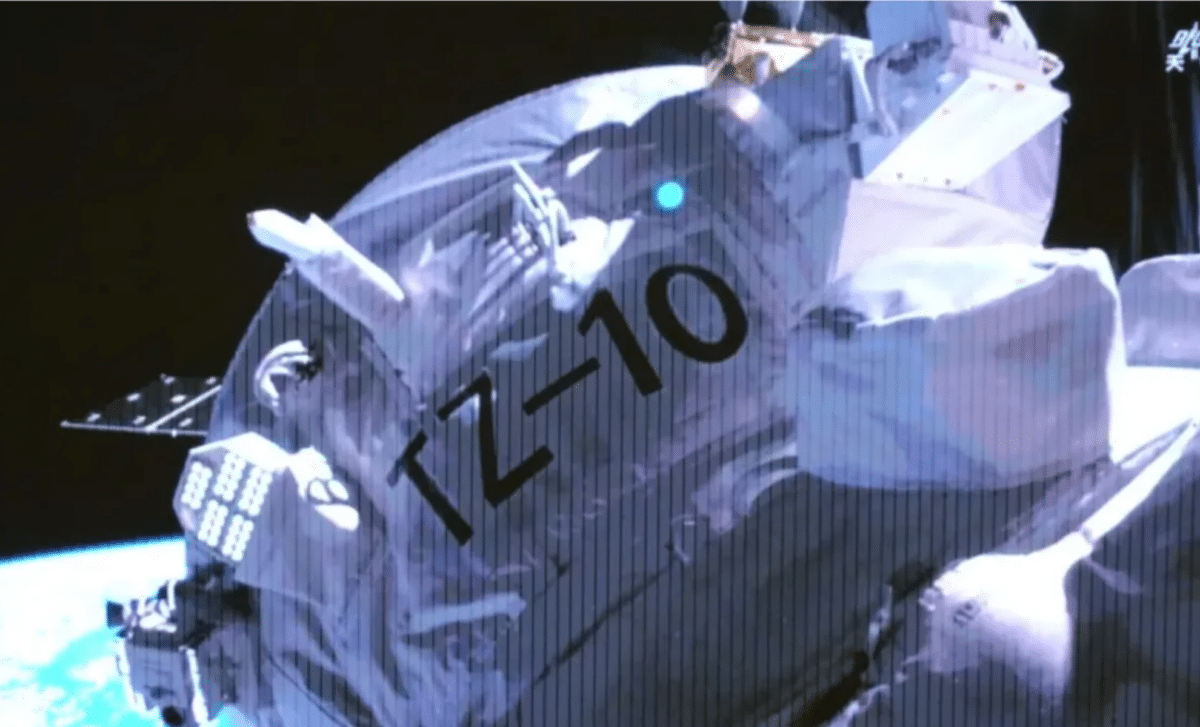
China has pioneered the deployment of synthetic human embryos into orbit to examine how the unique conditions of space, such as microgravity and cosmic radiation, influence early stages of human growth. This landmark study could provide critical insights into overcoming reproductive challenges for sustained human presence on the Moon, Mars, and other celestial bodies.
Synthetic Embryos on the Tianzhou-10 Voyage
The Tianzhou-10 spacecraft, which lifted off from the Wenchang launch site on May 10, transported over seven tons of provisions including food, fuel, spacesuits, and scientific instruments to the Tiangong space laboratory. Among the cargo were lab-grown human embryo models created from living stem cells. Differing from natural embryos, these synthetic counterparts proliferate but lack the capacity to develop into full fetuses, thus enabling early embryonic research without ethical dilemmas.
Leqian Yu, a scientist at the Chinese Academy of Sciences Institute of Zoology, stated, “These are not actual human embryos and cannot mature into individuals. Rather, they function as models to study the earliest phases of human formation.” The mission included two kinds of artificial embryos—one representing the peri-implantation stage, where the embryo adheres to the uterine lining, and another simulating peri-gastrulation, when cells begin organizing into distinct layers destined to form various organs. The embryos are cultured for five days in orbit before being frozen for their return to Earth.

🚀 Liftoff at 00:13UTC May 11, Long March 7 Y11 launched Tianzhou-10 from Wenchang https://t.co/5zSsOUJ2iP pic.twitter.com/jvIxnzdr1M
— CNSPACE (@CNSpaceflight) May 11, 2026
Studying Development on Earth and in Orbit
To assess space's effects, identical synthetic embryos were simultaneously cultivated on Earth as controls. "The experiment is progressing successfully," said Yu. “Comparing embryos grown in microgravity with those on Earth will help pinpoint how space environments influence early embryonic progression and identify challenges for long-term space living.”
Tianzhou-10 also carried zebrafish and mouse embryos for similar studies. Researchers aim to uncover how factors like altered gravity and radiation impact cell division, tissue patterning, and overall embryogenesis, which are vital to planning viable human reproduction beyond our planet where conditions vary dramatically.
The Complexities of Space Reproduction
Human reproduction beyond Earth remains a formidable scientific frontier. Stem cells show accelerated aging in low gravity, and radiation introduces DNA damage risks. Studies indicate that sperm motility may deteriorate in zero gravity, potentially complicating fertilization. Yu noted that these synthetic embryos were sent to explore how lifeforms, evolved under Earth's gravity over millions of years, respond when gravity is removed abruptly.
Achieving sustainable reproduction in space may require advanced methods such as in vitro fertilization, currently being investigated by commercial space ventures. These experiments target the crucial period when foundational organs form and the body’s primary axes are established under novel environmental stresses.
Advancing Human Settlement on Distant Worlds
For humanity to establish enduring settlements on the Moon, Mars, or other planets, mastering reproductive biology in space is indispensable. The synthetic embryo studies could shape future protocols to enable safe human growth beyond Earth. Outcomes will also inform medical procedures and space policies, as human travel and space tourism expand, making conception in orbit a tangible prospect.
Exploring artificial embryos in orbit marks a groundbreaking endeavor to anticipate and manage the biological complexities essential for life’s survival and thriving outside Earth.
- Categories:
- Science






0 comments
Sign in to Comment