
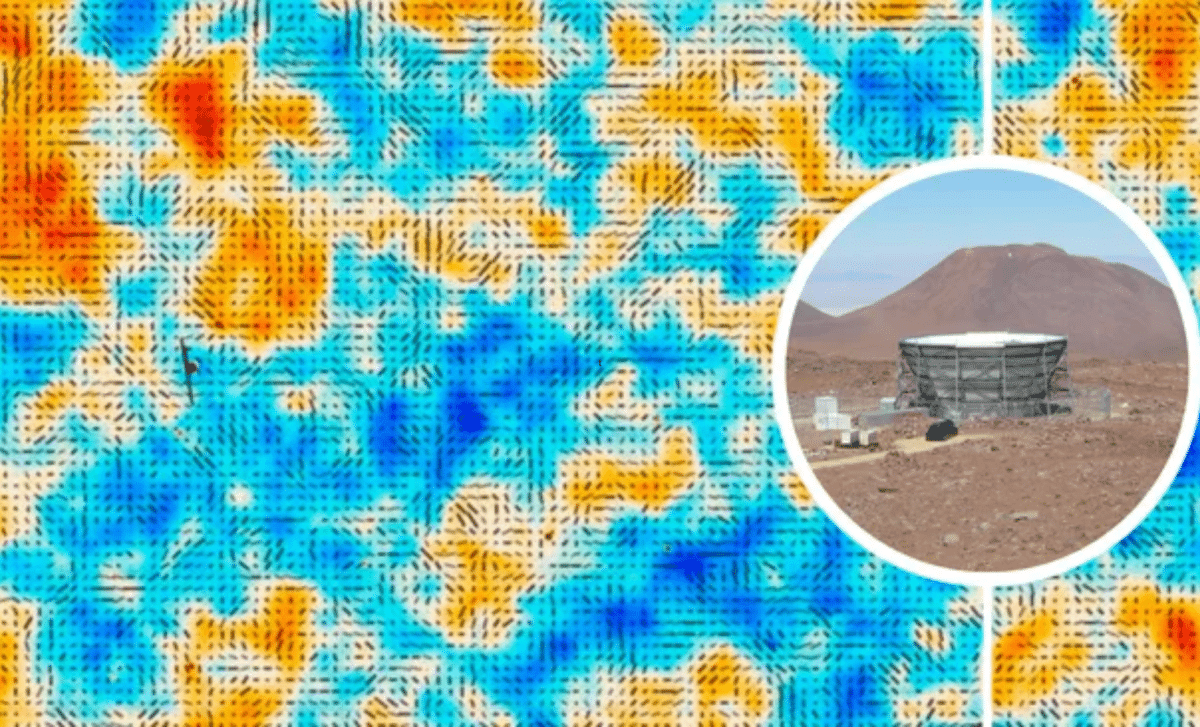
Recent research posted on Arxiv sheds new light on the enduring mystery of the “Hubble tension,” a conflict involving measurements of the universe’s expansion pace. The investigation utilizes data from the Atacama Cosmology Telescope (ACT), which has produced exceptionally precise readings of the Cosmic Microwave Background (CMB) radiation. This fresh evidence intensifies the question of why two distinct methods for determining the Hubble constant continue to offer conflicting outcomes. As scientists delve further into these inconsistencies, they may be approaching a breakthrough in understanding cosmic evolution.
Understanding the Hubble Tension and Its Significance
The Hubble constant serves as a key figure in cosmology, describing how rapidly space itself is expanding. Scientists have long employed two primary approaches to compute this rate: one measuring local phenomena via Type 1a supernovae, and another analyzing signals from the distant past through the Cosmic Microwave Background (CMB). Yet, these methods yield inconsistent values, a discrepancy known as the “Hubble tension.”
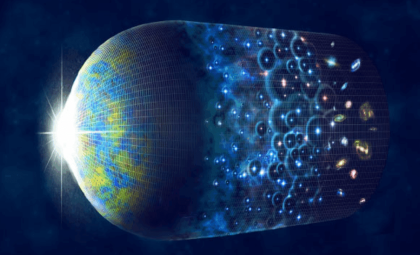
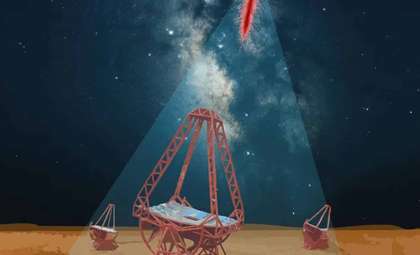
For years, this gap has challenged cosmologists, prompting questions about whether current models fully capture the universe’s behavior or if new physics might be involved. The latest data from the Atacama Cosmology Telescope (ACT) provide highly detailed CMB maps, especially focusing on polarization. Complementing temperature maps from the European Space Agency’s Planck satellite, this enables a sharper view of the universe’s formative epochs.

Crucially, the study reveals that the Hubble constant derived from ACT’s polarization measurements aligns closely with Planck’s findings, reinforcing the reality of the Hubble tension.
“When we compare them, it’s a bit like cleaning your glasses,” said Erminia Calabrese, a cosmologist at Cardiff University and a member of the ACT collaboration.
These new observations offer a more defined and refined cosmic image, making the divide between local and distant expansion rate measurements even more apparent.
Challenging Established Cosmological Frameworks with New Evidence
The ACT findings represent a notable achievement in observational cosmology. The telescope’s team has now reached measurement precision comparable to that of the Planck mission, long considered the benchmark for CMB studies.
“It’s the first time that a new experiment has reached the same level of observational capability as Planck,” said Thibaut Louis, a researcher at the Université Paris-Saclay, France.
ACT’s work has delivered not only high-resolution temperature maps of the CMB but also crucial polarization data, which was less accessible in earlier research efforts. This polarization information is vital for uncovering details about the early universe’s dynamics and the physics driving its expansion. By juxtaposing these polarization maps with temperature data, scientists have further confirmed the persistence and strength of the Hubble constant discrepancy.
“Our new results demonstrate that the Hubble constant inferred from the ACT CMB data agrees with that from Planck — not only from the temperature data, but also from the polarization, making the Hubble discrepancy even more robust,” said Colin Hill, a cosmologist at Columbia University.
Reevaluating Cosmological Theories in Light of New Discoveries
Published on Arxiv, along with two closely related additional papers, these results carry important consequences for cosmology. By assessing their data against a range of cosmological theories, the researchers have excluded several proposed explanations that assumed a uniform Hubble constant throughout the universe.
“We assessed them completely independently,” Calabrese explained.
“We weren’t trying to knock them down, only to study them. And the result is clear: The new observations, at new scales and in polarization, have virtually removed the scope for this kind of exercise. It does shrink the theoretical ‘playground’ a bit.”
While many questions remain, these discoveries rule out simpler theories and suggest the need for more intricate models to fully explain the Hubble tension. Future research will likely revisit foundational cosmological principles and seek novel explanations for these enduring discrepancies.
- Categories:
- Physics



0 comments
Sign in to Comment