
A father’s enthusiasm for a newly acquired 20TB hard drive quickly shifted to bewilderment when his computer failed to detect the device, and repeated formatting attempts proved futile. Though the storage device arrived sealed and seemingly genuine, it emitted faint clicking sounds before falling completely silent, prompting his son to inspect its internals.
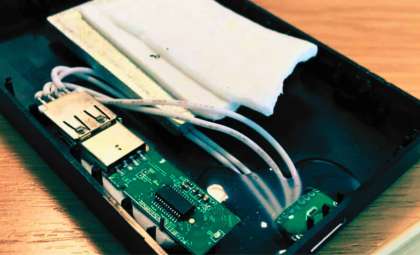
Upon opening the casing, the son discovered that the enclosure was devoid of actual storage components. Instead, it contained iron wheel weights crudely affixed inside the plastic shell, along with a small circuit board programmed to display a counterfeit capacity. There was nothing capable of saving any digital data, revealing that the father had bought essentially an empty shell crafted to imitate a real hard drive.
This fake storage device exemplifies a rising trend in tech scams targeting bargain hunters searching for large-capacity drives. Authentic 20TB external hard drives generally cost over $200, with portable models often priced above $300. Such a steep price gap should trigger caution, but persuasive packaging and deceptive online ads continue to dupe many consumers.

How the Bogus Drive Fooled Its Buyer
The unit arrived enclosed in packaging bearing Toshiba Canvio branding, complete with convincing labels and sealed wrapping suggesting new condition. Although Toshiba’s genuine Canvio line offers portable drives, their top capacity caps at 4TB. The claim of 20TB capacity was already implausible, but this was overlooked by the father relying on the online seller’s description.
Inside the box, scammers included a leaflet with instructions for drive formatting to lend false authenticity. The heavy feel and solid construction were due to hidden iron weights embedded inside, creating the illusion of a genuine device during physical handling.
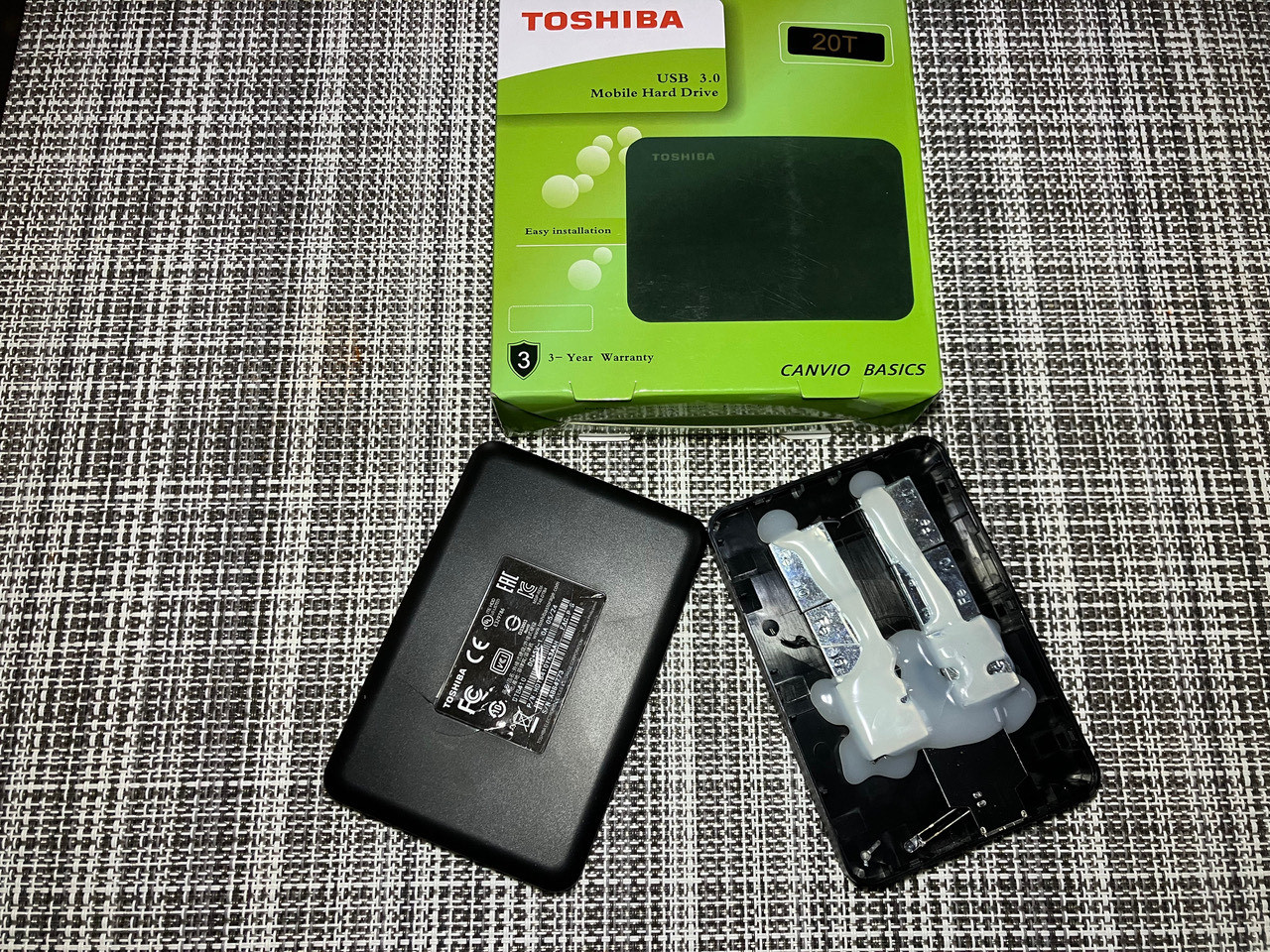
When connected to a Windows PC, the counterfeit drive mounted as a 19TB volume. Its circuit board was programmed to report this large capacity, fabricating the impression of a properly functioning drive. Users could even copy files onto it and see their names listed, but attempts to open or retrieve these files resulted in failure and system crashes.
Martin, the son who analyzed the drive and shared insights with Ars Technica, explained: “The device showed up on the desktop with a name displayed in Mandarin (which translated to ‘Hard Disc’). I was able to copy a file and see it appear on the drive, but opening the file triggered immediate errors. Even after reformatting, nothing worked correctly.”
The Role of Firmware in the Fake Storage Trick
Inside the counterfeit case, a small printed circuit board containing minimal flash memory was designed solely to fool the operating system into accepting the false storage capacity. Less experienced users might mistakenly believe the issue lies with their PC or software rather than the hardware itself.
Knowledgeable users recognize that Windows reports disk sizes in binary units like tebibytes, meaning a real 20TB drive would register close to 18.2TB. The shown 19TB volume deviates from this standard, presenting a subtle inconsistency alongside other red flags only discovered post-purchase.
The fake unit lacked all essential elements—no data platters, no read heads, no controlling boards—just weights and a deceptive circuit board made to simulate functional hardware.
Seller Declines Full Reimbursement Despite Overwhelming Proof
The counterfeit hard drive was bought from UK.Chicntech, a website largely focused on automobile products, kitchen gadgets, and home textiles rather than computer parts. The site’s electronics selection is limited and disorganized, including items like aromatherapy tools instead of trustworthy tech gear.
After Martin showed Chicntech support photos revealing the iron weights inside the opened drive, the company repeatedly dismissed the complaint. According to Martin, customer service alleged the weights “did not affect the device’s performance” and kept requesting information he had already supplied. Their highest offer was a mere 30% partial refund, permission to keep the useless hardware, and a complimentary gift from an unrelated Japanese supplier.
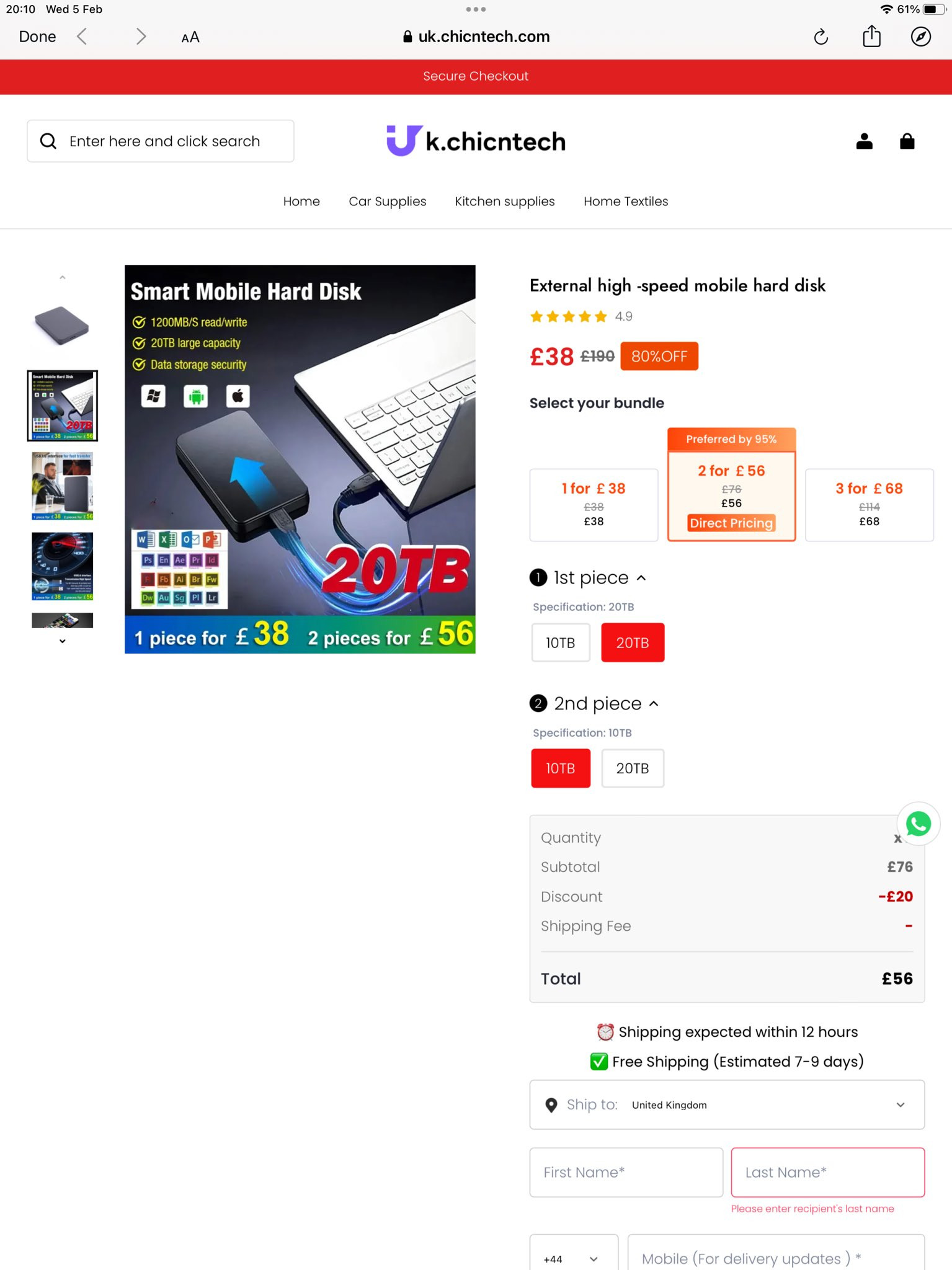
Chicntech’s return policies contain vague language that complicates refund attempts, noting electronic goods are deemed used once unplugged after activation, potentially voiding returns immediately. Martin said his father is now pursuing a refund through his credit card company after exhausting direct communication with the seller.
Widespread Problem of Fraudulent Storage Devices
Comparable fake products have surfaced across various marketplaces. Buyers have reported counterfeit tech sold via major retailers like Walmart and Amazon, where individual sellers exploit anonymity to push bogus merchandise before disappearing.
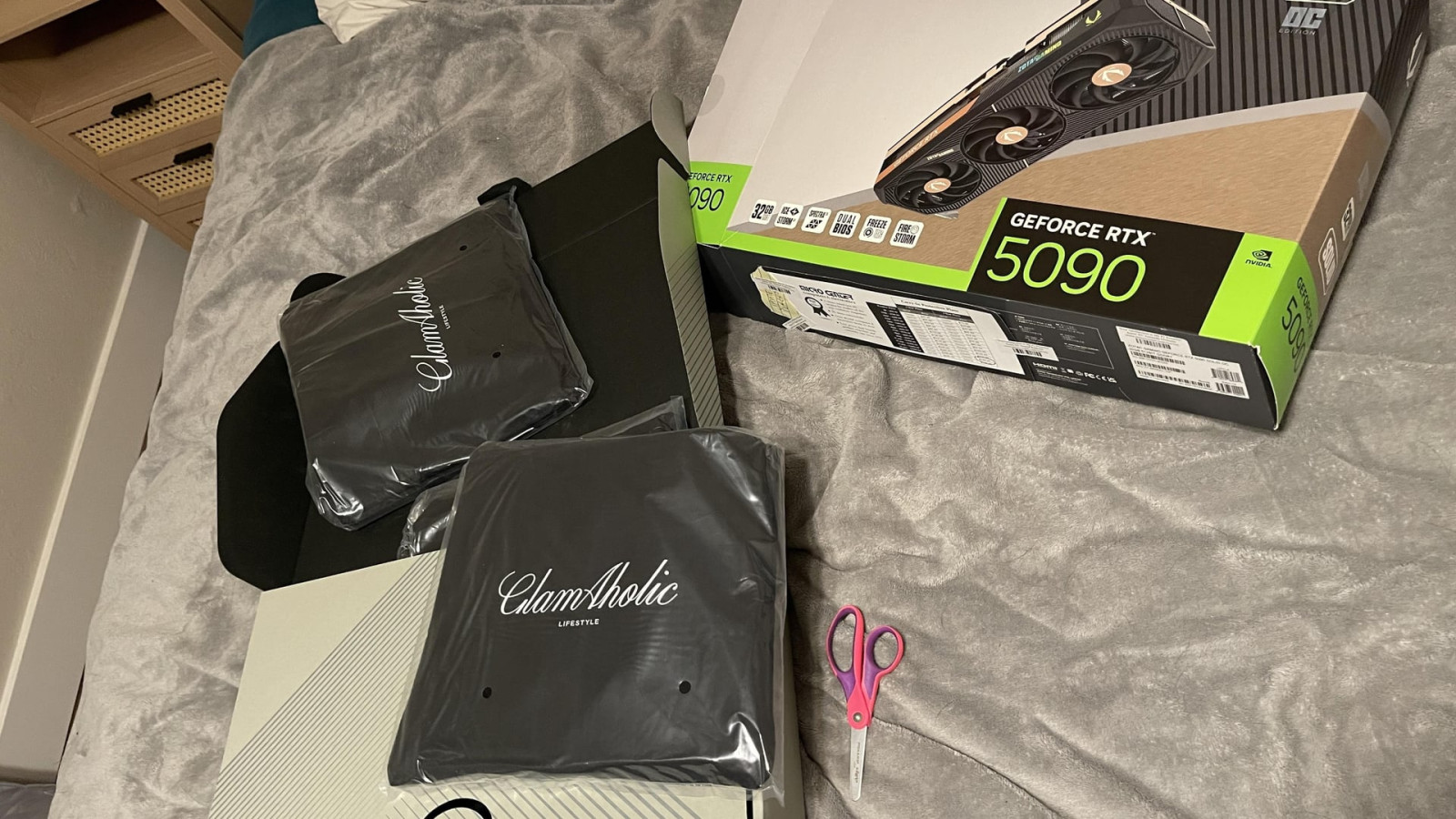
A similar case at Micro Center uncovered boxed graphics cards containing backpacks instead of GPUs. Thirty-one Zotac GPU packages were found stuffed with backpacks, indicating tampering upstream from retail. Micro Center replaced the affected purchases with real hardware, illustrating how counterfeit operations can infiltrate trusted supply chains.
Consumer advocacy groups warn that counterfeiters now produce realistic replicas of casing, branding, and stickers, fooling casual inspections. Online communities abound with reports of fake drives and SD cards masquerading as high-capacity devices, while actually holding little or no functional memory. This fraudulent 20TB drive case fits within this well-documented wave of technology scams.
- Categories:
- News











0 comments
Sign in to Comment