
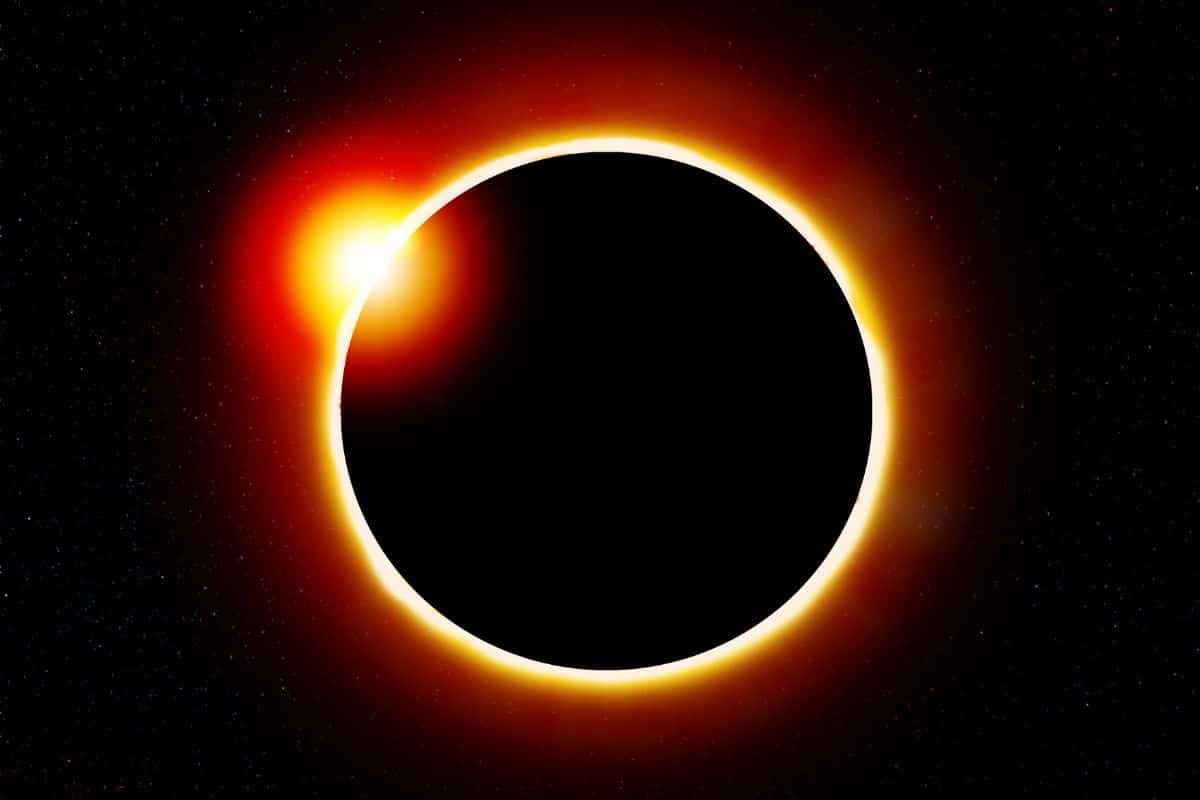
A powerful geomagnetic disturbance caused by a coronal mass ejection (CME) is expected to light up the night sky as far south as New York and Idaho this evening. The National Oceanic and Atmospheric Administration (NOAA) has issued an auroral forecast predicting a G1-class geomagnetic storm, with the possibility of intensifying to G2-level conditions, which would bring brighter and more widespread auroras.
Origin of Tonight’s Aurora Show
This auroral event originates from a solar flare that erupted on March 1, sending charged particles rushing toward Earth. When these particles interact with Earth’s magnetic field, they generate spectacular light displays near the poles. Stronger storms can cause the northern lights to be visible at lower latitudes, surprising viewers in regions not commonly associated with auroras.
The NOAA’s Space Weather Prediction Center (SWPC) anticipates the CME will make contact with Earth’s magnetic environment on March 4 or 5, with a chance for enhanced auroral displays. Space weather expert Tamitha Skov has noted that the storm may escalate to G2 severity, increasing visibility opportunities.

Where and When Is the Best Viewing?
The prime viewing window for the northern lights is expected between 7:00 p.m. and 10:00 p.m. EST (00:00–03:00 GMT) on March 5. Aurora visibility will likely diminish after this period, with conditions returning to normal by March 6.
To improve the chances of spotting the auroras, observers should seek out dark areas free from city light pollution. Looking towards the northern horizon will offer the best vantage point for the shimmering lights.
Effects on Technology and Communication Systems
Geomagnetic storms not only create stunning auroral displays but can also interfere with satellite transmissions, GPS signals, and electricity grids. Typically, a G1-level storm causes only minor disruptions, but if it intensifies to G2, the impact on technology might become more prominent.
High-frequency (HF) radio waves and GPS precision could experience degradation, especially in high-latitude areas. Drone operators and aviation navigation might encounter temporary communication challenges.
Implications for Solar Weather Trends
Currently, the Sun is nearing its solar maximum phase, the peak of its 11-year activity cycle. This period typically brings an increase in solar flares, CMEs, and related geomagnetic disturbances.
Heightened solar activity increases the likelihood of intense auroral displays in places that usually do not see them. Should this event develop into a G2 storm, it could signal a season of frequent auroral phenomena throughout 2025.
Tips for Photographing the Northern Lights
Those eager to capture the auroras are advised to use a camera with manual controls, setting a long exposure to catch the full brilliance of the display. A tripod is crucial for steady shots in low-light scenarios.
Since watching the northern lights often means being outside in cold conditions, dressing in warm, layered clothing is essential for comfort. Checking NOAA’s space weather updates can provide real-time forecasts and alert viewers to the best times for aurora watching.
For night sky enthusiasts in New York, Idaho, and other mid-latitude areas, tonight offers a rare and beautiful chance to observe one of nature’s most captivating phenomena.
- Categories:
- Nature










0 comments
Sign in to Comment