
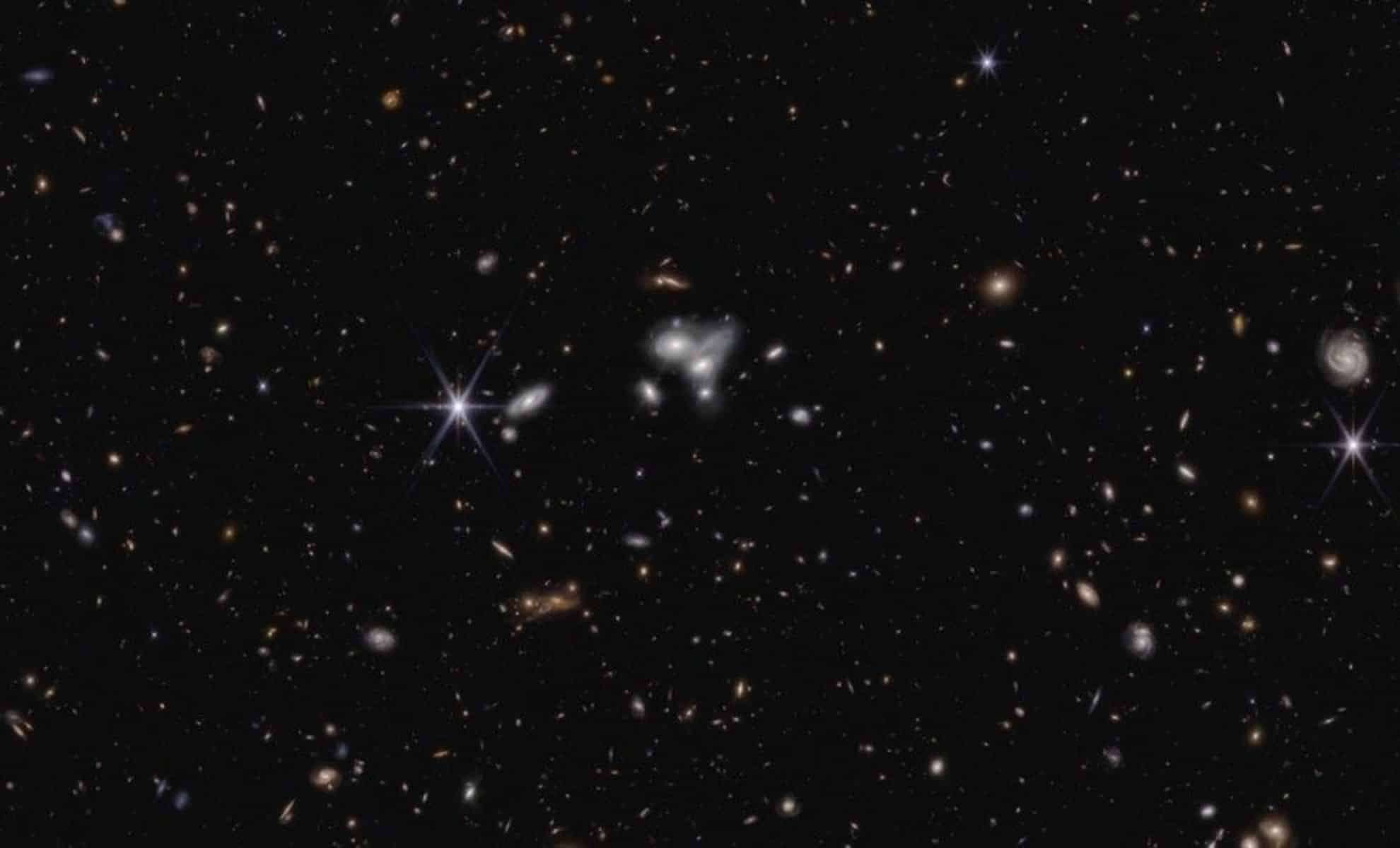
The James Webb Space Telescope has captured an extraordinary event—the most distant black hole merger observed to date. Occurring when the universe was a mere 740 million years old, this discovery offers fresh perspectives on the origins of black holes and galaxies.
James Webb Telescope Reveals Earliest Known Black Hole Merger
The Webb Telescope's latest data has detected a black hole merger within the galaxy system ZS7, representing the earliest merger ever documented.
Among these colliding black holes is a massive entity estimated to be 50 million times the Sun's mass, identified via Webb’s cutting-edge spectroscopic instruments.

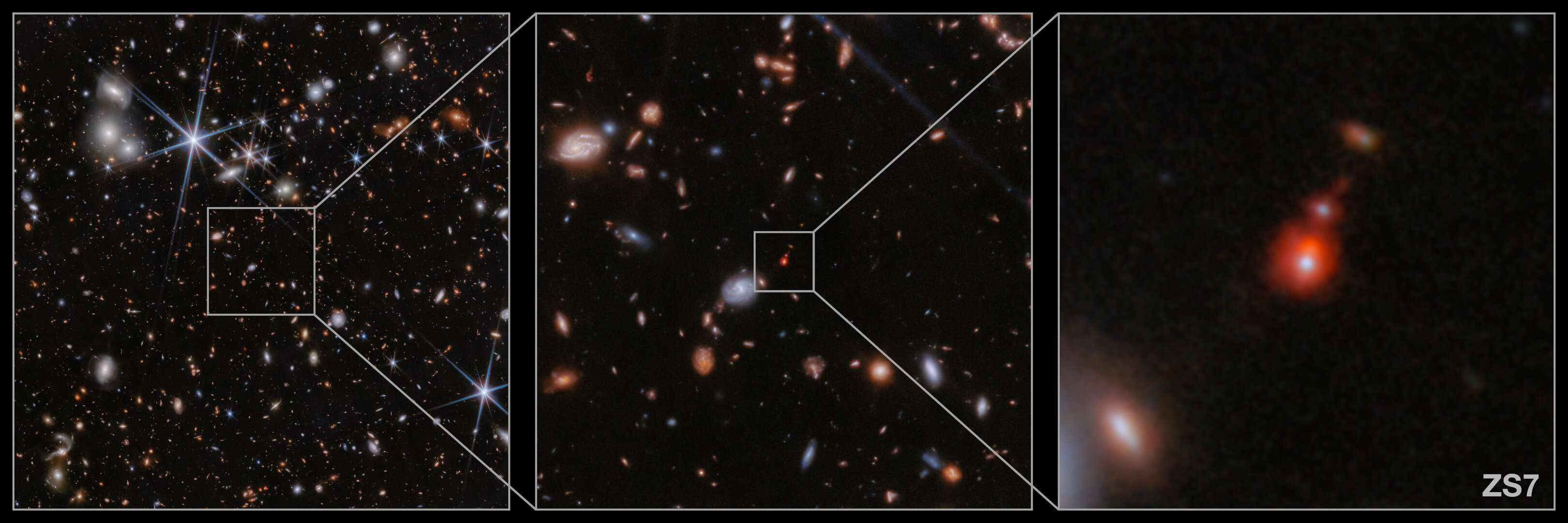
Webb’s precision enabled scientists to detect the distinct signatures of actively feeding black holes, otherwise undetectable by Earth-based telescopes, allowing them to distinguish the two objects and analyze their physical traits accurately.
This record-setting observation paves the way for deeper insights into black hole behavior in the universe's earliest epochs.
Insights into Supermassive Black Hole Formation
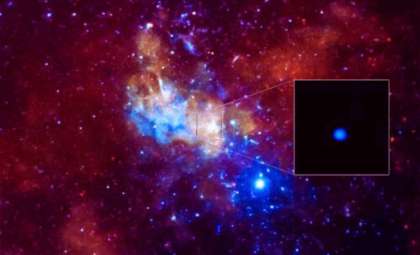
This milestone offers clues about how colossal black holes, like the one at the center of the Milky Way, amassed their enormous masses. Prof. Roberto Maiolino from the University of Cambridge notes that this supports the idea that mergers are a vital avenue for rapid black hole growth.
The presence of frequent black hole collisions in the universe’s youth implies that merging events significantly contributed to their expansion during cosmic infancy.
Merging, alongside matter accretion, appears to be a key factor enabling black holes to reach supermassive scales in remarkably short periods.
This mechanism helps elucidate the early emergence of supermassive black holes, answering a major puzzle in cosmology.
Merger Characteristics and Processes
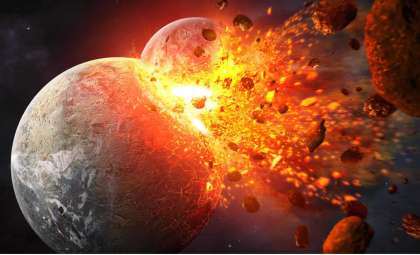
The two black holes in the ZS7 system are engaged in a merger releasing immense energy, identifiable through specific spectral fingerprints.
While one black hole is veiled within dense gas clouds, making precise measurement difficult, its mass is likely close to its more visible counterpart. Their collision consumes vast amounts of material and emits gravitational waves that distort spacetime.
These ripples can be captured by facilities like the LIGO-Virgo-KAGRA collaboration, which first detected gravitational waves in 2015.
Studying such detailed merger dynamics enriches our knowledge of black hole properties and how they interact, vital for refining formation and evolution models.
Expanding Horizons with Webb’s Discovery
This ancient black hole collision discovery opens doors to enhanced understanding of supermassive black hole origins. The European Space Agency’s forthcoming Laser Interferometer Space Antenna (LISA) mission promises to augment detection of gravitational waves from distant cosmic events.
Ongoing analysis of Webb Telescope findings alongside other observatories aims to reveal the prevalence and influence of black hole mergers during the universe’s formative years.
These studies are essential for constructing the cosmic timeline and deciphering the developmental history of its most mysterious phenomena. Observing these ancient occurrences challenges and sharpens current theories about early cosmic evolution.
Webb Telescope’s Role in Cosmic Exploration
By capturing far-flung, early-universe phenomena, the Webb Telescope demonstrates unmatched capabilities in expanding our cosmic understanding. Its discoveries provide vital pieces in the puzzle of the universe’s history.
Detecting primordial black hole mergers helps resolve long-debated questions about supermassive black hole growth and lays groundwork for future breakthroughs in astronomy.
The Webb Telescope's technological prowess marks a transformative period in space science, enabling us to explore the universe’s farthest reaches and uncover the secrets of our cosmic beginnings.
- Categories:
- Astronomy ,
- News ,
- Science ,
- Space





0 comments
Sign in to Comment