

A recent large-scale investigation has identified a noteworthy association between regular green tea intake and a decreased occurrence of brain abnormalities linked to dementia. This study, involving over 8,700 elderly participants in Japan, suggests that green tea might offer significant neuroprotective advantages, potentially aiding in the preservation of cognitive abilities. Individuals who habitually drank green tea exhibited fewer brain lesions, which are often linked to the early stages of Alzheimer’s disease and other dementia types.
This research bolsters the accumulating scientific support for green tea’s health-enhancing qualities, celebrated in traditional remedies for centuries. Loaded with antioxidants such as catechins and polyphenols, green tea combats oxidative damage and inflammation—two key contributors to cognitive deterioration. These findings underline green tea's promise as part of effective dementia prevention tactics and promote its inclusion in a health-conscious diet.
Investigating Green Tea’s Role in Cognitive Well-being
The study, conducted between 2016 and 2018, examined data from 8,766 elderly adults aged 65 and above. Participants recorded their green tea and coffee consumption habits, which researchers compared with magnetic resonance imaging (MRI) scans assessing brain volume and characteristics across five brain regions.

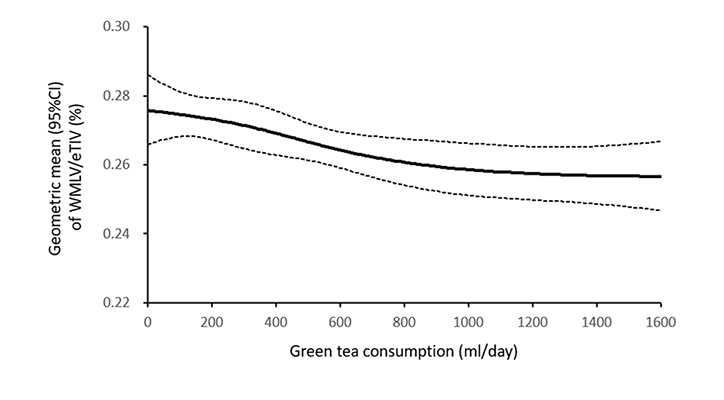
Analysis revealed that increased green tea consumption correlated with a reduced prevalence of white matter lesions, brain regions often related to aging and dementia. The research accounted for confounding factors such as age, educational background, and physical activity to ensure accurate results.
Intriguingly, no similar protective effects were observed with coffee intake. While coffee also contains antioxidants and caffeine, green tea’s unique bioactive substances likely contribute to its specific benefits.
More Green Tea, Greater Brain Protection
The study found a dose-responsive trend: participants who consumed more green tea developed fewer white matter lesions. Those enjoying three cups daily showed about a 3% reduction compared to individuals who drank only one cup. Increasing intake to seven to eight cups daily corresponded to a 6% decrease in lesions relative to low consumers.
Nonetheless, green tea intake didn’t significantly affect other brain metrics such as hippocampal volume or overall brain size, which are also linked to cognitive function but appeared uninfluenced by green tea consumption.
What Might Explain Green Tea’s Brain Benefits?
One hypothesis centers on green tea’s antioxidant compounds, particularly catechins, which help neutralize oxidative stress—a key factor in brain aging. Moreover, past studies have associated green tea with reduced blood pressure, which plays a crucial role since hypertension increases dementia risk.
Green tea’s comparatively low caffeine content versus coffee might make it more beneficial by limiting blood pressure spikes, thereby enhancing its potential to safeguard white matter without imposing cardiovascular stress.
Limitations and Genetic Influences
The research highlighted that green tea’s protective effects were not consistent across all individuals. Participants experiencing depression or carrying the APOE4 gene variant—a genetic marker for Alzheimer’s—did not show meaningful reductions in brain lesions. This points to genetic and lifestyle complexities influencing green tea’s effectiveness.
The authors call for expanded studies involving diverse populations beyond Japan to further validate and comprehend these findings.
Beyond Cognitive Benefits: Additional Positive Effects
Green tea’s advantages may extend well past brain health. Previous research links it to enhanced weight regulation, lower cancer risk, and better cardiovascular function. Its rich composition of bioactive substances, including catechins and the calming amino acid L-theanine, supports these broader health effects.
Despite these promising results, experts emphasize that green tea should be part of a holistic approach, including a nutrient-rich diet, regular exercise, and mental stimulation to maintain brain function.
Next Steps in Green Tea and Dementia Research
The study’s authors stress the necessity for long-term investigations that track participants over many years to conclusively determine causality. Future research exploring how genetics, lifestyle, and green tea consumption interact may help tailor effective dementia prevention strategies.
As ongoing research unfolds, green tea could emerge as a cost-effective, accessible way to lower dementia incidence and support cognitive longevity.
Simple Routine, Remarkable Impact
Incorporating green tea—starting with three cups a day—may offer a practical step toward brain protection. Besides its potential to diminish white matter lesions, green tea rituals encourage mindfulness and relaxation, factors connected to overall mental wellness.
However, it’s crucial to recognize that no single food or drink can completely prevent complex disorders like dementia. Green tea, alongside healthy living habits and medical guidance, can be part of a comprehensive strategy to support healthy aging.
The findings highlight green tea as a promising natural ally in fighting cognitive decline. As scientific exploration continues, green tea’s role in promoting brain health for aging populations worldwide looks increasingly promising.
- Categories:
- Health













0 comments
Sign in to Comment