
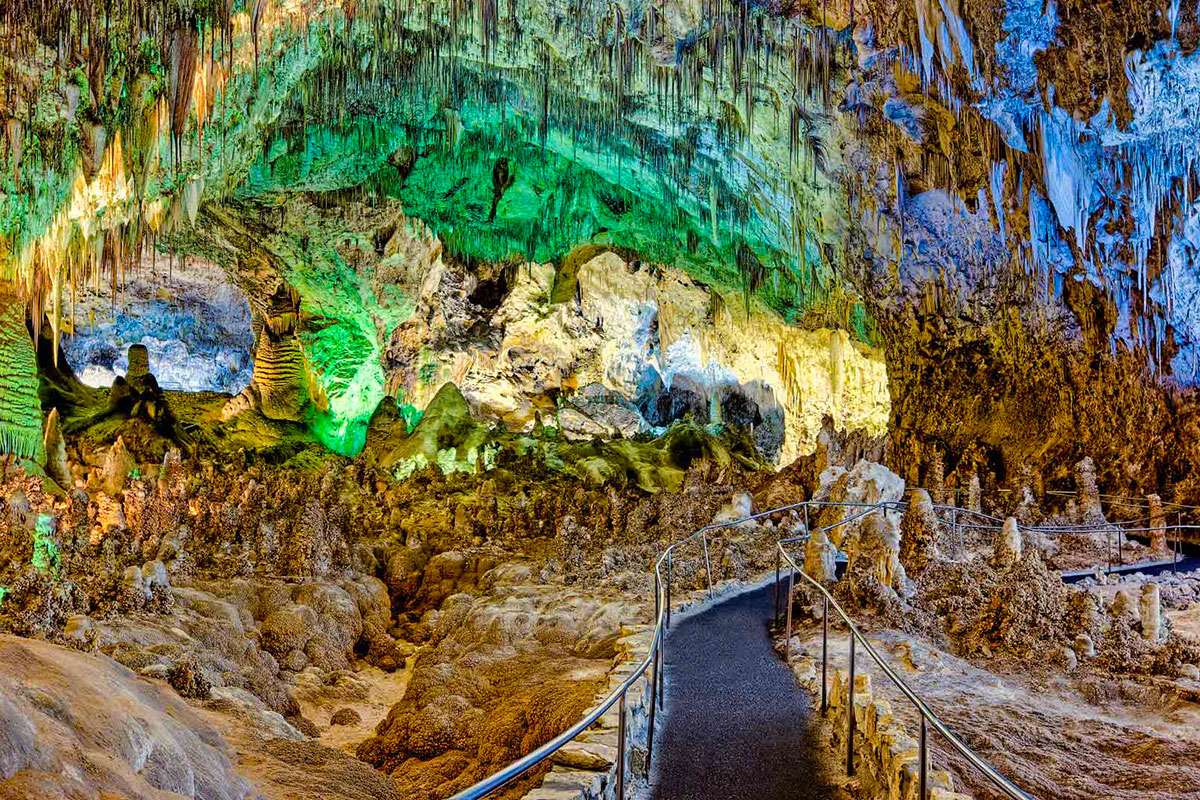
At Carlsbad Caverns National Park in New Mexico, an unexpected incident recently highlighted the fragility of cave ecosystems. This renowned UNESCO World Heritage Site, known for its stunning mineral formations and nearly 80 intricate caves, faced an ecological disruption after a visitor accidentally left a bag of Cheetos inside one of its famed chambers.
Why are Carlsbad’s caves so unique?
Carlsbad Caverns National Park features some of North America’s most magnificent caves. Among them, Lechuguilla Cave stands out as a natural underground sanctuary requiring careful protection due to its rare geological characteristics. Another highlight, the "Big Room" or "Grande Salle," is an ancient cavern accessible by a 1.24-mile trail. It has been described by Will Rogers as “the Grand Canyon with a roof,” measuring nearly 3,937 feet in length and 623 feet in width, ranking as the fifth-largest cave in the continent.
Visitors are drawn not only by the immense size of these caves but also by their remarkable mineral formations. However, managing large numbers of visitors presents ongoing challenges for conserving these delicate environments.

The Cheetos incident: Why it’s more significant than it appears
The story behind the dropped Cheetos in the Big Room made headlines, including CNN coverage. While it might seem trivial, the snack’s presence triggered notable ecological changes. Due to the cave’s moist conditions, the processed corn snacks quickly softened, becoming a rich food source for microbial and fungal colonies.
This unexpected influx of nutrients sparked a short-term food chain among native insects such as crickets, mites, spiders, and flies. Mold also began spreading across nearby surfaces. Park personnel dedicated over 20 minutes carefully removing mold and debris to prevent further damage. As one ranger explained on Facebook: “To us humans, a spilled snack bag may seem like nothing much. But for cave life? This tiny act can totally change everything.”
Tourist conduct and its influence on natural habitats
Visitors at Carlsbad Caverns must follow strict guidelines—only plain water is permitted inside the caves to protect the ecosystem. Nevertheless, incidents like the Cheetos spill reveal ongoing difficulties in visitor behavior management.
The term “tourons,” blending “tourist” and “moron,” is often used to describe individuals whose careless acts threaten cultural and natural heritage sites worldwide. Some notorious examples include:
- Someone in Spain damaging a 6,000-year-old cave painting for a social media photo;
- A German tourist arrested in Florence after harming Neptune’s fountain;
- A visitor caught vandalizing Bacchus’ statue;
- And tourists racing through Cambodia’s Angkor Wat ruins as if playing Temple Run.
A reminder to consider our environmental impact
This event serves as an important reminder that even seemingly minor actions can have profound effects on fragile ecosystems. As park staff succinctly stated: “Big or small, we all leave our mark everywhere we go. Let’s aim to make the world better than we found it.” It encourages everyone to reflect on their responsibility as both visitors and stewards of Earth’s natural marvels.
By recognizing these impacts, we can engage with ecological and cultural landmarks more responsibly. Adhering to the guidance of conservation experts and local authorities—whether at Carlsbad Caverns or other sites—helps ensure these extraordinary places endure for future generations while also enhancing our personal connection to the natural world.
- Categories:
- Nature








0 comments
Sign in to Comment