
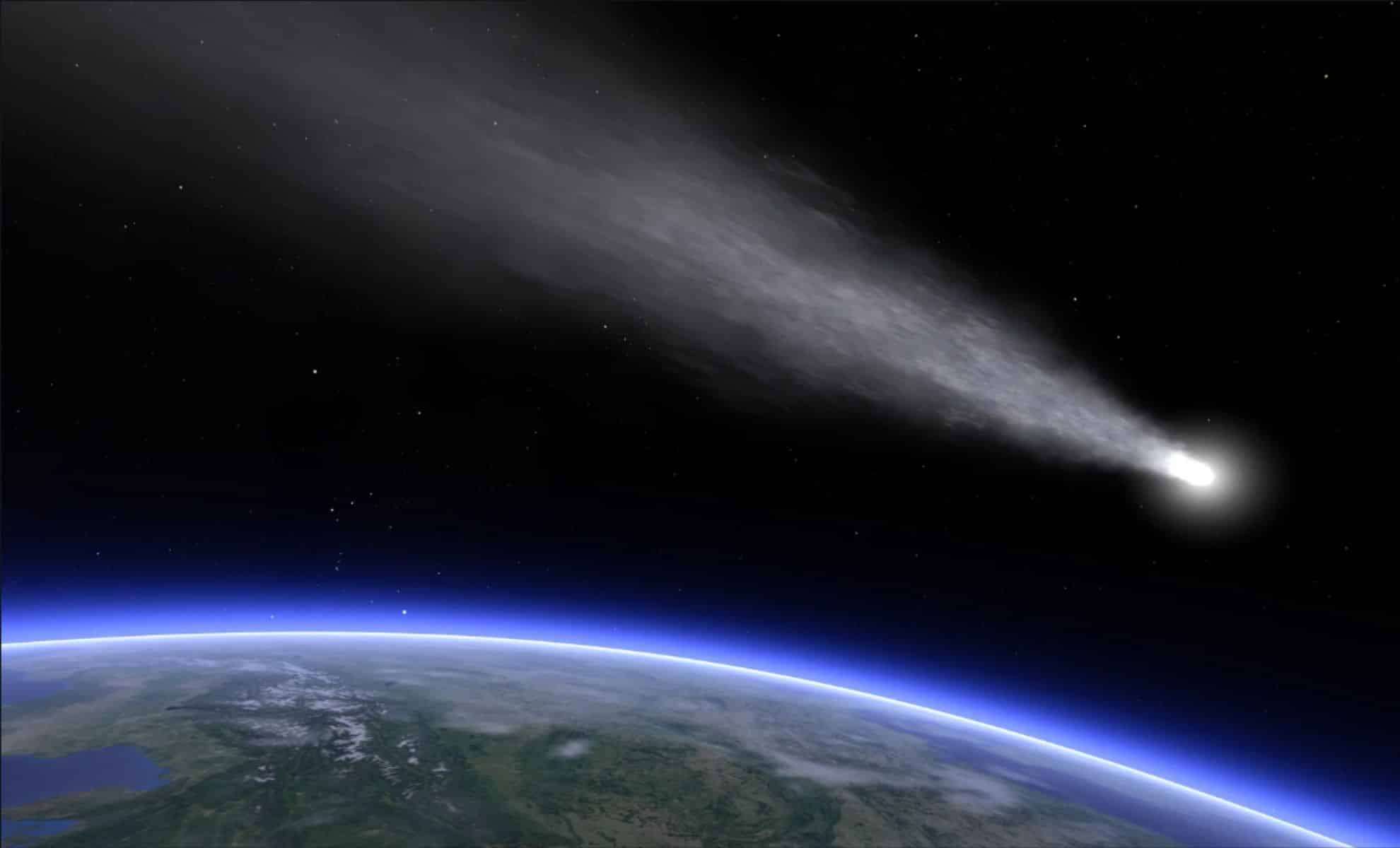
Astronomers have developed a novel technique to identify potentially dangerous long-period comets (LPCs) well before they near Earth, relying on the detection of meteoroid streams—tiny particle trails left behind by these comets as they traverse space.
Because these LPCs travel in orbits lasting hundreds to thousands of years, they are notoriously hard to spot early, since they spend most of their time far from Earth and only approach our planet after prolonged intervals.
This approach utilizes the monitoring of meteoroid streams, enabling early detection of hazardous comets by tracking the debris left along their orbital paths. By analyzing these streams, scientists can link the meteoroids back to their source comet, providing valuable advance warning beyond what traditional detection methods can achieve.

Leveraging Meteoroid Streams to Locate Long-Period Comets
Comets exposed to solar radiation release dust and rock fragments known as meteoroids, which form along their orbital tracks. When Earth passes through these streams, these particles enter our atmosphere, producing meteor showers visible from the ground. Careful examination of the speed, direction, and density of these streams enables researchers to trace them back to their original cometary sources, facilitating the early discovery of remote comets.
“This method offers a fresh perspective on uncovering long-period comets that might one day impact Earth,” remarked Samantha Hemmelgarn, the lead author of the study, as cited by Space.com. Initial application of this model involved analyzing 17 known meteor showers to connect them with their parent LPCs. By simulating possible comet trajectories and matching them to observed data, the findings confirmed the model’s strong predictive capability, indicating meteoroid streams could serve as early alerts for detecting LPCs.
Enhancing Detection with the Vera Rubin Observatory’s LSST
The Legacy Survey of Space and Time (LSST) at Chile’s Vera Rubin Observatory is poised to significantly amplify this detection strategy. With the LSST’s upcoming comprehensive sky surveys capturing frequent and detailed imagery, astronomers will be able to spot even faint meteoroid trails left by distant comets. This will permit precise mapping and backtracking to parent comets located billions of miles away. The observatory’s expansive view and sensitivity are expected to dramatically improve the early identification of LPCs, allowing years of advance notice for potential hazards.
Researchers emphasize, “the LSST will empower us to find long-period comets well before they become threats.” By detecting subtle meteoroid streams across wide regions of space, the LSST will help build a more complete sky map and determine comet paths ahead of time. This capability will be crucial for continuous monitoring and preparing intervention strategies if needed, positioning the LSST as a vital asset for large-scale LPC surveillance.
Advancing Planetary Defense and Future Investigations
This innovative approach marks a significant step forward in planetary defense by filling a major blind spot in current tracking methods. While most defense efforts focus on near-Earth asteroids, LPCs pose special challenges due to their long, unpredictable orbits. Spending much of their time in distant solar system regions makes early spotting difficult, limiting the window for response when they finally approach Earth. Tracing LPCs via their meteoroid trails offers critical additional time to assess collision risks and prepare responses.
Though this method may be less effective for comets with orbital cycles exceeding 4,000 years, it remains a valuable tool for improving early detection. Combined with observations from meteoroid trail analysis and the forthcoming data from the LSST, scientists are optimistic about identifying potentially perilous LPCs with greater accuracy and lead time than before. This proactive tracking technique not only enhances planetary defense but also enriches understanding of comet behavior in our solar system.
As more LSST data becomes available, meteoroid stream analysis could emerge as a foundational approach in defending Earth against distant comet threats. By unveiling objects that might otherwise be missed, this strategy offers a promising path forward to protect our planet and better anticipate the trajectories of hazardous long-period comets.
- Categories:
- News








0 comments
Sign in to Comment