
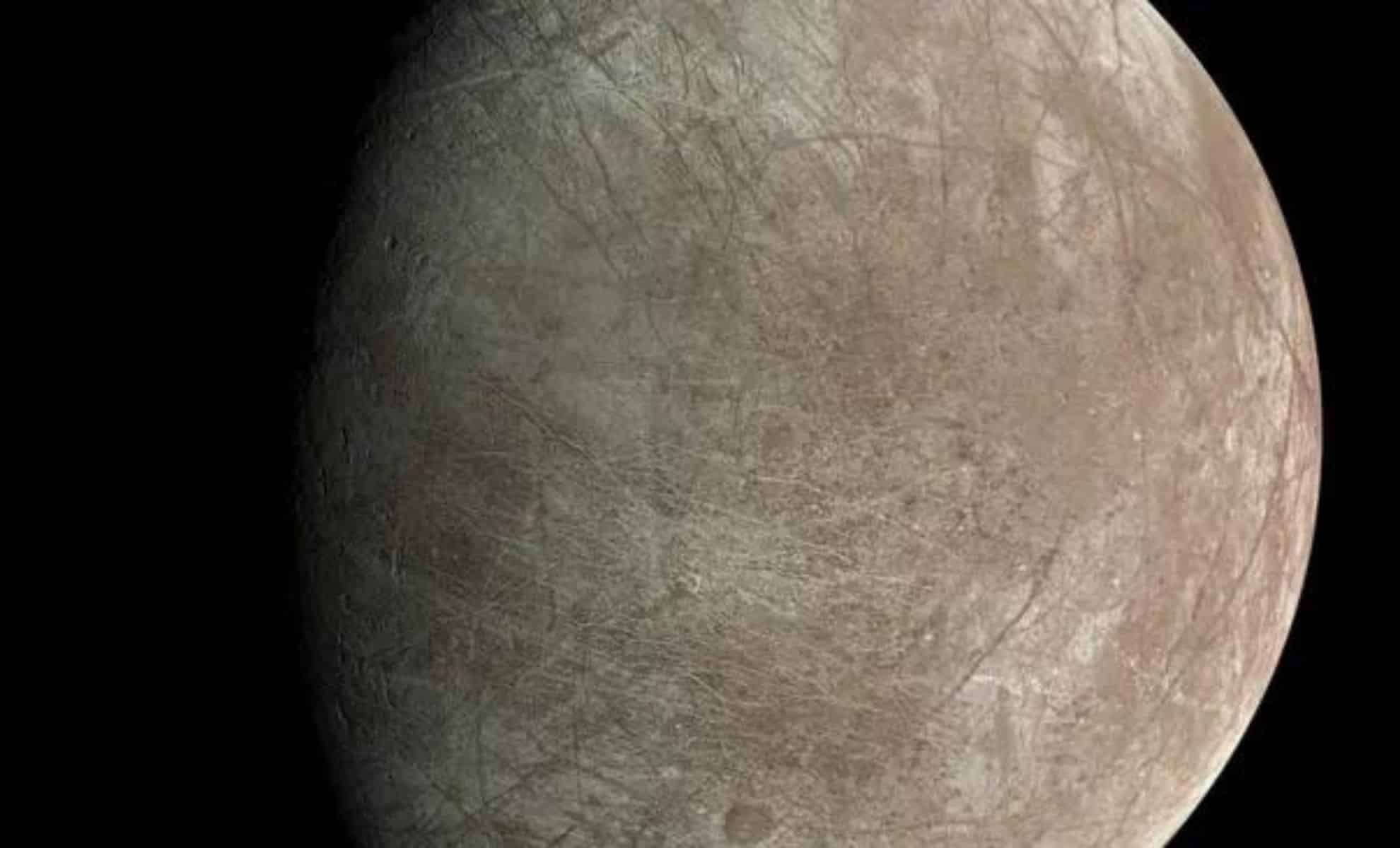
NASA’s Juno mission has delivered stunning images of Europa, one of Jupiter’s moons, revealing potential plume eruptions and surface formations that hint at vigorous activity beneath its frozen crust.
Europa, distinguished by its expansive, icy exterior and suspected underlying ocean, remains a top target in the quest to find life beyond Earth. These new findings set the foundation for the upcoming Europa Clipper mission dedicated to studying this intriguing world’s habitability.
Juno Observes Possible Plume Emissions on Europa
In a close encounter held on September 29, 2022, Juno acquired imagery suggestive of plume eruptions on Europa. Confirming these jets could allow future spacecraft to analyze Europa’s ocean chemistry remotely, avoiding the challenges of landing or drilling through ice.

Similar plumes have been documented on Saturn’s moon Enceladus, where subsurface ocean material escapes into space. Detecting comparable activity on Europa would deepen our understanding of its potential suitability for microbial life.
Sampling material from these plumes during flythroughs would enable scientists to investigate the moon’s ocean composition and the possibility of microbial ecosystems, a discovery with major implications for astrobiology and the search for extraterrestrial organisms.
Geological Clues Shine Light on True Polar Wander
Images from Juno also reveal striking fractures and steep-sided depressions on Europa’s surface, consistent with “true polar wander,” where the icy shell shifts independently over the underlying rocky core.
This movement is probably caused by ocean currents driven by tidal heating stemming from Jupiter’s gravitational forces. The internal flow generates stresses that create cracks, ridges, and other surface features.
Observing these structures in Europa’s southern area enhances our grasp of its internal geodynamics.
Such interplay between the subsurface ocean and the ice shell implies complex, evolving interactions where heat and fluid motion shape surface features. Insights into this process improve models of Europa’s interior and outer shell dynamics.
Reevaluating Europa’s Surface Characteristics
Juno’s detailed visuals have prompted new interpretations of europa’s terrain. Notably, a region once thought an impact crater named Gwern is now understood as an illusion created by intersecting ridges.
This highlights the intricate nature of Europa’s geology and the importance of high-resolution data for accurate feature analysis. Another distinct structure nicknamed the “Platypus” appears to originate from saline water pockets partially breaching the icy shell.
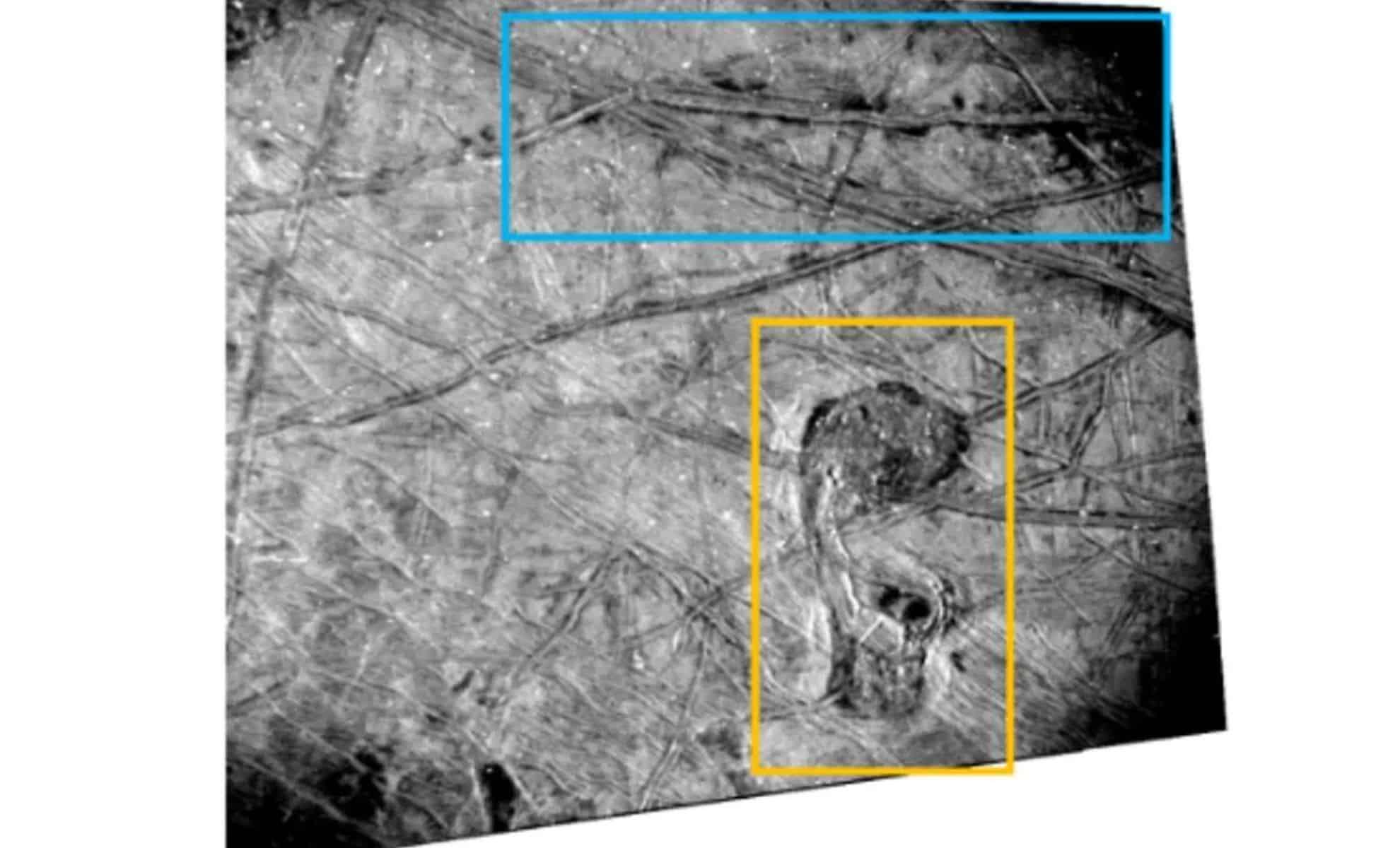
These salty reservoirs represent fascinating targets for further study, as they may provide direct pathways to Europa’s liquid ocean. Their presence implies the ice shell’s thickness varies, with some zones being thinner and more active, potentially simplifying future exploration efforts.
Preparing for the Europa Clipper Expedition
Juno’s discoveries offer valuable context for the Europa Clipper, set to launch later this decade. This mission will perform extensive surveys of Europa’s ice crust and underlying ocean with a focus on assessing its capacity to support life.
Direct plume analysis will enable the search for organic compounds and biosignatures. Equipped with cutting-edge tools, Europa Clipper will map ice topography, investigate geological features, and measure the shell's depth.
The collected data will generate an unprecedented understanding of Europa’s physical and chemical characteristics, guiding possible future landers that could penetrate the ice for direct ocean sampling. The mission will also explore thermal and chemical processes that drive surface renewal and geological activity.
The Wider Significance of Ocean Worlds
Europa is part of a fascinating group of “ocean worlds” in the solar system — moons harboring subsurface oceans beneath icy shells. Studying Europa enriches knowledge of other bodies like Saturn’s Enceladus and Jupiter’s Ganymede.
Comparing these moons’ geological and hydrological traits reveals parallels and contrasts that can help chart a course for further exploration and enhance our understanding of extraterrestrial habitability.
The ocean world paradigm broadens astrobiological perspectives, showing that life-supporting environments could exist far from the conventional habitable zone. Exploring these realms yields crucial insights into the variety and potential of life beyond Earth.
- Categories:
- Astronomy ,
- News ,
- Space ,
- Nasa







0 comments
Sign in to Comment