
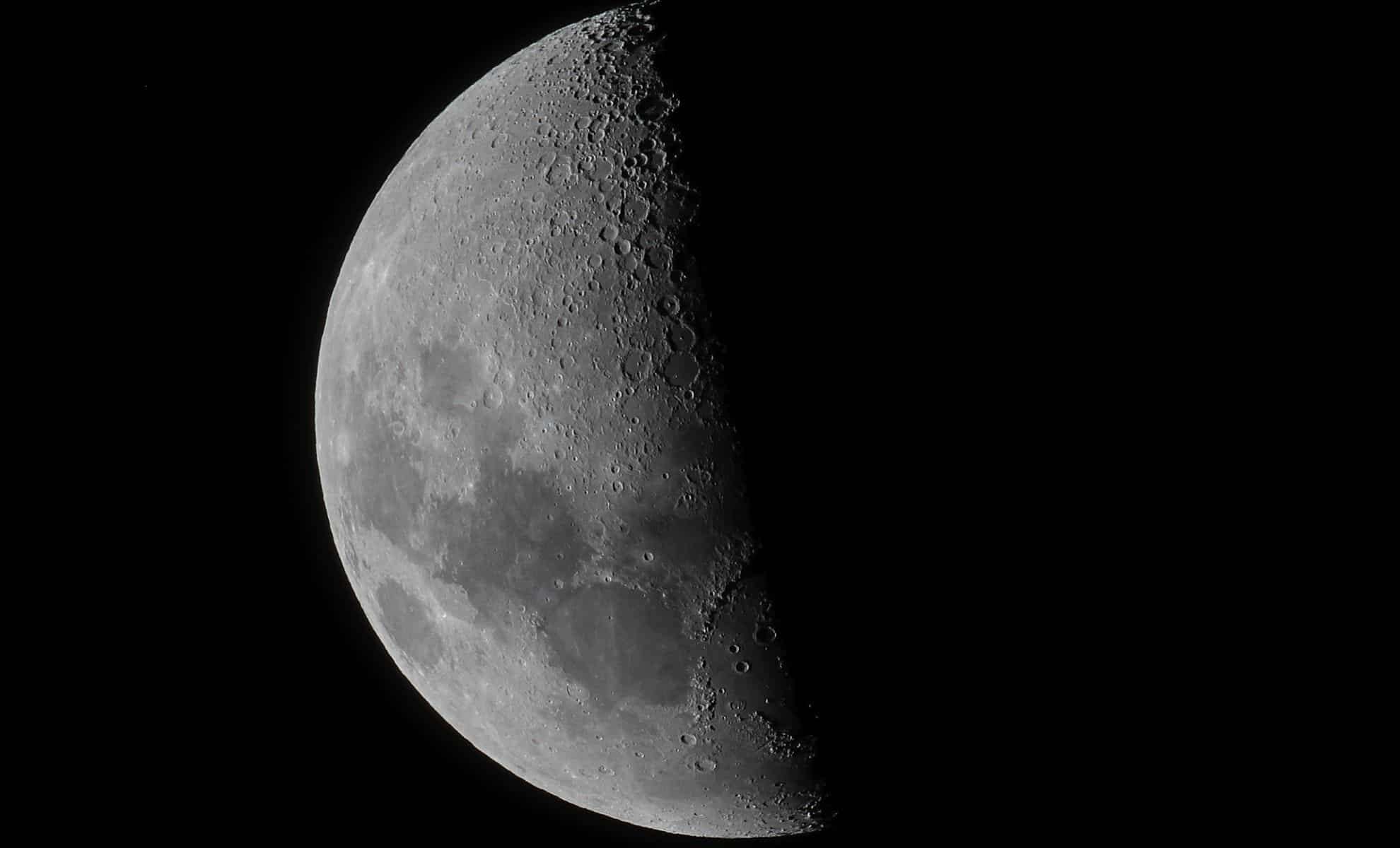
The newly introduced RadioLuna initiative represents a pioneering strategy for investigating the universe’s infancy. This daring venture, a collaboration between Blue Skies Space and OHB Italia supported by the Italian Space Agency, plans to position a swarm of small satellites in lunar orbit to explore the cosmic Dark Ages.
Why the Moon’s Hidden Far Side Is Perfect for Probing the Ancient Cosmos
Originally published on Space.com, this mission leverages the unique environmental advantage of the Moon’s far side: an unparalleled radio quiet zone. Shielded from Earth’s pervasive electronic noise, this region offers a rare opportunity to detect faint cosmic radio signals undisturbed by anthropogenic interference.
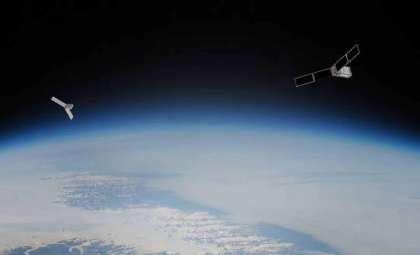
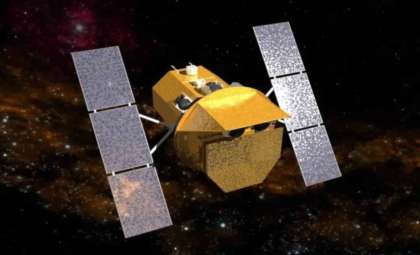
The satellites, part of the RadioLuna constellation, will operate collectively as a sophisticated radio telescope array. They aim to capture signals in the FM band, emitted by neutral hydrogen atoms dating back to the universe’s earliest periods. These signals are notoriously weak and nearly impossible to pick up from terrestrial observatories due to interference.

Affordable Exploration Through CubeSat Technology
Rather than deploying massive, complex instruments, RadioLuna utilizes a fleet of CubeSats, compact satellites built from readily available components. This efficient design choice cuts costs and accelerates development while maintaining cutting-edge scientific functionality.
This approach reflects a broader trend in space exploration focused on compact yet capable technology. With standardized hardware, RadioLuna’s team can launch a scalable, easily upgradeable network that promises easier maintenance in future expansions.
Roberto Aceti, Managing Director at OHB Italia, highlights the balance between ambitious scientific objectives and practical engineering constraints, emphasizing the rewarding potential despite technical challenges ahead.
Listening to the Universe’s Dark Ages
The Dark Ages, spanning approximately 380,000 to 400 million years post-Big Bang, remain one of cosmology’s most enigmatic chapters. During this epoch, the universe was dominated by neutral hydrogen, which emitted and absorbed faint radio waves that encode information about early cosmic conditions.
If RadioLuna successfully records these signals, scientists could construct a three-dimensional map of the primordial matter distribution. Such data would deepen our insight into the initial formation of cosmic structures, inflation mechanics, and the origins of the cosmic microwave background radiation.
This breakthrough could sharpen current cosmological theories and rigorously test hypotheses concerning dark matter and dark energy.
Collaborating with Global Lunar Projects
RadioLuna is part of an expanding network of lunar missions benefiting from infrastructure efforts like the European Space Agency’s Moonlight program and NASA’s Artemis initiative, both targeting long-term sustainable lunar presence.
Marcell Tessenyi, CEO and co-founder of Blue Skies Space, notes that these complementary lunar projects are fostering a growing lunar economic ecosystem. He expressed gratitude to the Italian Space Agency for funding their joint project with OHB Italia to pursue innovative scientific exploration.
Launch Timeline Still Undetermined
No official launch schedule or budget details have been disclosed yet, but the project is gaining momentum. As the Moon evolves into a center for scientific and commercial activities, initiatives like RadioLuna are poised to pioneer a new chapter in astronomy from lunar orbit.
RadioLuna embodies a fusion of visionary scientific aims and state-of-the-art technology, paving the way for future endeavors that may utilize the Moon as a strategic platform to study phenomena ranging from cosmic dawn to potential biosignatures on far-off worlds.
- Categories:
- Space






0 comments
Sign in to Comment