
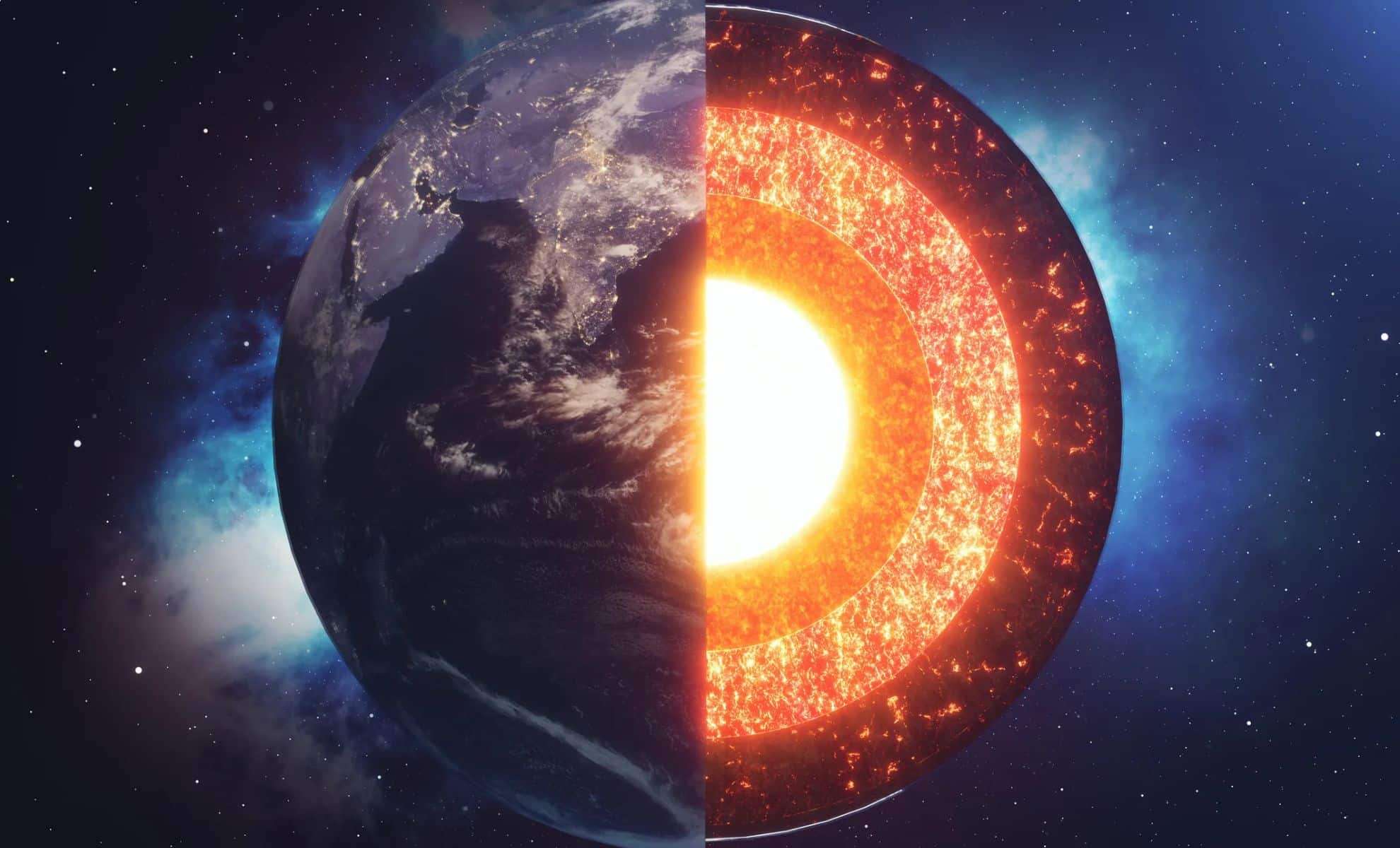
For many years, scientists have been intrigued by the discovery of primordial helium—specifically the isotope ³He—emanating from volcanic regions such as Hawaii and Iceland. Unlike the abundant ⁴He, which is formed through radioactive decay, ³He does not originate naturally on Earth. This anomaly has led researchers to theorize that its source lies deep within our planet.
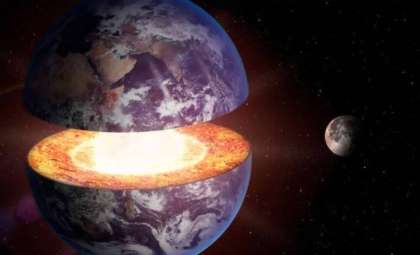
Recent research published in Physical Review Letters presents a startling new perspective: Earth’s core may harbor enormous amounts of helium, retained since the dawn of the solar system. The investigation, led by Professor Kei Hirose at the University of Tokyo, revealed that helium can chemically bond with iron under extreme pressure conditions. This challenges the long-standing belief that helium is too inert to form stable compounds.
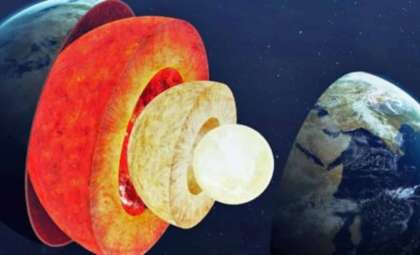
This breakthrough transforms our comprehension of Earth’s interior structure and implies that primordial gases from the early solar nebula could still be confined beneath the planet’s crust. These findings offer fresh insights into planetary formation, the genesis of Earth’s atmosphere, and the core’s development over time.

Revolutionary High-Pressure Experiments Unlock Helium’s Role
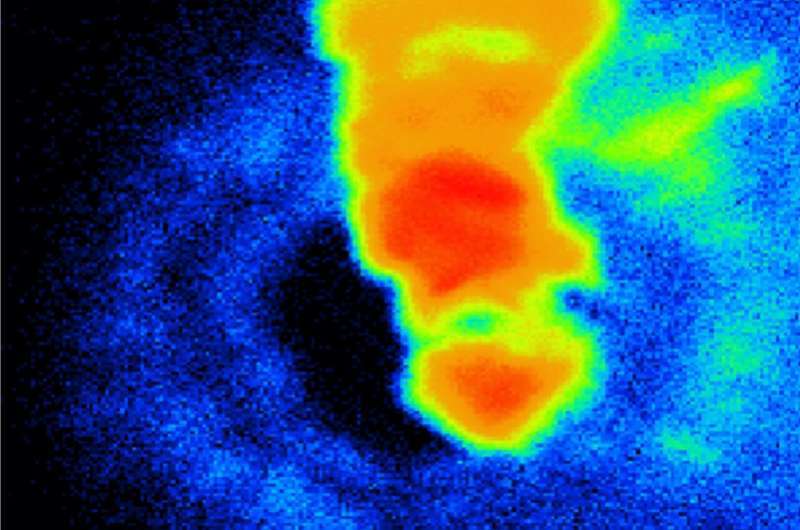
To unravel helium’s behavior deep inside Earth, the scientists employed an advanced experimental setup designed to replicate the core’s extreme environment. Using a laser-heated diamond anvil cell, they exposed helium combined with iron to immense pressures and temperatures akin to those found in the lower mantle and outer core.
“Studying geological and chemical processes occurring deep within Earth requires duplicating those intense conditions in the lab. That’s why we utilize laser-heated diamond anvil cells to apply such extreme pressure and temperature to samples and observe their transformations,” explained Professor Hirose.
The team subjected their samples to pressures between 5 and 55 gigapascals—equivalent to 50,000 to 550,000 times atmospheric pressure—and temperatures ranging from 1,000 to nearly 3,000 Kelvin (about 1,340–4,900°F).
“We compressed iron and helium together under pressures of 5–55 gigapascals and heated them to temperatures from 1,000 to nearly 3,000 Kelvin. Such pressures are tremendous—up to 550,000 times that of Earth’s atmosphere—and the high heat used could melt iridium, a metal notable for its thermal resilience,” Hirose said.
Earlier research had observed only minuscule quantities of helium within iron, approximately seven parts per million. However, this new study discovered helium concentrations as high as 3.3%, surpassing previous levels by thousands of times. Significantly, helium remained stable within iron’s crystal lattice structure even after pressure was lessened, indicating that these gases might remain sealed in Earth’s core for billions of years.
Shedding Light on Earth’s Ancient Helium Emissions
The continuous detection of ³He in volcanic emissions has pointed toward the existence of primordial solar nebula remnants inside Earth. Still, the precise location and mechanism releasing helium remained unclear.
The new findings suggest that Earth’s core itself could serve as an extensive helium reservoir, gradually releasing this gas through the mantle and bringing it to the surface via volcanic activity. This discovery establishes a direct connection between our planet’s deepest layers and its earliest formation era.
Furthermore, the discovery prompts intriguing questions about other noble gases. Could elements like neon or hydrogen also exist trapped deep within the core? If so, this might illuminate the origins of Earth’s atmosphere and even the source of terrestrial water.
- Categories:
- News




0 comments
Sign in to Comment