

After the Boeing Starliner’s initial mission was postponed recently, a NASA contractor has expressed serious concerns that faults might still be present in the Atlas V rocket system.
Introducing the Boeing Starliner
The Starliner is Boeing’s initiative to succeed the space shuttle program, aiming to provide crewed journeys to and from orbit. It competes with rival spacecraft from SpaceX and Blue Origin. A notable feature of the Starliner is its capability to perform ground landings upon return, unlike other capsules that splash down in water, a fact proven during its test flights.
Projected Timeline for the Starliner Launch
Following multiple technical hurdles and Boeing’s ongoing commercial aviation challenges, the company must postpone crewed missions aboard the Starliner for the foreseeable future.

United Launch Alliance, which provides the Atlas V rocket used to propel the capsule into space, announced that the next launch attempt won’t occur before Friday.
The Starliner project has been hampered by delays and engineering setbacks over several years.
In 2019, the Starliner’s maiden flight could not dock with the International Space Station due to an internal timing error that prematurely fired thrusters. Despite thruster malfunctions on later flights, the spacecraft successfully docked on its 2022 test mission.
Safety Concerns Prompt NASA Contractor to Call for Starliner Launch Delay
NASA halted the crewed debut of Boeing’s Starliner on Monday, mere hours before liftoff at Kennedy Space Center. Subsequently, ValveTech, a NASA subcontractor, publicly urged postponing the launch until thorough safety validations can confirm the vehicle’s reliability, citing potential catastrophic risks.
The delay stemmed from the need to fix a pressure regulation valve in the liquid oxygen tank of the Atlas V rocket. NASA announced that another launch attempt won’t be made until at least May 17.
NASA explained that the mission was scrubbed due to irregular oscillations detected in the valve during prelaunch activities. The valve was closed to mitigate vibrations, yet the problematic oscillations recurred during fuel draining. ValveTech has warned these disturbances might indicate a broader underlying failure.
Erin Faville, ValveTech’s president, commented, “As close collaborators with NASA and valve system specialists, we strongly advise against a second launch attempt due to the severe risk of a launchpad accident. Reports indicate a buzzing sound, likely from a leaking valve, was heard moments before liftoff. This suggests the valve may have exceeded its operational lifespan.”
“NASA must intensify its safety inspections and reevaluate protocols to prevent any disaster that could endanger astronauts and personnel on the ground.”
NASA awarded Boeing a $4.2 billion contract in September 2014 for Commercial Crew Transportation, with SpaceX receiving $2.6 billion. The Starliner’s first crewed flight was initially slated for 2017 but has been delayed repeatedly, now expected to fly this month. These setbacks have led to Boeing incurring $1.5 billion in additional expenses.
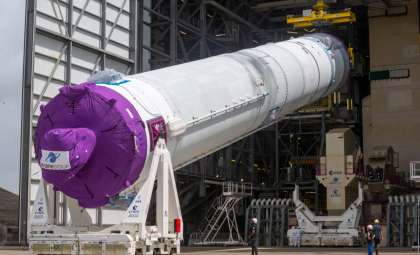
While the Starliner has grappled with development troubles, the Atlas V rocket has been a reliable vehicle since 2002. Developed by Lockheed Martin and currently produced by United Launch Alliance—a joint venture between Boeing and Lockheed Martin—the Atlas V is approaching retirement, with only 17 missions left before being succeeded by the new Vulcan rocket.
ValveTech’s warnings emphasize that any mishap could jeopardize astronauts Barry Wilmore and Sunita Williams, along with ground crew and bystanders. Boeing’s recent quality control lapses are significant, surpassing prior aviation safety controversies and whistleblower reports within the company.








0 comments
Sign in to Comment