

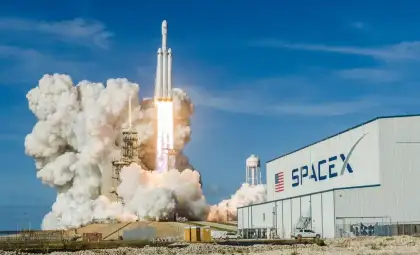
NASA has officially incorporated SpaceX’s Starship, the most massive and potent rocket ever developed, into its authorized fleet of launch vehicles—a development poised to influence the agency’s approach to deep space exploration in coming decades. As detailed by Space.com, Starship is now part of NASA’s Launch Services II (NLS II) contract framework, enabling it to transport NASA payloads to Earth orbit, the lunar surface, and potentially other destinations.
Although Starship has yet to complete a full orbital flight, its addition reflects increasing trust in SpaceX’s innovative spacecraft and its swiftly maturing launch capabilities.
The Largest Rocket Enters NASA’s Trusted Fleet
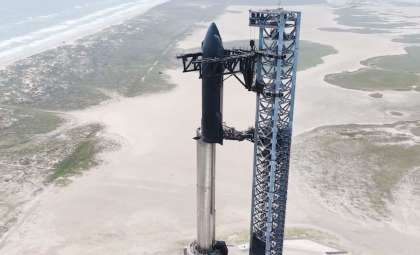
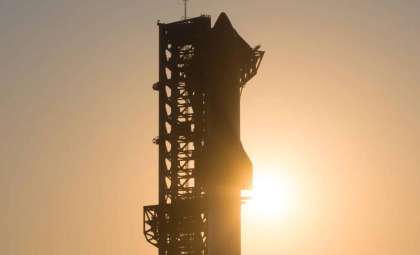
At an impressive height of 403 feet, Starship is a two-stage, fully reusable launcher that surpasses all historic rockets in size. While it remains in the experimental launch phase, SpaceX has conducted eight test flights from its Starbase facility in South Texas, including several attempts aiming for orbit.

By joining the NLS II program, SpaceX now stands among a select group of providers authorized to support NASA’s missions to space. This contract authorizes NASA to select Starship for a diverse array of low- to medium-risk payloads—ranging from Earth satellites to interplanetary probes—under full NASA technical supervision.
Bold Testing, Innovative Recovery, and Reusability Aims
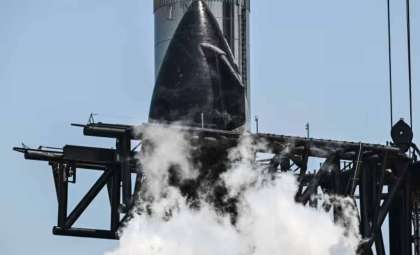
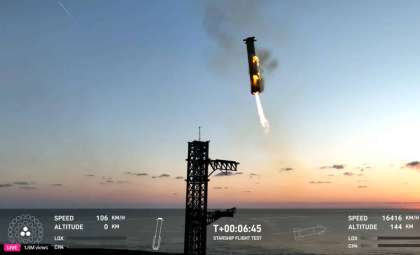
Starship’s development has encountered challenges. Its most recent flights—Flight 7 and Flight 8—experienced explosive anomalies during the upper stage’s ascent. Nonetheless, the mission has achieved key milestones, such as the successful landing of the Super Heavy booster, occasionally caught mid-air by enormous robotic arms dubbed “chopsticks” on the launch pad.
SpaceX is striving to produce a rocket that is entirely reusable and capable of repeatedly lifting enormous payloads, aiming to lower the cost and increase the frequency of access to space.
NASA’s Strategic Applications for Starship
NASA has already designated a lunar-optimized Starship to serve as the crew landing vehicle for the Artemis III mission, targeting a 2027 launch. Starship’s official inclusion in the agency’s launch roster now opens possibilities for its use in uncrewed scientific ventures, cargo transport, or facility construction in cis-lunar space.
The NLS II contract extends through 2032, suggesting Starship could be integral to NASA’s plans for space exploration throughout the next decade, including ventures to Mars and beyond.
Starship’s Critical Role in Mars Ambitions
For SpaceX CEO Elon Musk, Starship represents more than a launch vehicle—it embodies a crucial component of humanity’s expansion beyond Earth. Designed to ferry both crew and cargo to Mars, Starship’s approval for NASA missions bolsters Musk’s vision with validation from one of the world’s leading space agencies.
Though technical challenges persist, Starship’s acceptance into NASA’s launch portfolio indicates a greater openness to innovative, high-risk spaceflight technologies with the potential to transform future space operations.
- Categories:
- News







0 comments
Sign in to Comment