
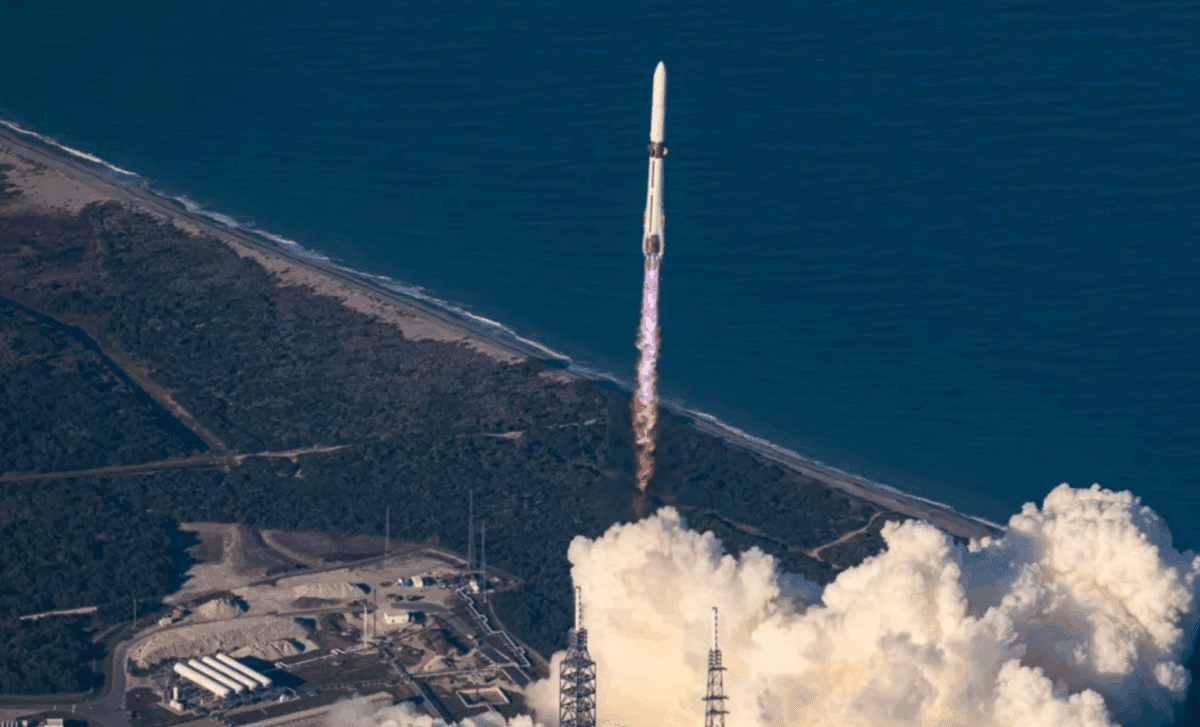
NASA’s ESCAPADE mission, launched in November 2025, has captured its initial series of breathtaking images, including self-portraits of the twin spacecraft as they embark on their interplanetary voyage. Merely days after liftoff, these early photographs demonstrated the spacecraft's readiness and marked an exciting milestone in their expedition toward Mars. These first images not only highlight technological achievements but also serve as a preview of the advanced instrumentation that will drive upcoming Martian research. NASA now aims to uncover vital insights into Mars’ atmospheric dynamics and its interactions with solar wind.
An Innovative Start to Mars Exploration
The ESCAPADE mission lifted off from Cape Canaveral Space Force Station, Florida, atop a Blue Origin New Glenn rocket on November 13, 2025. Set to reach Mars by 2027, its main goal is to explore how Mars’ atmosphere responds to solar wind—a key factor driving atmospheric loss over time. Prior to its Martian arrival, the spacecraft will orbit near Lagrange Point 2, approximately one million miles from Earth, to conduct essential system tests.
This initial phase plays a critical role in validating ESCAPADE’s capabilities and mission strategy. Its pioneering design and operational plan promise to deepen our knowledge of Mars’ atmospheric behavior and the cosmic forces influencing it.

First Spaceborne Self-Portraits: ESCAPADE’s Early Images
One week after launch, the ESCAPADE spacecraft reached a significant moment by capturing their first 'selfies.' Equipped with Visible and Infrared Observation System (VISIONS) cameras from Northern Arizona University, one spacecraft photographed its solar array while receding from Earth. This milestone confirms that the imaging instruments are in excellent condition and ready for upcoming scientific tasks. NASA states these images strongly support the mission’s future investigative goals.
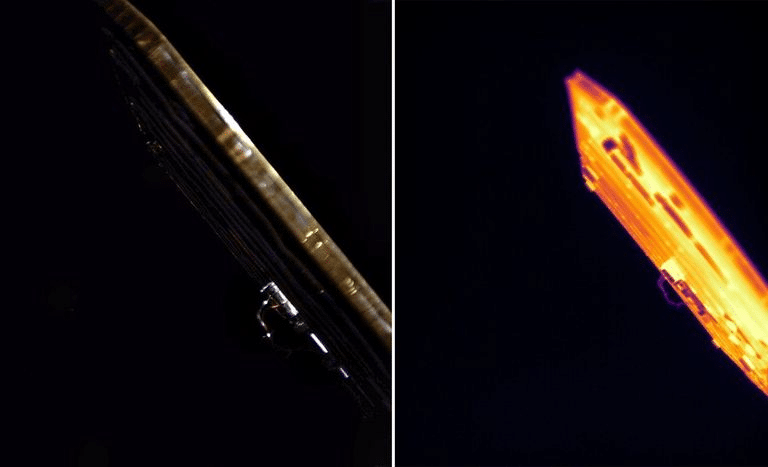
The visible-light imagery holds promise for future Martian atmospheric research. ESCAPADE will leverage these cameras to study Martian auroras, which are critical for understanding atmospheric behavior. The infrared camera will shed light on how Mars’ surface temperature fluctuates between day and night, offering valuable clues about its climatic cycles.
Investigating Solar Wind’s Influence on Mars
Upon arrival, ESCAPADE will concentrate on measuring solar wind—a stream of charged particles from the Sun—and its effects on the Martian atmosphere. This interaction likely contributes to the planet’s atmospheric erosion over eons.
Deciphering solar wind’s role is crucial for planning safe human missions, impacting everything from habitat design to planetary protection. Insights gained will enhance our understanding of Mars’ geologic history and its suitability for future exploration.
Using Gravity to Propel Toward Mars
ESCAPADE’s trajectory involves a strategic use of Earth’s gravity. In 2026, the spacecraft will perform a gravity assist maneuver, slingshotting themselves toward Mars. This technique conserves fuel while boosting speed, a common practice for extended spaceflights.
By looping close to Earth, ESCAPADE gains momentum through gravity’s pull, efficiently setting course for the Red Planet and optimizing its interplanetary journey.
The Importance of Lagrange Point 2
Before Mars, the mission’s spacecraft will operate near Lagrange Point 2, located about one million miles from Earth. Known for its gravitational equilibrium, this position offers a stable observational platform relative to Earth and Sun.
Here, the spacecraft can thoroughly test instruments and calibrate systems in a stable environment, ensuring peak performance for the demanding scientific phase ahead.
Anticipating Mars Arrival in 2027
The journey to Mars is lengthy, with ESCAPADE expected to arrive by September 2027. During these two years, the spacecraft will maintain operations around Lagrange Point 2, continuing system checks and refining instrument accuracy.
This interval builds the necessary momentum for a smooth approach to Mars, where detailed studies of its atmosphere and solar wind interactions will commence, setting the stage for new discoveries and paving future missions.
- Categories:
- Space



0 comments
Sign in to Comment