
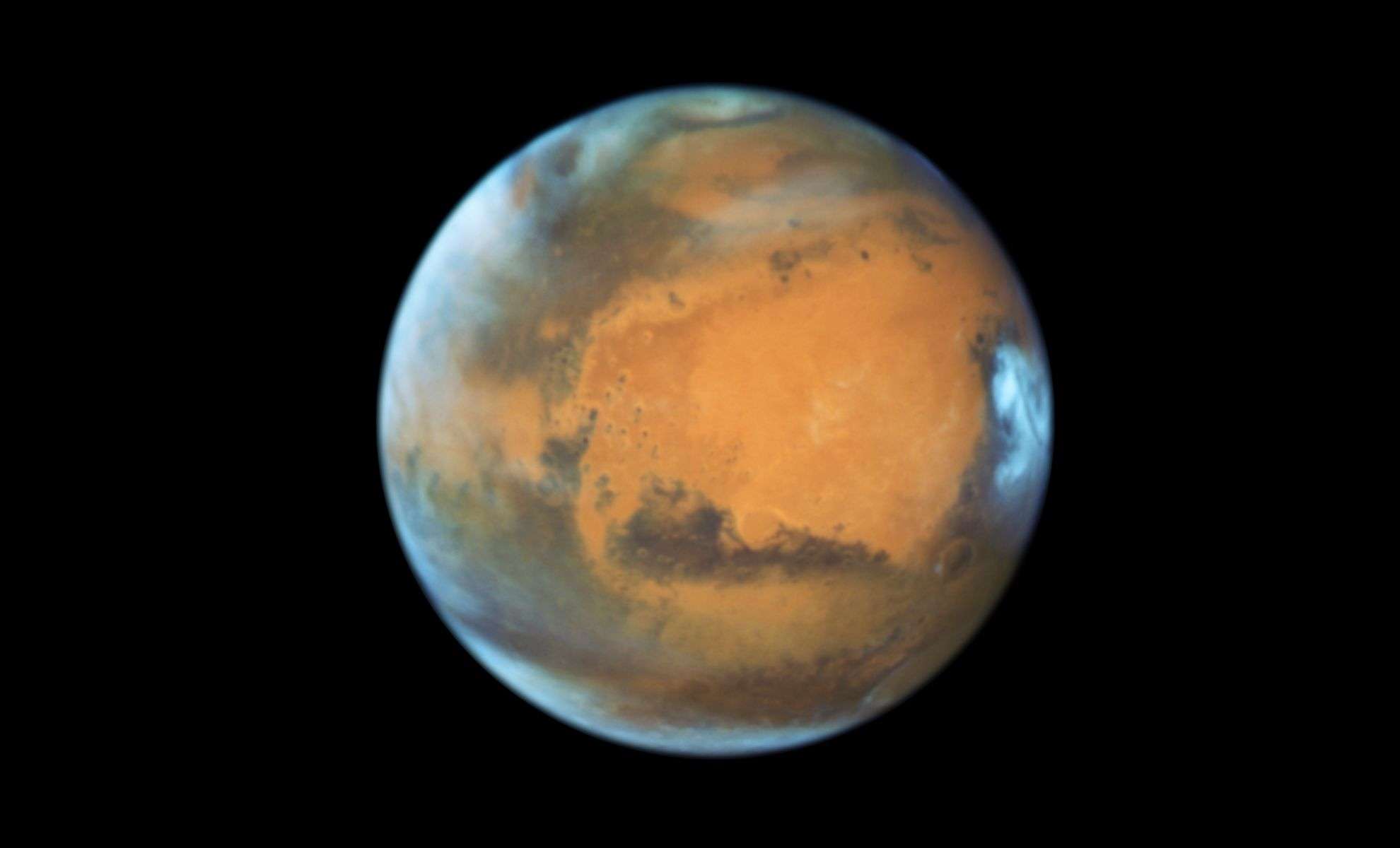
Is it truly within our reach to reshape Mars into a planet capable of sustaining life similar to Earth? Emerging research now indicates that this extraordinary vision may be achievable. A recent study explores strategies to elevate the Red Planet's temperature, enrich its atmosphere, and nurture life, carefully analyzing the scientific, technological, and economic challenges involved.
Reevaluating Mars’ Potential for Habitability
The notion of transforming Mars has captivated scientific communities and enthusiasts for many years. However, since 1991 there has been scarce comprehensive evaluation regarding its feasibility. Planetary scientist Nina Lanza from Los Alamos National Laboratory, co-author of the latest study, highlights, “Terraforming Mars hasn’t been seriously studied for feasibility since 1991.”
Over the past three decades, tremendous progress has been made in planetary sciences, geoengineering, and the life sciences.
Scientists propose warming Mars and increasing atmospheric pressure to create conditions favorable for stable liquid water and breathable oxygen. One approach involves releasing genetically engineered photosynthetic microbes that could slowly generate oxygen, fostering a viable atmosphere and initiating ecosystems capable of supporting diverse forms of life.

Unveiling Mars’ Terraforming Challenges
The team advises a cautious approach, underscoring the importance of understanding the immense resources, potential hazards, and significant financial investment terraforming would entail. Current research priorities include analyzing Mars’s water reserves, carbon dioxide availability, and soil characteristics to determine the planet's capacity to sustain such an environmental shift.
New geoengineering methods may raise Mars’s average temperature by tens of degrees within mere decades, yet many fundamental physical, chemical, and biological factors remain unclear.
Authors stress ongoing inquiry to better define these limitations. Clarifying what is possible from physical and biological perspectives on Mars will be crucial in planning any terraforming initiatives. This work also informs whether transforming Mars outweighs conserving it as a natural, untouched environment.
Beyond Mars: Broader Benefits of Terraforming Research
The technologies and insights developed through terraforming research hold promising applications for Earth. Innovations such as drought-resistant plants, soil regeneration methods, and refined ecosystem modeling could become instrumental in addressing pressing environmental issues worldwide.
“Studying the terraforming of Mars provides a critical platform to test planetary theories and uncover gaps in our understanding,” the research team concludes. This investigation into altering the Red Planet promises to drive substantial scientific advancement, regardless of whether full terraforming is realized.
Heads up: terraforming Mars isn’t just sci-fi, it’s a real possibility that’s possible with today’s technology.
Mars could be green in MY lifetime. 🚀 🌼
What’s stopping us? We need a lot more real research into how to do it right. Don’t nuke Mars!
— Erika Alden DeBenedictis (@erika_alden_d) May 13, 2025
Charting the Next Steps to Reshape Distant Worlds
Scientists acknowledge that multiple unknowns still exist. “Learning how to terraform a planet like Mars,” the research notes, may be a pivotal move toward exploring and inhabiting locations beyond our solar system. This revitalized focus on Mars terraforming could signify a transformative phase in both planetary science and deep space exploration.
- Categories:
- Space













0 comments
Sign in to Comment