
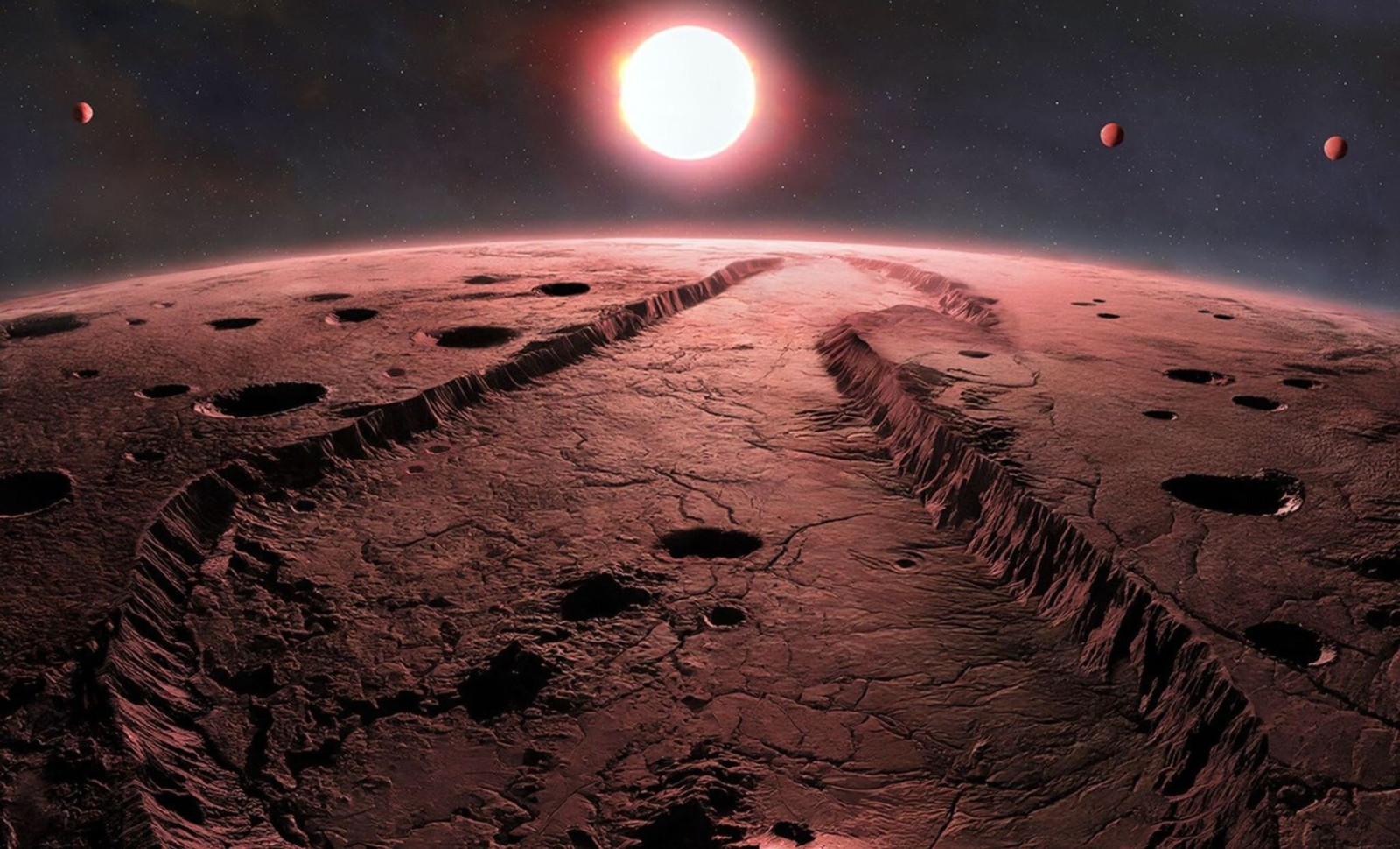
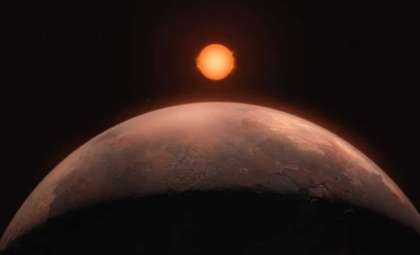
Astronomers have presented the most comprehensive study to date of the four planets orbiting Barnard’s Star, one of our nearest stellar neighbors. Published in Monthly Notices of the Royal Astronomical Society, the research reveals that these small terrestrial planets possess distinct compositions, have likely lost their atmospheres long ago, and are improbable candidates for habitability.
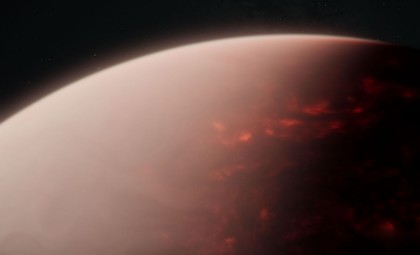
Initially detected in 2025, the four planets circling Barnard’s Star are smaller than both Earth and Venus but exceed the size of Mars, placing them in a unique class of rocky worlds uncommon in our solar system. Their close distance to their host star and elemental composition provide a fascinating opportunity to study rocky planet formation and evolution outside our own system.
Experts at the University of Cambridge examined how the star’s chemical properties relate to the makeup of its planets. Their findings shed light on the internal materials that likely constitute these distant worlds.

The study identified that the distinct elemental profile of Barnard’s Star offers important insights into its planetary companions. It was discovered that this red dwarf harbors unusually high magnesium levels, suggesting that its planets mirror this elemental surplus.
Planetary Minerals Diverge from Earth’s
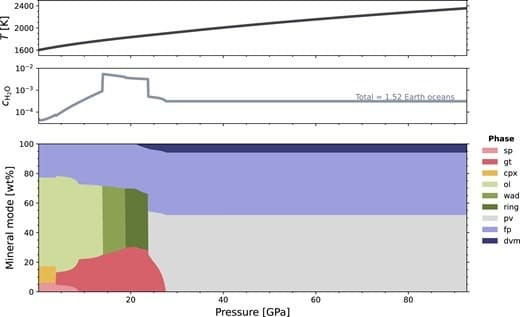
The elevated magnesium abundance appears to have shaped the mineralogy of these planets. The team concluded that the four bodies might contain substantial amounts of periclase, a mineral uncommon in Earth’s interior.
On Earth, magnesium is chiefly locked in olivine minerals, which play a crucial role in storing water beneath the surface. Conversely, the planets orbiting Barnard’s Star are expected to contain more periclase, a mineral less effective at retaining water.
“Barnard’s Star has an enormous amount of the element magnesium compared to other stars, so its planets are likely to be rich in magnesium too,” said Xander Byrne, lead author of the study from the Institute of Astronomy at the University of Cambridge.
This discovery highlights how planets with seemingly similar rocky exteriors can harbor fundamentally different internal chemistries. The work emphasizes the influence of stellar elemental makeup on the properties of their orbiting planets.
Atmospheric Loss Due to Proximity
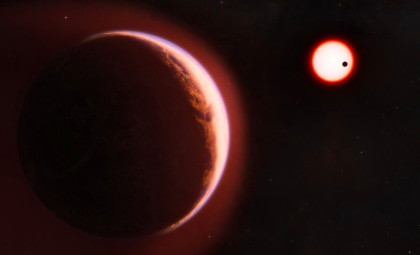
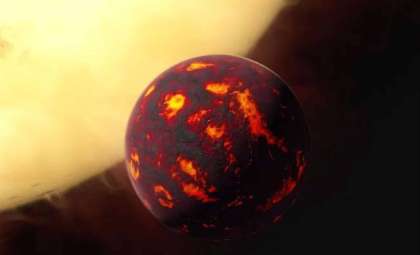
The planets’ closeness to Barnard’s Star has profoundly affected their development. Even the farthest planet orbits roughly ten times nearer to its star than Mercury does around the Sun.
The team’s findings suggest these planets likely lost their atmospheres early on, estimating that any atmospheres would not have survived beyond about 2 billion years, while the star system is approximately 10 billion years old.
The paper explains that high stellar radiation combined with low planetary gravity probably caused this atmospheric depletion.
“These planets were always going to be hostile because they’re really close to their star,” Byrne explained. “When you’re that close to your star and have such little gravity, your atmosphere just gets blown off.”
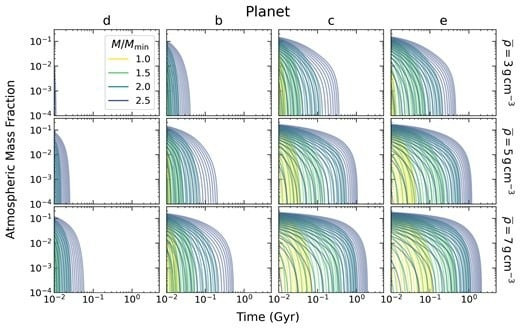
The lack of substantial atmospheres means these worlds likely have environments unlike Earth’s, reducing the chances that they support Earth-like life conditions.
Orbital Resonance Supports System Stability
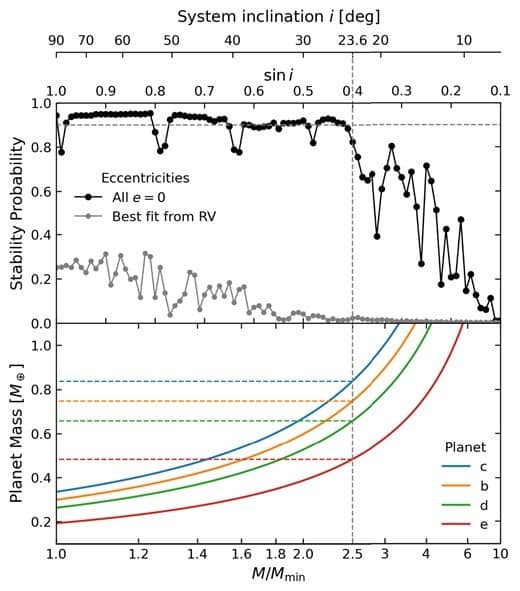
The tight configuration of these four planets might have presented challenges for stability. In dense systems, gravitational effects can destabilize orbits, causing collisions or ejections.
The Cambridge researchers determined the system’s stability may be maintained through orbital resonance, where planets’ orbits follow specific ratios. The inner three planets exhibit a 9:12:16 orbital period ratio.
This resonance pattern is similar to that which stabilizes Jupiter’s moons. It may prevent orbital disturbances between Barnard’s Star’s planets.
“Larger planets are much easier to detect than small ones, so we know about very few sub-Earth planets like the ones in this system,” stated Byrne. “But the sensitivity of these new missions will help reduce this bias, allowing us to discover more and more planets that are small and rocky, like Earth.”
The researchers anticipate that upcoming projects, such as the ESA’s PLATO mission, will enable the discovery of more small, rocky planets akin to those found orbiting Barnard’s Star.
- Categories:
- Space






0 comments
Sign in to Comment