

Among the countless enigmas of the cosmos, rogue planets stand out as particularly captivating. These wanderers float freely through space, unbound to any star.
Breakthrough observations from the Euclid space telescope have unveiled seven more of these solitary planets, providing new perspectives on their nature.
Euclid Telescope Uncovers Additional Rogue Planets in the Milky Way
Recent efforts using the Euclid telescope have revealed seven previously unknown rogue planets, enriching our knowledge of these elusive objects.

Starless and forever alone: more ‘rogue’ planets discovered.
The Euclid space telescope has discovered seven more rogue planets, shining a light on the dark and lonely worlds floating freely through the universe untethered to any starhttps://t.co/igWPh8LJHY pic.twitter.com/PInTPMRaob
— AFP News Agency (@AFP) May 29, 2024
Rogue planets, which wander without a host star, drift through the galaxy in constant darkness. This discovery supports estimates that our galaxy may contain trillions of such starless worlds.
These findings enhance our grasp of the complexity and diversity of planetary systems across the Milky Way. The large number of rogue planets prompts scientists to rethink traditional views on how planets form and evolve, indicating a wider range of planetary formation scenarios.
Exploring the Nature of Rogue Worlds
What sets rogue planets apart is their lack of orbit around any star. Unlike planets in familiar solar systems, these bodies roam the galaxy independently, making them particularly hard to detect since they don't emit their own light and are mainly observed during rare alignments with bright objects.
The latest revelations from the Euclid telescope imply that trillions of these loners might populate our galaxy. This raises intriguing questions about their potential to support life and the implications for our understanding of planetary formation and migration processes.
Location and Features of Newly Found Rogue Planets
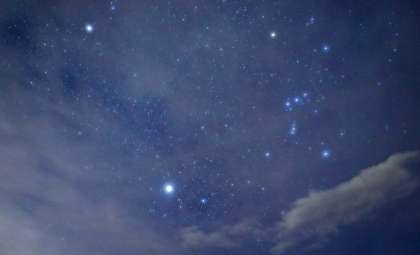
The seven newly reported rogue planets reside in the Orion Nebula, roughly 1,500 light-years away from Earth. These gas giants, each exceeding four times Jupiter's mass, rank among the largest of their kind discovered so far. Their presence in this star-producing region highlights the chaotic and varied nature of planetary birth.
The Orion Nebula serves as a cosmic nursery, and spotting rogue planets here reveals the turbulent nature of planet formation, where many objects may be expelled from their birth systems. This discovery offers a rare chance to investigate these planets’ attributes and trace their origin stories, shedding light on the violent events that can render a planet rogue.
Theories on How Rogue Planets Form
Experts suggest two main pathways for the creation of rogue planets. One theory contends that some planets originate in solar systems but are gravitationally ejected due to interactions with neighboring planets or passing stars. The other proposes that some of these planets are born directly in interstellar space during star formation processes.
These discoveries deepen our understanding of both planetary and stellar development, revealing the dynamics that can lead to planets being cast adrift. Finding massive gas giant rogues also hints that smaller, rocky bodies might be traveling the galaxy alone, which could have implications for astrobiology.
Could Rogue Planets Host Life?
Even in the absence of sunlight, rogue planets might sustain life by tapping into internal heat caused by radioactive decay or gravitational forces. Earth's deep-sea hydrothermal vents are examples of ecosystems thriving on geothermal energy, suggesting life could exist beneath the surfaces of these dark wanderers. While complex organisms are unlikely, microbial life could feasibly survive.

This possibility broadens the scope for detecting life beyond our solar system, challenging preconceived conditions necessary for habitability. Subsurface oceans sustained by internal heat could provide stable habitats for extremophiles, expanding where life might be found in the universe.
Rogue Planets in Binary Orbit
Some rogue planets engage in binary partnerships, orbiting one another without a parent star. Such configurations add complexity to their dynamics and hint at a wider diversity in starless planetary systems.
These binary pairs offer intriguing cases for studying gravitational interactions in isolated settings, helping scientists understand how such systems can form and remain stable absent a star.
- Categories:
- Astronomy ,
- News ,
- Space











0 comments
Sign in to Comment