

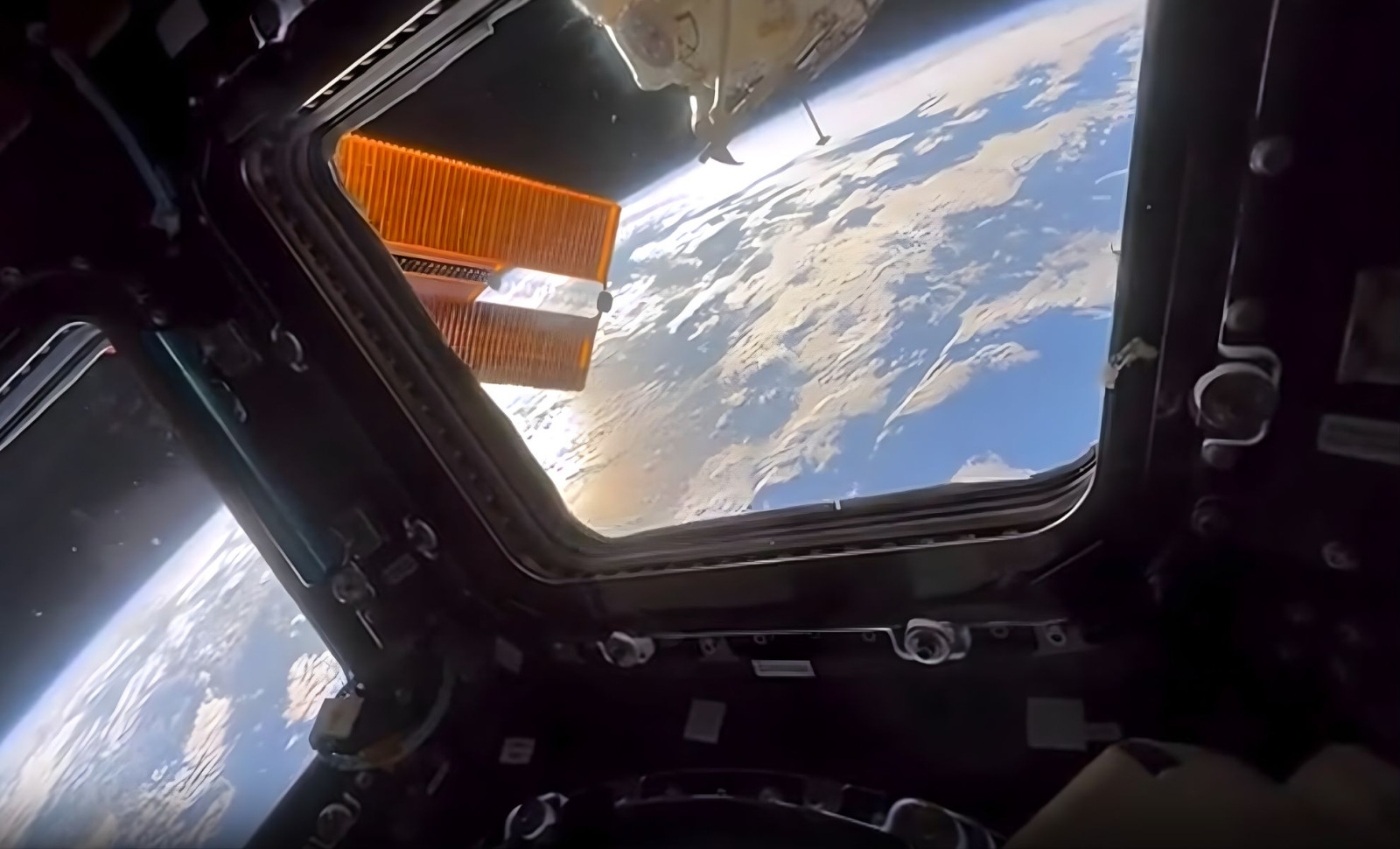
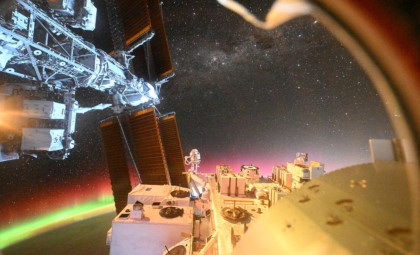
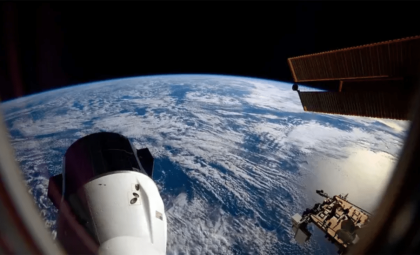
ESA astronaut Sławosz Uznański-Wiśniewski has unveiled captivating time-lapse videos showcasing the Earth and Moon, filmed during his mission aboard the International Space Station as part of the Ignis mission. Shot from the ISS’s iconic Cupola module, these clips provide a unique accelerated view of Earth’s ever-changing atmosphere and the serene glide of the Moon through orbit.
The scenes were recorded throughout Uznański-Wiśniewski’s 20-day journey on Axiom Mission 4 (Ax-4), which launched on June 25, 2025, in a SpaceX Dragon capsule. Although these visuals quickly gained popular attention, they represent only one element of the broader mission objectives.
Alongside capturing remarkable imagery, Uznański-Wiśniewski conducted a variety of scientific experiments during his limited but intense stay in space. The Ignis mission was dedicated to fostering research collaborations between ESA and Polish science institutions.

Immersive Views from the Cupola Observatory
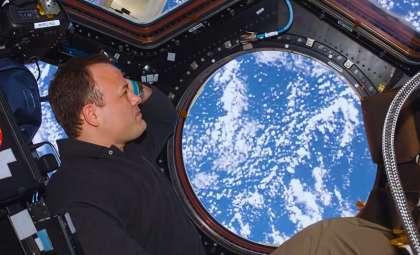
Sławosz Uznański-Wiśniewski captured the stunning time-lapses through the Cupola, a seven-windowed observation module on the ISS that provides sweeping vistas of Earth and space. ESA reports that the footage reveals diverse phenomena visible from orbit, such as shifting cloud patterns, atmospheric glows, and the Moon rising along Earth’s horizon.
Published through ESA’s official media channels, the videos demonstrate not only advanced space imaging technology but also the profound emotional impact of witnessing Earth from orbit. The segments compress multiple orbits into just a little more than nine minutes of breathtaking edited footage.
Driving Scientific Progress on a National Level
Ignis incorporated an essential research element. Per ESA’s details, Uznański-Wiśniewski executed 13 experiments from Polish research groups along with three investigations led by ESA. These experiments focused on human biology, material sciences, biotechnology, and technology validation.
“The Ax-4 mission marks the second commercial human spaceflight for an ESA project astronaut. Ignis was sponsored by the Polish government and supported by ESA, the Polish Ministry of Economic Development and Technology (MRiT) and the Polish Space Agency (POLSA). ”
ESA emphasized that these studies are intended to support long-term scientific objectives and to aid in validating technologies for future space missions.
- Categories:
- Space






0 comments
Sign in to Comment