

On November 20, 2025, a subtle and uncommon solar storm impacted Earth, initially observed by specialists at NOAA (National Oceanic and Atmospheric Administration). This quiet solar disturbance came unannounced, resulting in auroras visible unusually far south, illuminating skies over regions such as Maine and Denmark. As reported by Space.com, this event sheds light on how stealthy solar eruptions, which often go unnoticed, can still alter Earth’s magnetic field while producing stunning natural light shows.
Understanding Stealth Solar Storms
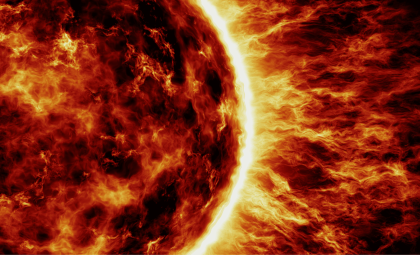
Stealth solar storms, known as coronal mass ejections (CMEs), remain a puzzling aspect of space weather. Unlike typical CMEs that appear with bright solar flares and vigorous activity on solar images, stealth CMEs are much less conspicuous. They are harder to identify because they lack common indicators like intense solar flares or abrupt changes in ultraviolet emissions.
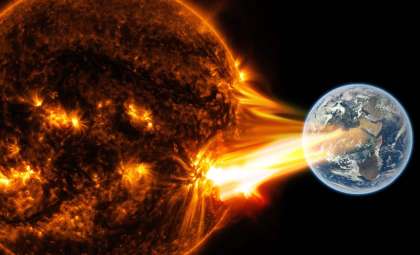
These stealthy eruptions gradually emit solar wind that accumulates and eventually disrupts Earth's magnetic environment. Regarding the November 20 incident, NOAA’s Space Weather Forecasters identified the solar wind conditions as dominated by a “negative-polarity coronal hole high-speed stream” coupled with an “embedded transient,” indicating a stealth CME.

Space weather scientist Tamitha Skov tweeted, “Stealthy solar storms are back!” emphasizing that these events often remain unnoticed until they reach Earth.
Surprising Auroral Sightings
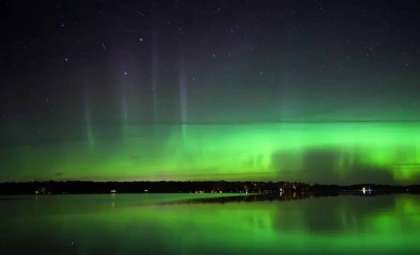
For many observers, the most striking outcome of this stealthy solar event was the unexpected glow of auroras in regions that rarely witness such phenomena. Auroras typically occur near the polar zones, but on November 20, the disturbance extended them as far south as Maine and Denmark. In Denmark, witnesses described vivid red and purple auroras sweeping the night sky, with the Big Dipper drifting close to the horizon.
These auroral displays likely resulted from the combination of the stealth CME and a swift solar wind emerging from a nearby coronal hole. Reports indicated that the geomagnetic activity increased just enough to render the auroras visible at lower latitudes, thrilling many who seldom experience such visual spectacles.
Aurora tonight 20/11 23:30 CET near Hobro in Denmark. pic.twitter.com/eQhBlP1Gh8
— Mikhaël Vervoort (@HaelVoort) November 20, 2025
Why Predicting Stealth CMEs is Difficult
Forecasting these types of solar storms is challenging because they lack the distinct characteristics that make other CMEs easier to detect. Standard CMEs are often visible through bright solar loops or sudden flares on the solar surface, whereas stealth CMEs originate inconspicuously from regions with weaker magnetic activity.
A 2021 research article explains that stealth CMEs can still exert strong magnetic influences despite their faint origins. Detecting these hidden eruptions requires advanced techniques, such as employing multi-wavelength and multi-angle solar observations. Consequently, they often go unnoticed until they begin impacting Earth's magnetosphere.
- Categories:
- News







0 comments
Sign in to Comment