
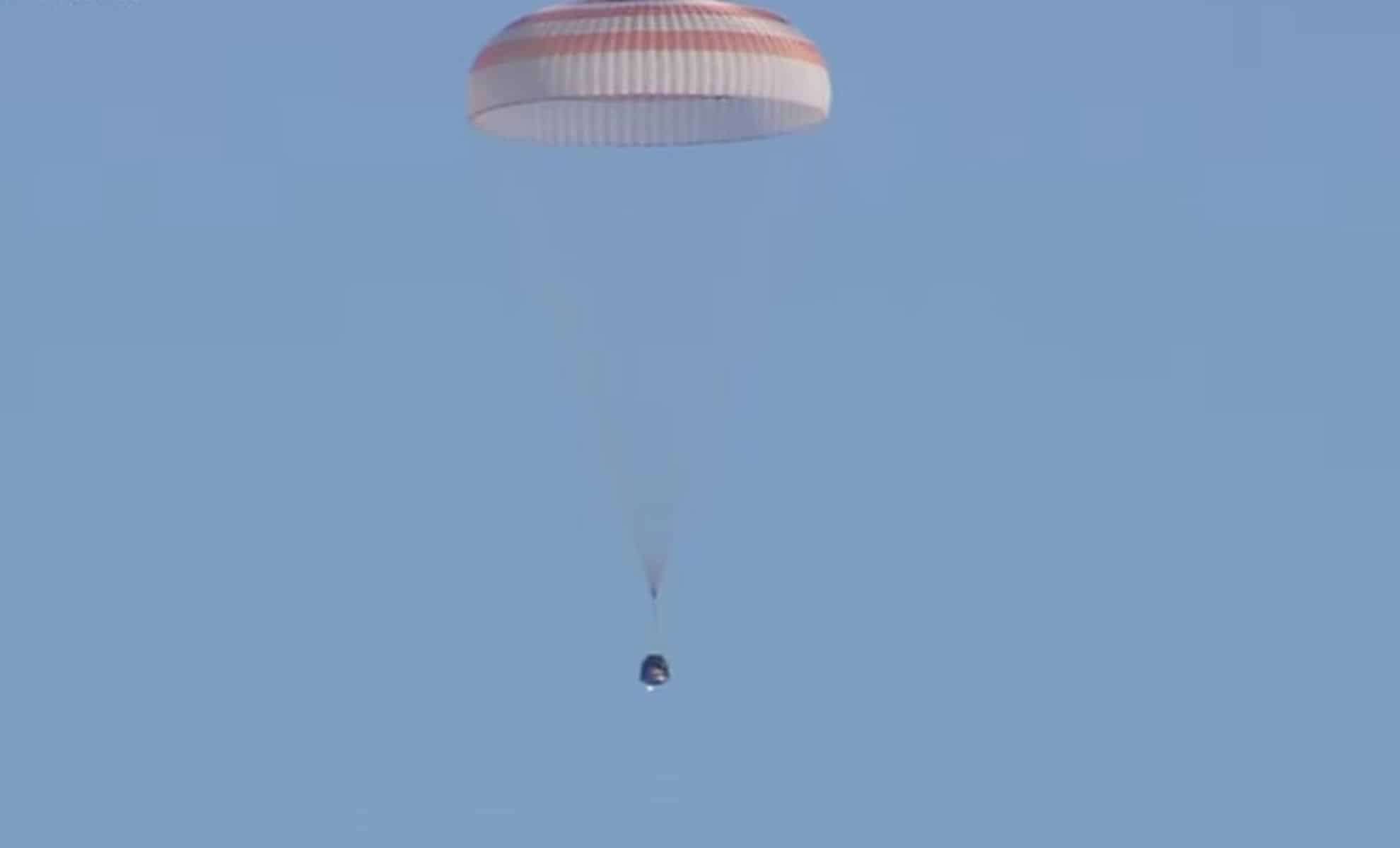
The Soyuz MS-25 spacecraft, carrying two Russian cosmonauts along with an American astronaut, completed a secure landing in Kazakhstan, concluding their mission aboard the International Space Station (ISS).
This mission highlights the ongoing international scientific collaboration on the ISS that persists despite complex geopolitical challenges on Earth.
Precise Touchdown on the Kazakh Plains
The Soyuz spacecraft undocked from the ISS and descended over a period of roughly 3.5 hours, landing safely in Kazakhstan's vast steppe region. During descent, the capsule deployed its iconic red-and-white parachute and slowed to around 7.2 meters per second (16 mph), with small retrorockets activating moments before touchdown to soften the impact. Reports from Roscosmos, the Russian space agency, confirmed the landing was executed flawlessly.

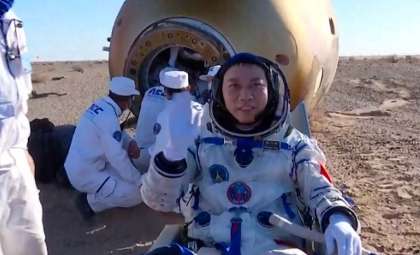
Immediately following touchdown, recovery teams assisted the crew out of the capsule, helping them settle into seats near the landing site to aid their transition back to Earth's gravity. They were then transferred to a nearby medical station for thorough health evaluations. Roscosmos shared footage demonstrating the smooth cooperation between recovery teams and the returning astronauts, highlighting the mission’s successful conclusion after crucial ISS research.
Mission Breakthroughs and Crew Achievements
For Russian cosmonauts Oleg Kononenko and Nikolai Chub, this trip set a new benchmark for the longest uninterrupted stay aboard the ISS. Having arrived in September 2023, their mission included extensive experiments to better understand the impacts of long-duration spaceflight on the human body. Their record-setting duration underscores the physical and mental resilience essential for future prolonged missions.
American astronaut Tracy Dyson completed her third trip to space with this mission, spending half a year on the ISS. In addition to conducting vital scientific studies, Dyson was involved in maintaining the station’s systems. After landing, she was seen holding a Russian Matryoshka doll, symbolizing the camaraderie and cultural exchange among the crew members.
Continuing ISS Work Despite Challenges
The departure of Kononenko, Chub, and Dyson does not halt ongoing research aboard the ISS. Currently, eight crew members remain on the station, advancing several scientific programs in microgravity conditions. American astronauts Butch Wilmore and Suni Williams are among those who remain, as their return schedule has been delayed.
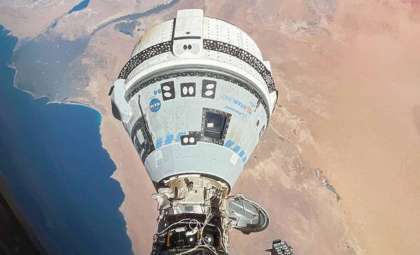
Their initial plan was to return on Boeing’s Starliner capsule, but due to multiple technical setbacks such as thruster malfunctions and helium leaks, NASA postponed their trip back to ensure safety. Instead, they will return on a SpaceX ship next year. Boeing’s Starliner program has encountered extensive difficulties, with costs surpassing $1 billion for repairs and improvements. Steve Stich, NASA’s commercial crew program manager, recently remarked on the Starliner’s complicated journey: “We’re excited to have Starliner come home.”
Meanwhile, the ISS crew continues experiments ranging from biological research to Earth observation, enriching scientific knowledge that will support future missions to the Moon and Mars. The data returned from astronauts like Kononenko, Chub, and Dyson is pivotal for understanding human adaptation to extended spaceflight.
Space: A Beacon of Global Cooperation
Despite tensions between Russia and the United States on Earth, space remains a domain of steady partnership. The combined return of Kononenko, Chub, and Dyson serves as tangible proof of ongoing international teamwork in space exploration. Their shared mission demonstrates how astronauts and cosmonauts can collaborate effectively beyond political disagreements.
With their safe return, the crew closes another chapter in humanity’s quest to explore beyond our planet. Their success emphasizes the role of space as a frontier where collaborative scientific efforts continue to break new ground, even under challenging global circumstances.









0 comments
Sign in to Comment