
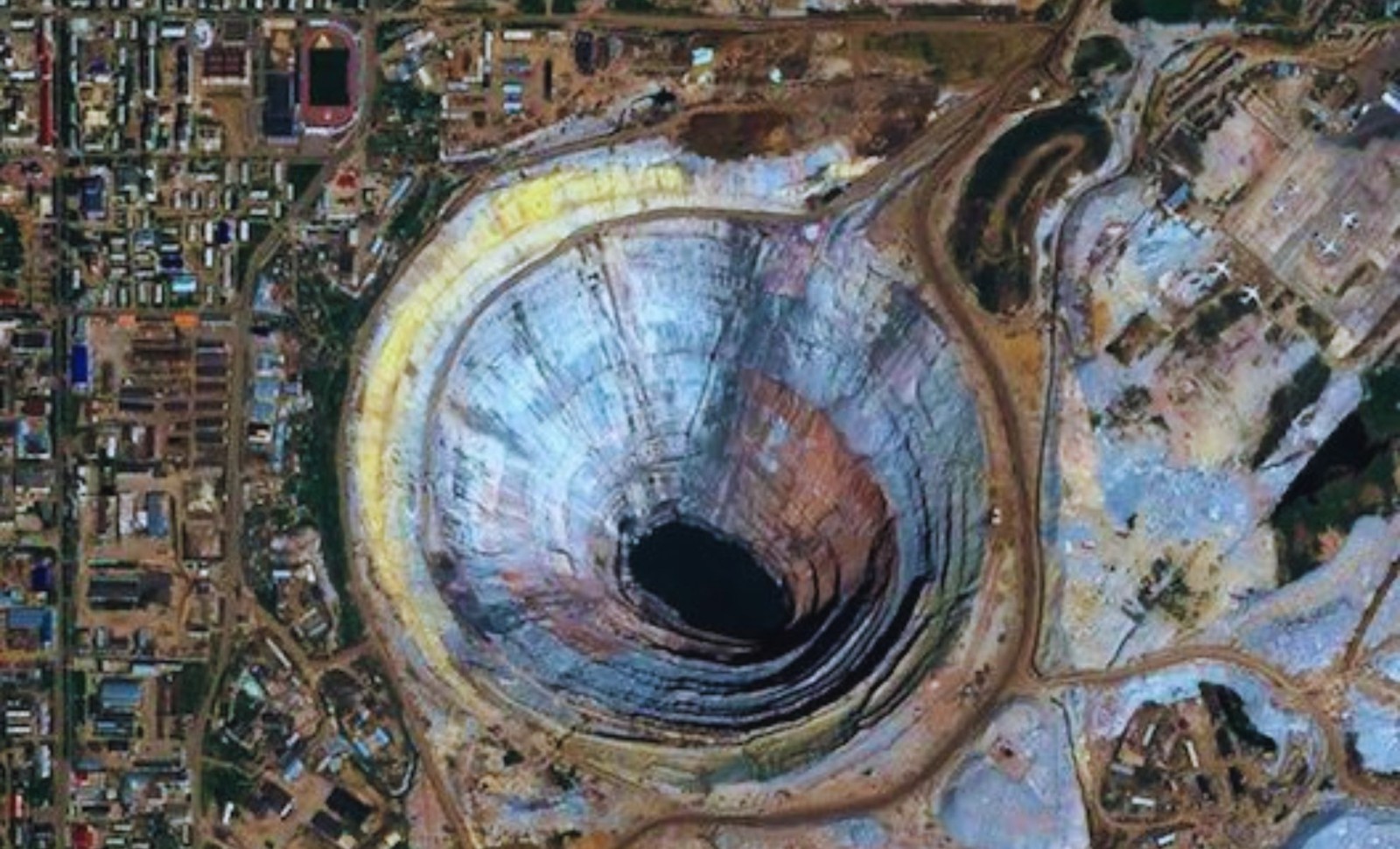
Deep within the Arctic's frozen expanse lies a man-made abyss once dubbed "the gateway to the underworld." The Kola Superdeep Borehole, known as the Earth's deepest drilled cavity, reached an extraordinary depth of 12 kilometers beneath the surface. Though a feat of engineering and science, this extraordinary project has since been sealed, sparking questions about why it was halted and what mysteries it unveiled.
Situated on the Kola Peninsula in northwest Russia, the Kola Superdeep Borehole was initiated by Soviet scientists in 1970 with the ambition to probe deeper into the Earth's crust than anyone before. However, the mission encountered formidable obstacles. As drilling penetrated further, rising temperatures created insurmountable difficulties, ultimately forcing the project to cease. Once the deepest human-made excavation on the planet, the site now stands abandoned, steeped in curiosity and intrigue.
Which may draw you to wonder… what is the deepest humanity has ever dug?
The Kola Superdeep Borehole in Murmansk, Russia, which before it ceased operation in 1989 had reached a depth of over 12,000 metres.
Beneath this innocuous cover lies the deepest hole in the world. pic.twitter.com/NQLhptMzsY— The Cultural Tutor (@culturaltutor) April 8, 2024Add Cosmo Herald as a Preferred Source

Competing to Reach the Earth's Depths
The Kola Superdeep Borehole was part of a worldwide effort during the 1970s to explore the hidden layers beneath the Earth's surface. While the Soviet Union undertook this daring project, countries like the United States pursued similar goals. As drilling progressed, rumors and folklore began to emerge. Some locals claimed eerie sounds—likened to human cries—emanated from the depths, though these tales remained folklore. The real obstacles were the extreme conditions faced by the drilling teams as they delved deeper into the planet’s crust.
The Soviet initiative aimed to surpass all previous depth records, but with every kilometer drilled, complications mounted. BBC reports that the temperatures at the borehole’s bottom reached an astonishing 180 °C, far higher than initially expected. This unexpected heat overwhelmed the drilling technology, leading to the project's suspension in 1992, well before reaching the mantle.
Unexpected Heat Halts the Mission
As the drilling reached unprecedented depths, rising temperatures proved to be an insurmountable challenge. When heat soared to 180 °C, machinery began to fail under the strain. Scientists had underestimated these thermal conditions, and consequently, drilling efforts stopped. Uli Harms, a researcher from a similar German drilling enterprise, remarked on the surprise caused by these thermal extremes.
“When the Russians started to drill they claimed they had found free water – and that was simply not believed by most scientists. There used to be common understanding among Western scientists that the crust was so dense 5 km down that water could not permeate through it.”
Originally expected to breach even further depths, the borehole project was impeded by both the extreme geothermal conditions and diminishing financial support. By 1995, the operation was fully terminated.
Though the hole penetrated just about one-third into the Earth's crust, this narrow, plate-sized opening represented a major scientific and engineering milestone.
The Kola Superdeep Borehole, drilled by the Soviet Union in the 1970s and 1980s, reached a depth of 40,318 feet (12,262 meters).
— FunFacts (@ScienceXFacts) June 12, 2025
The deepest hole ever dug by humans. pic.twitter.com/0pIB2NqUn3
An Unsettling Attraction Today
Today, the Kola Superdeep Borehole no longer functions as an active research site but has transformed into a silent, bleak landmark in the Arctic region. With its closure, it has attracted visitors intrigued by its unusual past. While drilling has ceased, those who visit can still observe remnants of the equipment and absorb the eerie ambiance surrounding this forsaken endeavor.
Though new exploration has ended, the fascination with the Kola Superdeep Borehole remains alive. Local myths persist, and scientists continue to analyze the geological samples retrieved during the drilling process.
- Categories:
- News



0 comments
Sign in to Comment