
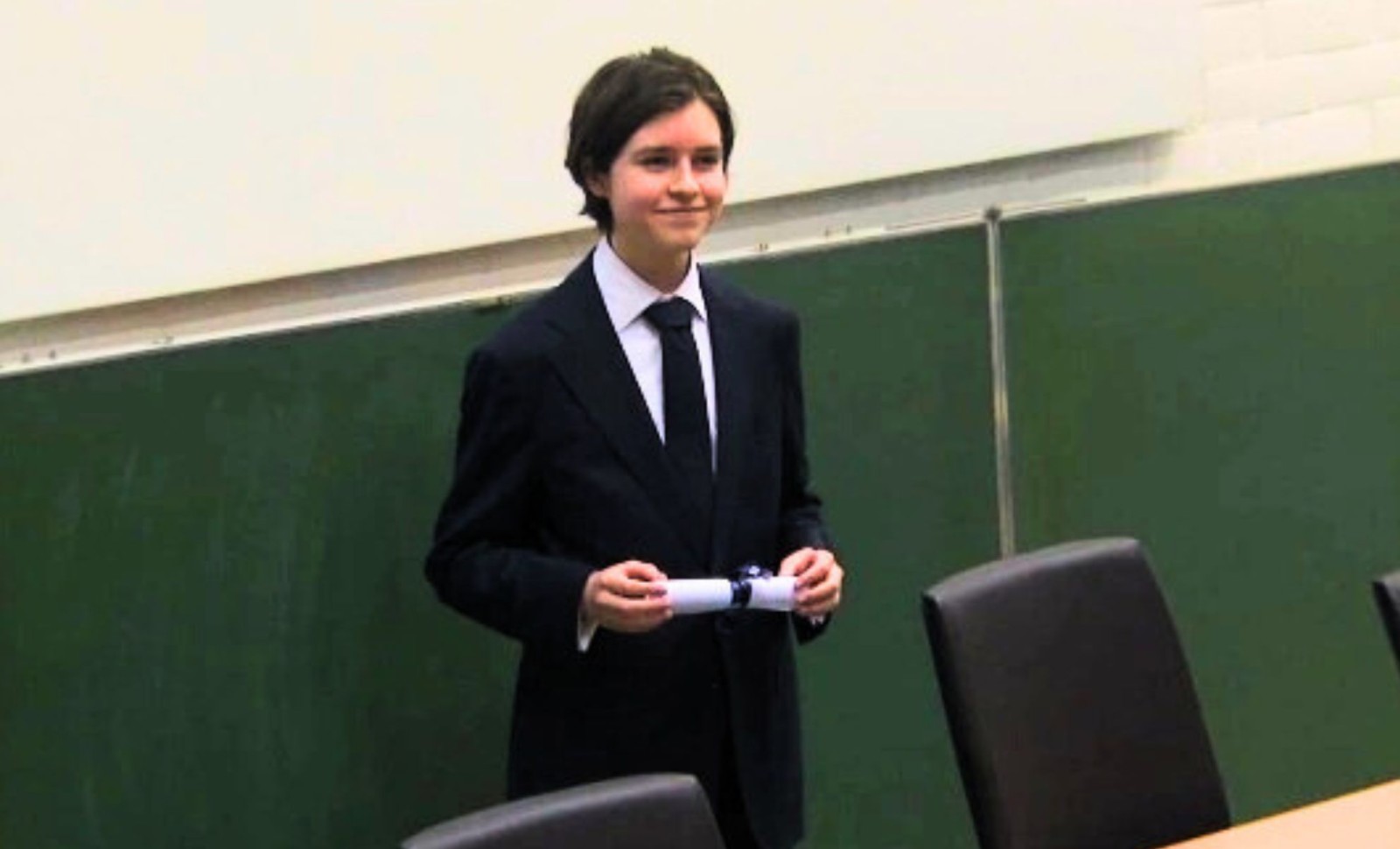
A remarkable 15-year-old Belgian prodigy has become one of the youngest ever to earn a doctoral degree in quantum physics. This achievement marks just the start of a groundbreaking research journey focused on integrating artificial intelligence with human enhancement.
The University of Antwerp recently announced that Simons has successfully defended his dissertation on theoretical physics—an accomplishment typically achieved by researchers much older. His thesis centered on Bose polarons in exotic quantum states, involving ultracold superfluids and supersolids.
Looking ahead, Simons is now engaged in a second PhD program specializing in medical sciences and artificial intelligence. He has expressed a vision of developing technologies aimed at extending human lifespan and ultimately creating enhanced 'superhumans.'

From Cold Quantum Matter to Cutting-Edge Biomedicine
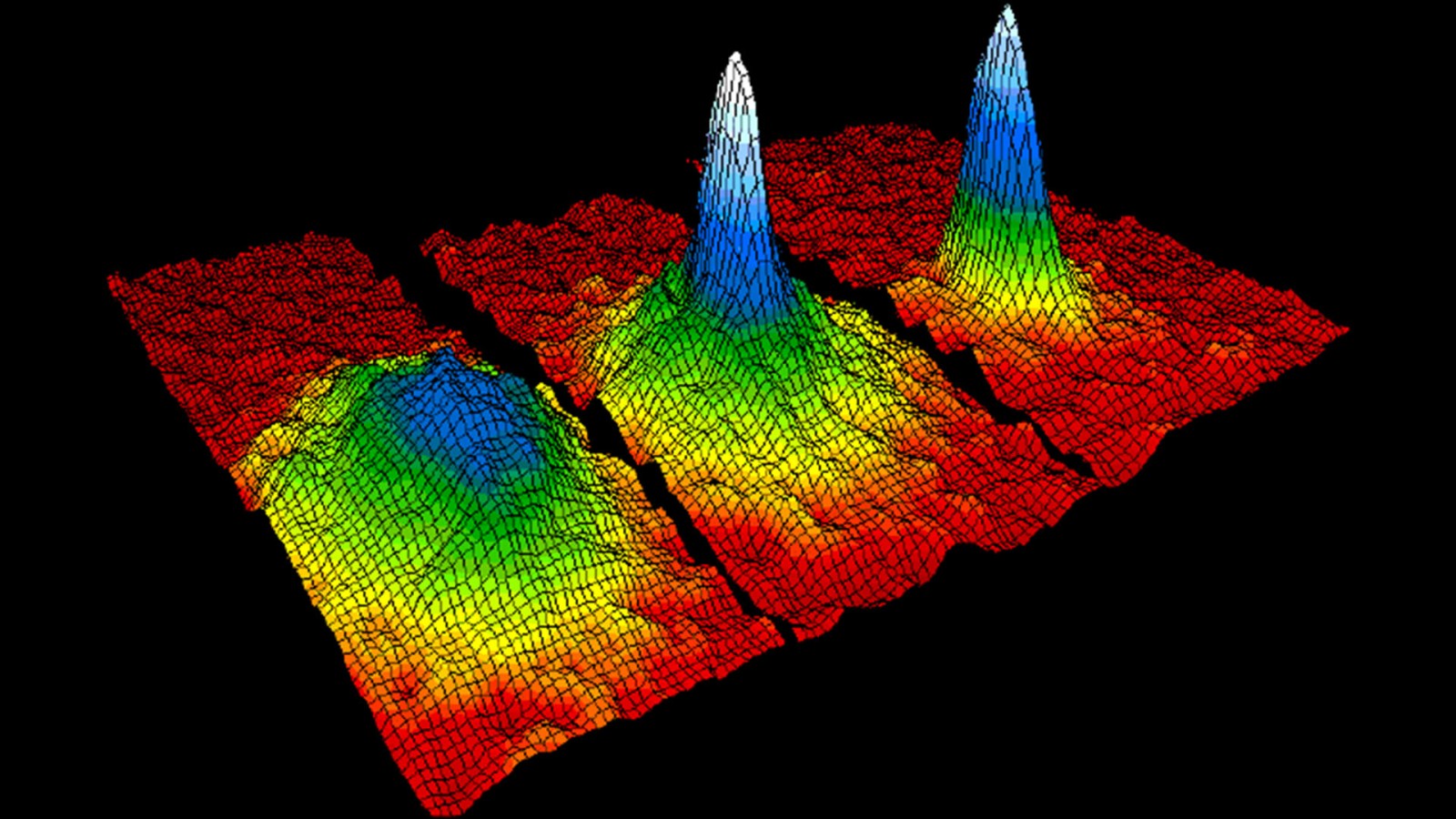
Simons' doctoral investigation explored the properties of Bose–Einstein condensates, where atoms near absolute zero act uniformly as a quantum entity. His research focused on Bose polarons, impurities interacting within these condensates, shedding light on the behavior of quasiparticles in quantum fluids.
This work has far-reaching implications across many-body physics, quantum technology, and even astrophysics. Validated by the University of Antwerp, his dissertation represents a major contribution to this intricate field.
Before obtaining his doctorate, Simons completed both bachelor’s and master’s degrees in physics at the University of Antwerp in less than two years. He also gained experience through an internship in quantum optics at Germany’s Max Planck Institute for Quantum Optics, where he started examining connections between quantum phenomena and biology.
This interdisciplinary exposure influenced his decision to pursue a medical science PhD in Munich, where his current research focuses on AI-driven approaches to diagnostics, aging, and regenerative therapies.
Harnessing AI to Extend Human Life
Motivated by the aspiration to significantly prolong life, Simons has shared in interviews his aim of creating what he calls “superhumans.” During an interview with Belgian network VTM, he stated: “After this, I’ll start working towards my goal: creating super-humans.”
Since age 11, he has regarded defeating the aging process as his primary mission, viewing artificial intelligence in medical applications as the most promising strategy to realize this ambition.
His work coincides with growing investments and discoveries in longevity science and AI-enhanced healthcare. Firms like Altos Labs and Calico Life Sciences are pioneering efforts in cellular rejuvenation, AI-guided diagnostics, and anti-aging drug development. Leading journals including Nature Aging and Cell Reports Medicine report advancements in senolytics, gene editing, and machine learning for predicting age-related conditions.
Simons’ rare combination of expertise in both quantum physics and biomedical AI positions him uniquely in this fast-evolving research landscape.
Breaking the Mold of Conventional Academia
Simons’ rapid academic ascent is extraordinary. Finishing high school by age 8, starting university before turning 10, and earning a master’s degree at 12 illustrates an unmatched acceleration. Although an initial plan to complete studies at Eindhoven University of Technology at 9 stalled, he resumed progress at the University of Antwerp.
He consistently advanced through complex coursework swiftly, dedicating time during his master’s to innovative research and prestigious internships like the one at Max Planck.
While young scientific talents frequently attract attention, Simons’ ambition toward transformative biomedical innovation raises unprecedented ethical and scientific questions.
There is no dispute from his academic institutions regarding the authenticity of his credentials or his dissertation, which are publicly recorded and validated.
Pushing the Limits of Science and Ethics
Transitioning from quantum physics to biomedical AI is unusual and met with skepticism by many about the practicality of achieving 'superhuman' enhancements under current scientific and ethical frameworks.
The domain of human enhancement, closely related to transhumanism, remains largely theoretical, with most real-world advances limited to assistive technologies and personalized medicine. Scientific studies indicate progress in measuring aging biomarkers and developing tissue engineering methods, but true superhuman performance enhancement is still speculative.

Nevertheless, Simons treats his academic efforts as a direct route toward these transformative objectives. His statements reveal a conviction that biology can be fundamentally redesigned instead of just repaired.
A researcher so young pursuing such ambitious goals intensifies discussions about the ethics, supervision, and pace of cutting-edge scientific development.
- Categories:
- News










0 comments
Sign in to Comment