
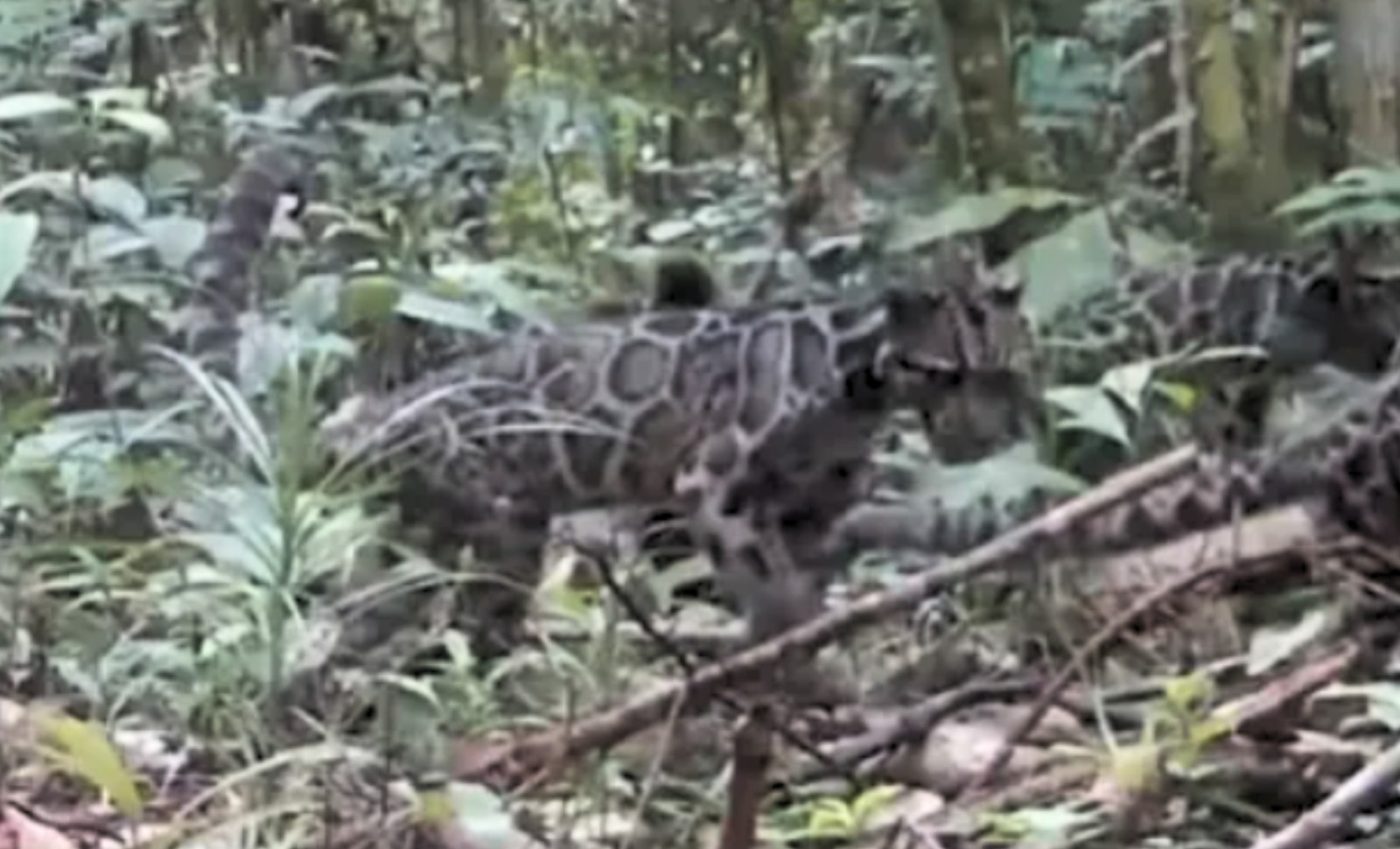
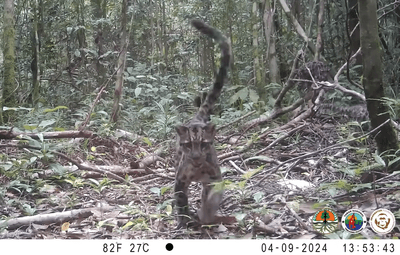
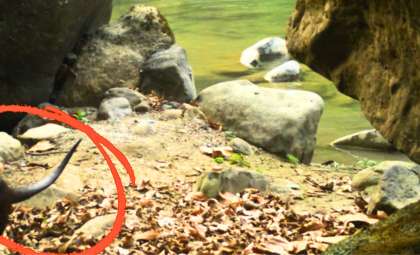
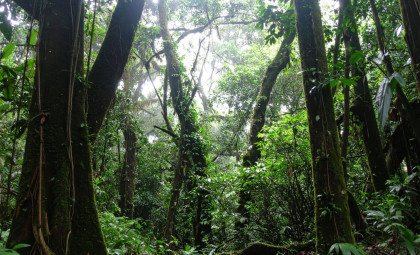
Within the dense landscapes of Tanjung Puting National Park, a motion-sensor camera captured an unprecedented event: a mother Bornean clouded leopard accompanied by two tiny cubs navigating the forest floor. At one point, a cub halted and looked straight into the camera lens before continuing onward.
This remarkable footage provides an extraordinary window into the life of one of Borneo’s most secretive predators. For scientists and conservationists working in this region, the images represent more than a rare wildlife moment—they confirm that the endangered species is successfully reproducing in protected habitat where previously only solitary adults had been recorded.
The Orangutan Foundation alongside Tanjung Puting National Park released this video as the first instance of documenting a mother with two cubs within the park boundaries. This milestone is significant because Bornean clouded leopards are notoriously difficult to observe, even with camera traps, and evidence of breeding carries greater conservation value than sightings of lone adults.

The Importance of This Discovery
The Bornean clouded leopard, scientifically known as Neofelis diardi borneensis, ranks among the rarest wild felines in Southeast Asia. Conservationists note the species’ low recruitment rates, meaning few juveniles survive to reproductive age. Observing a female with two thriving cubs indicates that parts of Tanjung Puting are successfully sustaining the species’ full reproductive cycle, not merely serving as transient habitat.
“The clouded leopard is adept at navigating both the treetops and the forest floor, serving as a crucial predator that helps maintain ecosystem balance,” said A. Yoga Perdana, research manager for the Orangutan Foundation. “Seeing a female with cubs demonstrates their health and active reproduction in the wild.”
Despite this hopeful sign, the species remains threatened by ongoing deforestation and habitat fragmentation throughout Borneo. However, for such an elusive feline rarely encountered by humans, footage like this offers vital confirmation that breeding continues in their natural environment.
Adaptations for Forest Life and Hunting
Specially adapted to forest habitats, the Bornean clouded leopard excels both in the canopy and on the ground, preying on a variety of animals including monkeys, deer, wild pigs, birds, and reptiles. Its lengthy tail provides balance among branches, while its broad paws, sharp claws, and flexible ankles enable remarkable agility, including descending tree trunks headfirst.
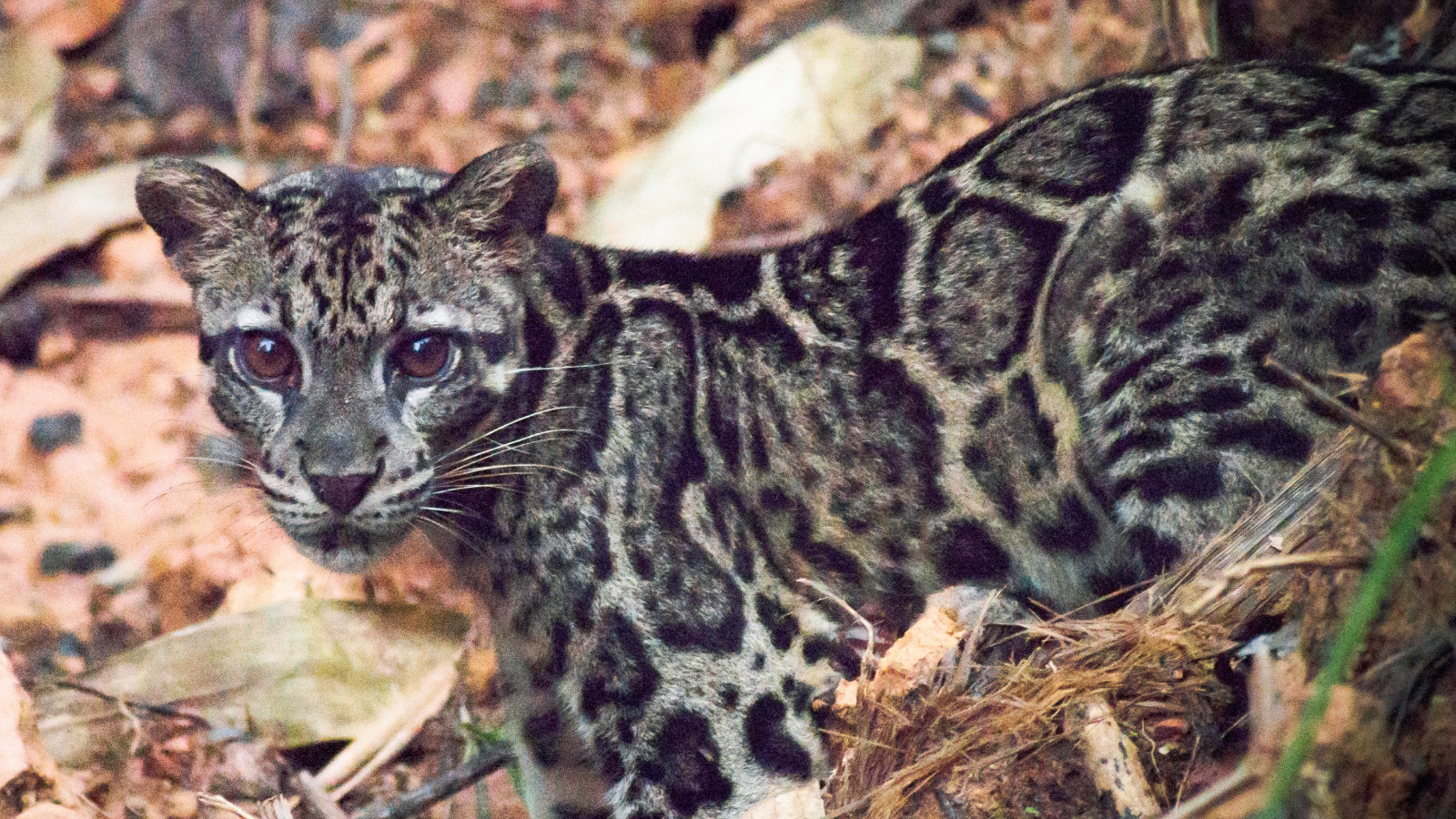
This cat is also visually unique. Compared to mainland clouded leopards, the Bornean subspecies has darker gray fur and smaller, more intricately spotted cloud-shaped patterns. According to the Felidae Conservation Fund, it bears the longest canine teeth in proportion to body size among all living cats, with adult fangs measuring up to two inches.
Genetic studies published in 2007 established the distinction of the Sunda clouded leopard from its mainland relatives, with the Bornean variant representing one unique branch of this lineage native to the forests of Borneo and Sumatra.
Insights from Camera Trapping
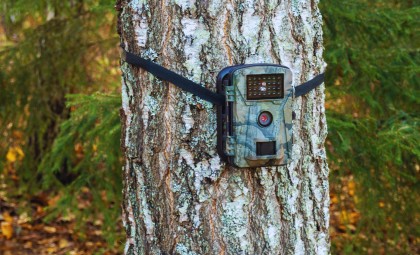
Such footage highlights the power of camera traps as vital research instruments. In dense forest environments where animals are elusive and human presence is limited, motion-activated cameras document animal activity and behaviors without disturbance. This makes them indispensable for studying secretive carnivores like clouded leopards that often evade direct observation.
Within Tanjung Puting, the Orangutan Foundation employs camera traps to assess species diversity and distribution patterns. Earlier videos had recorded isolated clouded leopards, but the April 2024 footage reveals a mother accompanied by two cubs, offering new insights into the species’ reproductive success in intact forest habitat.
Such observations do more than confirm species presence; they help scientists gauge whether the environment supports essential life stages such as breeding and juvenile development, which are critical for long-term survival.
A Glimmer of Hope in a Threatened Environment
Conservation estimates suggest between 5,000 and 11,000 clouded leopards inhabit Borneo, with an additional 3,000 to 7,000 residing on Sumatra. Exact population numbers remain uncertain due to the species’ elusive nature. Nonetheless, forest loss continues to shrink suitable habitats, emphasizing the importance of protected areas for the species’ continued existence.
Therefore, this footage holds great significance. It’s not merely an extraordinary viral clip or a rare sighting; it documents a mother successfully nurturing her young in one of Borneo’s conservation areas, a clear indicator that the forest remains a viable home for the species.
For such a secretive predator facing habitat pressures, the Tanjung Puting recordings provide some of the strongest evidence yet that ongoing conservation efforts in the park are making a tangible difference in sustaining the Bornean clouded leopard population.
- Categories:
- News







0 comments
Sign in to Comment