
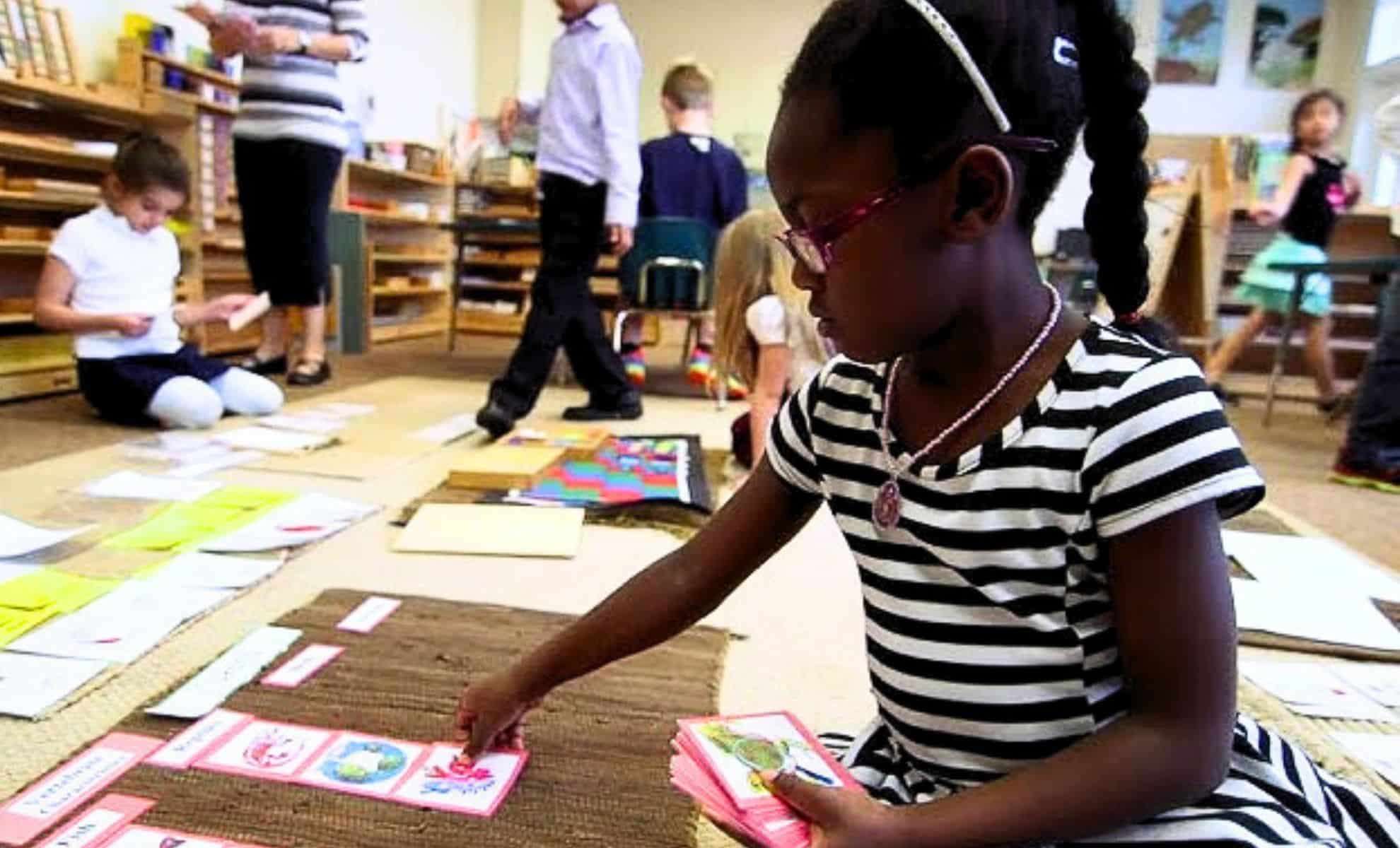
The Montessori approach has earned acclaim for promoting independence and self-guided discovery. Yet beyond its appealing philosophy, some families are confronting significant academic shortcomings that challenge their children’s readiness for more traditional settings.
Agathe, who enthusiastically enrolled her daughter in a Montessori program, now doubts whether this educational style truly prepared her child. Following four years within Montessori’s less structured framework, adapting to conventional schooling proved extremely difficult. Essential skills like reading, writing, and math appeared neglected in favor of an educational ethos centered more on ideals than fundamentals.
When “Not Ready” Becomes a Persistent Delay
Montessori’s focus on learning at each child’s pace initially seems beneficial, allowing exploration driven by curiosity instead of rigid curricula. However, for parents such as Agathe, this flexible model reveals serious disadvantages.

Her daughter, after extensive Montessori experience, had not completed basic dictation tasks and exhibited difficulties with reading fluency. Despite Agathe’s concerns, educators often responded with reassurances that her child was simply "not ready yet," masking deeper delays.
Transitioning to a standard school made clear this was more than just timing—it was a substantial academic lag.
Lack of Testing and Feedback Leaves Parents Unaware Until Critical
A hallmark of Montessori education is the absence of formal assessments. Progress reports, grades, or standardized tests are often missing, leaving parents with limited insight into their child’s proficiency.
For those moving into traditional schools later on, the reality can be shocking. Suddenly, families face the cost and challenge of intensive private tutoring to address knowledge gaps, particularly in mathematics—a common area of difficulty for former Montessori students.
“The teachers assured me she would learn it when she was ready, but I wasn’t seeing real progress.”
Demanding Clarity: Parents Seek Greater Transparency in Montessori
Another source of frustration is Montessori schools’ reluctance to share clear course plans or detailed academic content. Unlike more conventional institutions, transparency about the curriculum is often limited.
Parents like Agathe who ask for explanations frequently encounter defensiveness or subtle discouragement.
“We weren’t allowed to know what was being taught, and any questions made me feel like I was being difficult.”
The lack of accountability raises concerns for families investing substantial funds in Montessori education.
Reevaluating Montessori: Strengths in Creativity but Weaknesses in Core Learning
While Montessori is praised for fostering creativity and independence, its minimal structure may be undermining students’ mastery of essential academics.
Growing scrutiny points to inconsistent teaching quality and limited oversight, prompting scrutiny over Montessori’s actual effectiveness beyond its image.
For Agathe and many others, Montessori’s approach didn’t provide the framework needed for success. Her daughter is now making progress in a traditional environment, but only with considerable tutoring and support.
As more parents voice their experiences, the once-unbiased enthusiasm for Montessori education is increasingly questioned. The critical issue remains:
- Categories:
- Trends

















0 comments
Sign in to Comment