

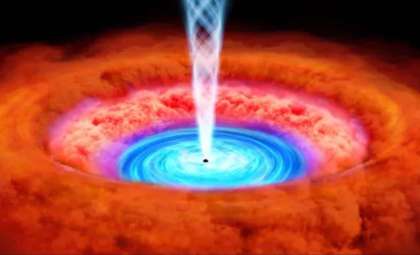
Scientists have taken a remarkable step toward unraveling the mystery of what's hidden inside a black hole. In an innovative investigation featured in PRX Quantum, a research team led by Enrico Rinaldi harnessed quantum computation and machine intelligence to replicate the quantum configuration theorized to exist inside black holes. Utilizing the holographic principle, they explored a complex mathematical construct called a matrix model, creating a novel method for probing gravity without crossing the event horizon.
Connecting Quantum Phenomena with Space-Time Geometry
One of the foremost goals in modern physics is to reconcile general relativity — the framework explaining gravity and cosmic-scale dynamics — with quantum field theory, which governs particles at the smallest scales. Though both theories succeed in their realms, their fundamental differences have long prevented unification. Researchers from the University of Michigan, RIKEN, and Keio University applied holographic duality, a groundbreaking hypothesis positing that gravitational physics in three dimensions can be equivalently described by a quantum system without gravity in two dimensions.
“Einstein’s theory describes a universe filled with space-time but no particles,” Rinaldi remarks. “Conversely, particle physics involves particles but leaves out gravity.” This split has been a barrier to developing a proper quantum gravity theory. The matrix models chosen here serve as mathematical bridges to merge both views into a single, comprehensive description.

By narrowing in on simplified matrix models—still representative of core black hole traits—the team tested their algorithms on both quantum processors and classical neural network architectures. Their target was the lowest energy state, which might embody the fundamental essence of space-time’s fabric.
Decoding Gravity with Advanced Matrix Techniques
Matrix models play a pivotal role in string theory, where particles emerge as oscillating tiny strings rather than point-like dots. Within this concept, black holes represent densely packed string aggregates, with their properties encoded in vast mathematical grids known as matrices. Directly solving these models poses huge challenges, especially for identifying their minimum energy state. This is where cutting-edge computational techniques make a difference.
“Understanding the ground state is crucial because it determines the nature of the system,” says Rinaldi. “For instance, in materials science, the ground state tells you whether a substance conducts electricity, behaves as a superconductor, or has specific strength properties. Pinpointing this state among countless possibilities is tough, so computational strategies are essential.”
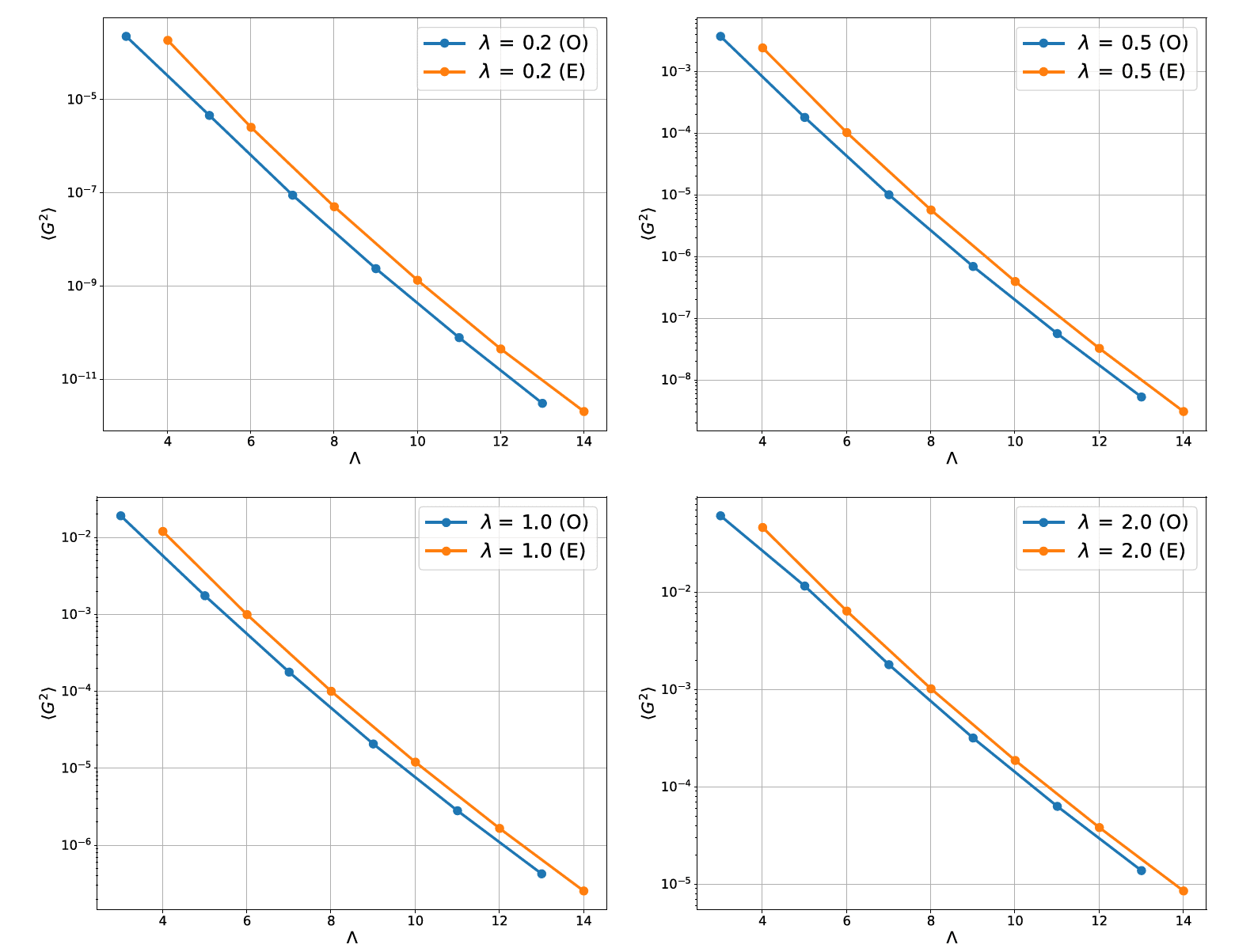
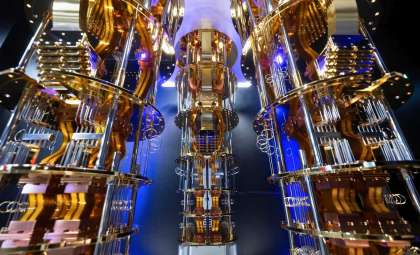
Focusing on a bosonic matrix model with two or three matrix components, the scientists simulated the systems’ low-energy configurations using quantum gate operations executed on qubit arrays. Constraints of current quantum machines—limited to only a few dozen qubits—meant the experiments were small-scale but maintained important structural details. The findings confirm that variational quantum algorithms can effectively approximate these matrix wavefunctions, advancing the possibility of simulating gravitational phenomena on quantum devices.
Quantum Algorithms: Crafting the Symphony of the Cosmos
Programming a quantum system can be analogized to writing music. Each qubit behaves like a line on a musical score, and quantum gates act like notes, adjusting the system’s state step by step. Unlike a fixed musical piece, the arrangement here evolves dynamically, requiring iterative tuning to arrive at the desired outcome.
“We can think of quantum circuits as musical compositions played from left to right,” explains Rinaldi. “Transforming qubits progressively changes the system, but you don’t know beforehand which ‘notes’ or gates to apply. Optimization fine-tunes these gates so that at the finale, the system settles into the lowest energy state—the ‘music’ perfectly played.”
This metaphor illustrates the difficulty of designing quantum algorithms that replicate the inner workings of a black hole. Employing methods like variational quantum eigensolvers (VQEs), the team minimized energy by balancing constraints on energy and symmetry. Despite hardware limitations, comparing results with exact computations and neural network models yielded strong agreement, marking a significant milestone in quantum gravitational research.
- Categories:
- News







0 comments
Sign in to Comment