
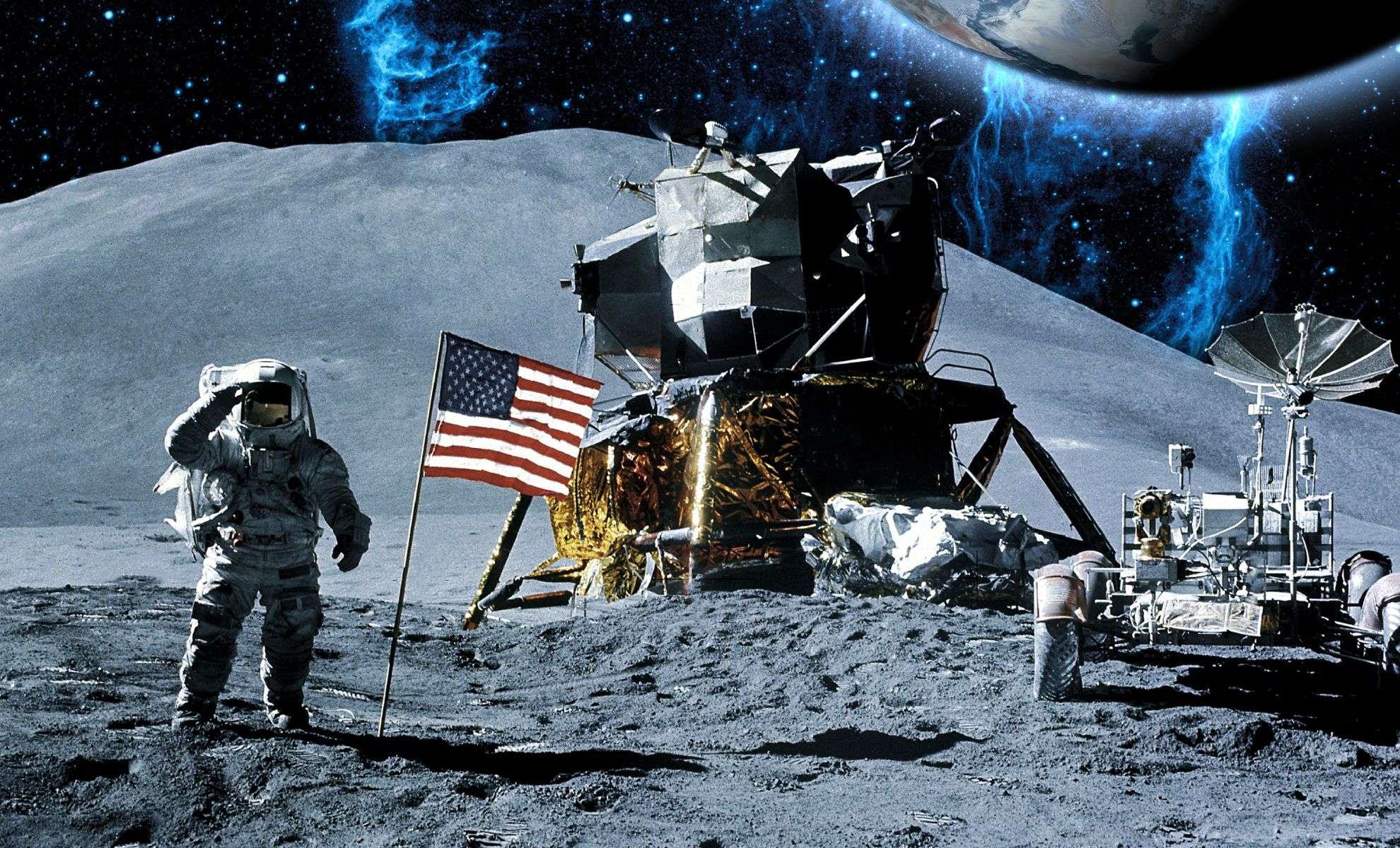
NASA, following directives from the White House, is advancing plans to implement the Moon’s inaugural official time zone. Dubbed Coordinated Lunar Time (LTC), this new standard aims to unify timekeeping across all future lunar explorations, spacecraft maneuvers, and navigation systems, heralding a major stride in interplanetary infrastructure during a period of escalating global space ambitions.
The Challenge of Measuring Time on the Moon
Time doesn’t pass identically everywhere. NASA faces the unique difficulty of defining lunar time because clocks on the Moon run faster due to its weaker gravitational pull. The White House Office of Science and Technology Policy (OSTP) estimates that a clock on the lunar surface advances roughly 58.7 microseconds per Earth day faster than an Earth-bound clock. OSTP Director Arati Prabhakar highlighted that additional fluctuations will introduce further timing variances, increasing the complexity of maintaining synchronization.
Kevin Coggins, who leads space communications and navigation at NASA, illustrated the issue by comparing it to the atomic clocks at the U.S. Naval Observatory, describing them as “the heartbeat of the nation.” He emphasized that establishing an equally reliable “heartbeat” on the Moon is essential. Although such divergences appear minor, they are critical in the space arena, where navigation and communication depend on timing accuracies down to nanoseconds, and even tiny deviations could cause serious navigational inaccuracies.

Establishing a Unified Temporal Standard Beyond Our Planet
Previous lunar missions used elapsed mission time, but the next wave of space endeavors demands a consistent and accurate common time scale. The Celestial Time Standardization Act, recently ratified by U.S. Congress, obligates NASA to develop this time zone by late 2026. Its design will align with Earth’s Coordinated Universal Time (UTC) but will be modified to accommodate lunar gravitational and relativistic influences.
The implementation will probably involve atomic clocks stationed on the Moon or in its orbit, producing a weighted and averaged time signal to offset relativistic time dilation. This approach promises a trustworthy baseline to support ongoing lunar missions, particularly under NASA’s Artemis program, aimed at returning humans to the Moon for the first time in over five decades.
Connecting Deep Space Endeavors Through Lunar Time
According to an OSTP representative, lacking a unified lunar time standard would jeopardize secure data exchange, precise positional tracking, and coordinated communications among Earth, lunar installations, satellites, and crew. “Imagine a world where clocks don't match up — the disruption could be enormous,” the spokesperson noted.
This lunar timing system is expected to serve beyond the Moon, forming the prototype for timekeeping frameworks on Mars and other celestial destinations, setting the stage for interplanetary temporal coordination. Collaborative efforts are already underway involving international agencies, private sector innovators, and research organizations to shape this cosmic time standard.
With multiple nations, companies, and spacecraft gearing up for activities around and on the lunar surface, LTC will be the critical metronome ensuring that they all keep perfect time together.
- Categories:
- News








0 comments
Sign in to Comment