
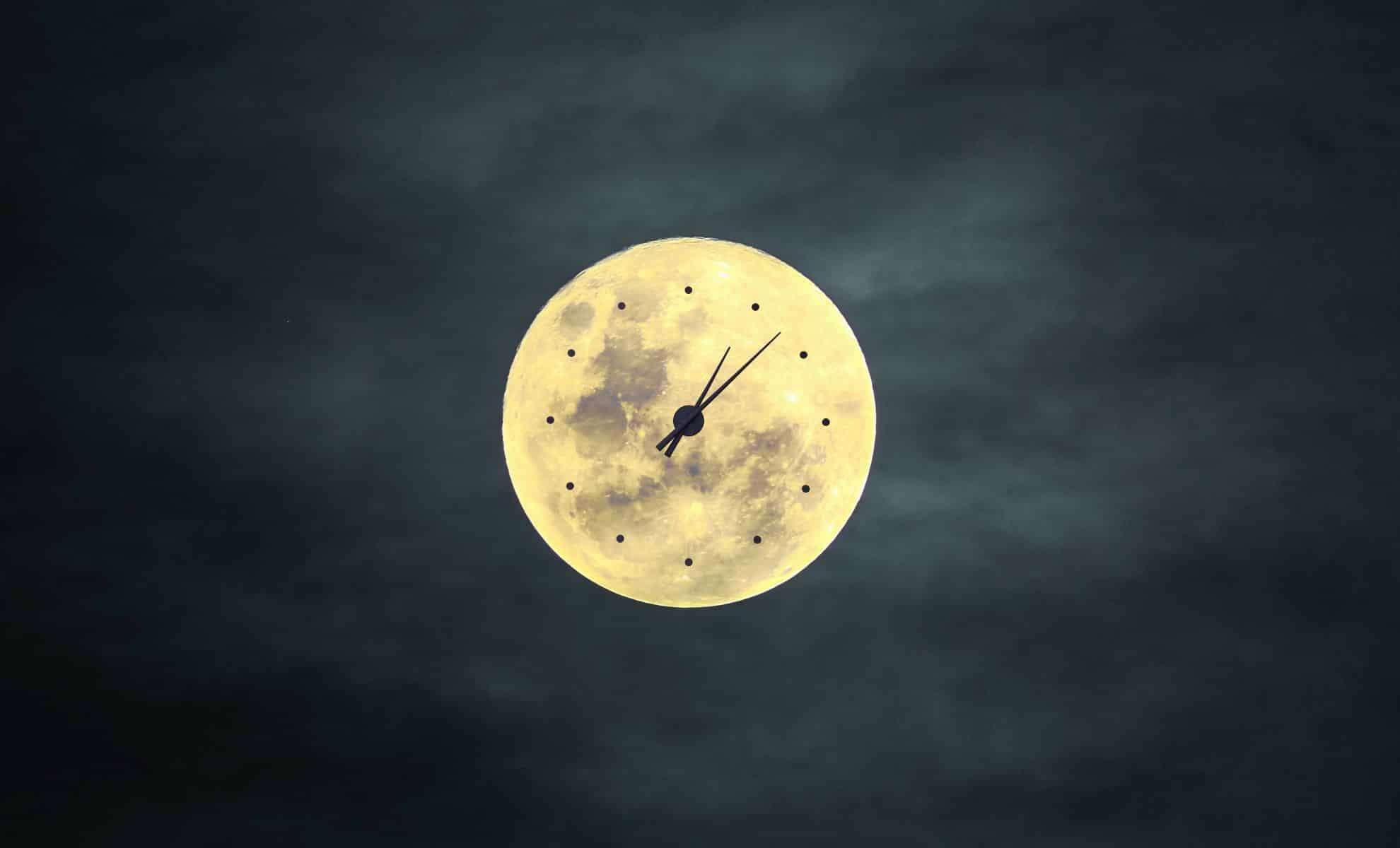
In partnership with the European Space Agency (ESA), NASA is pioneering efforts to develop a standardized timekeeping system for the moon.
This project is pivotal for the smooth operation of upcoming lunar expeditions, especially the Artemis program, which aims to bring astronauts back to the lunar surface. With rising global interest from countries like China and India, along with private sector ventures, a consistent lunar time framework is vital to synchronize the efforts of these diverse participants.
Why Lunar Time Matters Now
Creating a time zone on the moon presents unique challenges due to its environment. Unlike Earth's 24-hour rotation, the moon’s day lasts about 29.5 Earth days, making traditional time zones unsuitable. This requires a fresh methodology for tracking time that suits lunar conditions.

NASA and ESA researchers are considering adopting Coordinated Universal Time (UTC) as a starting point, a system widely used on Earth for precise timing. They are also exploring the possibility of designing a new time scale that directly aligns with lunar operational requirements.
White House Involvement in Lunar Time Development
The initiative has garnered high-level endorsement from the U.S. government. The White House recently issued a directive for NASA to present a detailed lunar timekeeping strategy by the end of 2023, highlighting its importance in America’s revitalized lunar ambitions.
The memo also calls for implementation of the new time system by 2026, coordinating with the timeline planned for renewed crewed moon landings. This underlines the critical role accurate temporal coordination will play in meeting the nation’s space exploration milestones.
Addressing the Challenges Ahead
Setting up a lunar time standard involves navigating numerous technical and logistical obstacles. Key issues include enabling precise navigation and seamless communication, which rely heavily on accurate time synchronization between missions.
The prolonged lunar day-night durations and absence of natural terrestrial time markers complicate synchronization. Adding to the complexity, the need for consensus among various international participants, each potentially having preferred methods, is crucial for operational harmony on the moon.
Advancing Lunar Timekeeping Technology
NASA and ESA are developing cutting-edge technologies to support lunar time standards. Their toolkit includes ultra-stable atomic clocks for long-term timing accuracy and crystal oscillators for short-term precision. Such equipment will ensure the smooth coordination of lunar activities.
Reliable timekeeping is essential to bridge operations seamlessly with Earth-based systems. This development is a backbone for Artemis’ objectives, which include landing the first woman and the next man on the moon by 2024 and laying foundations for sustained human presence by decade’s end.
Impact on Future Space Exploration
Creating a unified lunar time scale will significantly enhance international cooperation and the efficiency of multi-national lunar projects. As more countries and private companies join the lunar frontier, having standard timekeeping will be crucial for coordinating efforts.
This timekeeping framework supports the Artemis initiative and sets the groundwork for missions beyond the moon, including Mars expeditions. The solutions developed for lunar timing will provide valuable lessons for future deep space explorations.
Understanding Lunar Time Complexities
The necessity for a distinct lunar time standard stems from the moon’s unique characteristics, such as roughly two-week-long periods of daylight and darkness, unlike Earth’s consistent day-night cycles, requiring a tailored approach to timekeeping.
Moreover, communication between Earth and the moon experiences a delay of around 1.28 seconds each way, a factor that must be integrated into timekeeping protocols. Efficient data synchronization between Earth and lunar timeframes demands advanced conversion and management systems.
Establishing a lunar time zone is a challenging but vital step toward the next generation of space missions. Through global collaboration and state-of-the-art technology, NASA and ESA are creating an innovative time system customized for lunar exploration. This endeavor highlights the essential role of precise timing in spaceflight and will help extend human presence deeper into our solar system.
- Categories:
- Astronomy ,
- News ,
- Space ,
- Nasa





0 comments
Sign in to Comment