

China prepares to achieve a groundbreaking milestone with its Chang’e-6 mission aiming to land on the Moon’s far side and return valuable lunar soil to Earth.
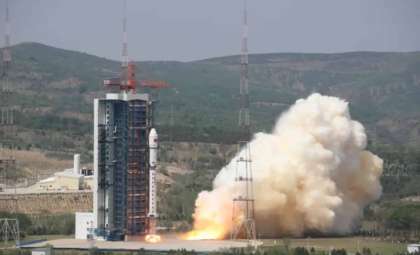
Planned for early June, this mission will explore the South Pole-Aitken Basin, a scientifically important lunar region. Building on the achievements of Chang’e-5 in 2020—which retrieved samples from the Moon’s near side—Chang’e-6 hopes to deepen our knowledge of lunar geology and the early solar system environment.
Targeting the Moon’s far side offers a novel vantage point to analyze its composition, providing researchers fresh data on the Moon’s formation and evolutionary history.

Landing Timeline
The scheduled lunar landing of Chang’e-6 is set for June 2, with timing critical to ensuring smooth communication and operational success. The mission team has carefully coordinated the schedule to optimize mission phases and data transmission.
Chang’e-6 lunar far side landing attempt set for approx 0000 UTC Sunday, June 2 (8:00 p.m. EDT June 1, 0800 BJT June 2) https://t.co/fGtZ2c4Ifq
— Andrew Jones (@AJ_FI) May 29, 2024
The selection of the landing site presents unique obstacles, yet confident mission planners anticipate a successful touchdown and efficient sample retrieval.
Mission Architecture of Chang’e-6
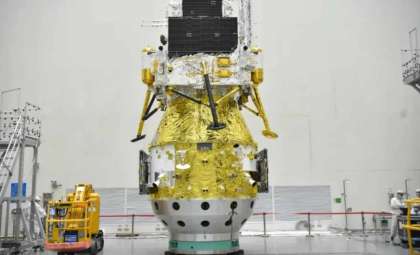
The operation encompasses four critical components: an orbiter, a lander, an ascent vehicle, and a return capsule. After the lander collects lunar soil samples by drilling, the ascent vehicle will launch into lunar orbit where it rendezvous with the orbiter. The orbiter is then responsible for bringing those samples safely back to Earth.
Upon re-entry, the return capsule will deliver the specimens to a designated landing area in Inner Mongolia. This highly complex sequence highlights China’s advanced spaceflight capabilities and underscores the precision required for Earth-Moon sample return missions.
Tackling Communication Barriers
Maintaining contact with a spacecraft on the Moon’s far side is a formidable challenge due to the absence of a direct line of sight. To resolve this, China utilizes the Queqiao relay satellite, which has maintained lunar orbit since 2018. This satellite operates as a communication bridge, relaying data between the ground teams and lunar lander.
Functioning at the heart of communication, Queqiao ensures uninterrupted control and real-time data exchange, demonstrating innovative solutions in enabling deep space exploration.
Scientific Value and Strategic Importance
The South Pole-Aitken Basin, targeted by Chang’e-6, ranks among the solar system’s largest and oldest impact structures. Collecting samples from this basin offers unprecedented opportunities to study lunar geology and unlock secrets about the Moon’s past and the solar system’s early development.
Data gathered may reveal signs of historical volcanic processes and water ice deposits, vital clues for understanding lunar resources and assessing the feasibility of long-term human missions on the Moon.
China’s Rising Influence in Space Exploration
The Chang’e-6 mission marks another leap forward in China’s rapidly growing space program. Since sending its first astronaut into orbit in 2003, China has built the Tiangong space station, successfully landed a rover on Mars, and continues to break new ground in space technology.
Future plans include expanded lunar exploration, new spacecraft development, and enhanced space infrastructure—solidifying China’s goal to emerge as a dominant spacefaring nation, capable of executing intricate extraterrestrial missions.
- Categories:
- Astronomy ,
- News ,
- Space ,
- Aircraft









0 comments
Sign in to Comment