

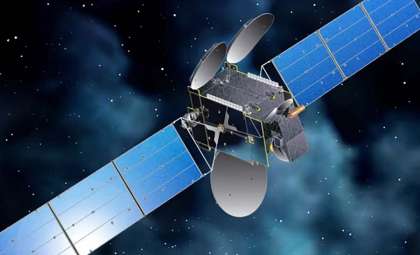
The European Space Agency (ESA) has appointed Airbus Defence and Space to construct the Vigil satellite, a trailblazing project designed to enhance forecasting of space weather phenomena.
Backed by a €340 million investment, this initiative marks a crucial leap forward in monitoring solar activity that threatens Earth’s technological systems. Vigil will supply vital information to safeguard critical infrastructure and deepen scientific insight.
About ESA’s Vigil Satellite
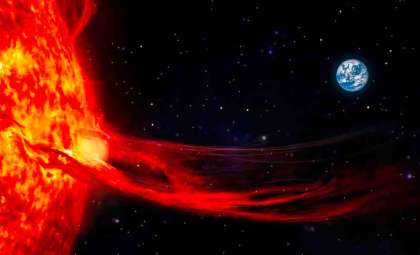
Vigil will become Europe’s inaugural satellite solely dedicated to space weather prediction, offering early alerts for intense solar events like storms. Such phenomena can disrupt electrical grids, communication systems, and satellites, jeopardizing both ground-based and orbital assets.


The satellite will be positioned at the Lagrange point L5, a gravitationally stable spot that allows constant monitoring of solar behavior before it becomes observable from Earth. This unique location enables early detection of solar events that may impact our planet.

Cutting-Edge Technology Onboard
Airbus Defence and Space will equip Vigil with state-of-the-art instruments to observe solar activities live. Among these are:
- Photospheric Magnetographic Imager: Captures detailed images of the Sun’s magnetic fields, identifying sunspots and changes in magnetism.
- Heliospheric Imager: Tracks solar wind and interplanetary dynamics, helping map solar particle paths.
- Compact Coronagraph: Monitors the Sun’s corona to spot coronal mass ejections (CMEs), which are key space weather drivers.
- Plasma Analyser: Studies solar wind characteristics, shedding light on solar material reaching Earth.
- Magnetometer: Measures space magnetic fields crucial for understanding solar wind’s effect on Earth’s magnetosphere.
- Extreme Ultraviolet Imager (JEDI): A NASA-provided tool that captures UV radiation from solar flares and energetic events.
Mission Goals and Impact
Vigil’s chief mission is to improve space weather forecast accuracy and timeliness. Providing advance alerts will empower infrastructure operators to implement protective protocols, reducing disruption risks. The data gathered will also fuel scientific studies enhancing our grasp of solar dynamics and their Earthly consequences.
This knowledge is vital for refining solar behavior models and reinforcing predictive frameworks.
The Significance of Predicting Space Weather
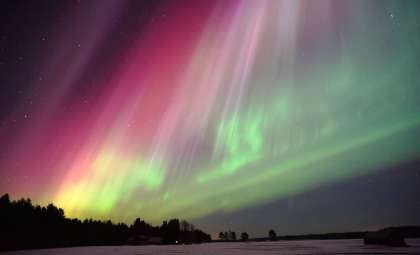
Solar events like the Carrington Event of 1859, which caused widespread telegraph failures and luminous auroras visible near the equator, illustrate the potential damage of extreme space weather. Should a similar phenomenon strike today, it could trigger massive power outages, interrupt communications, and impair satellites.
Vigil’s timely forecasts are designed to minimize these vulnerabilities by safeguarding satellites, power systems, astronauts, and space missions. Reliable warnings will help maintain the essential services modern civilization depends on.
International Cooperation
The Vigil initiative benefits from collaboration with global space agencies such as NASA and NOAA, who contribute instruments and expertise. This collective approach boosts mission efficiency and strengthens international readiness for space weather challenges.
Such partnerships highlight how global teamwork enhances our capacity to counter space weather threats.
Looking Ahead
Planned for deployment in 2031, Vigil will set a benchmark in space weather surveillance. Its accomplishments could lead to future missions and innovative technologies, ensuring enhanced preparedness against solar activity hazards.
The dataset provided will aid in creating advanced protection strategies for Earth and could stimulate further investment in space weather science and infrastructure.
Strengthening Global Infrastructure
A major benefit of the Vigil project lies in boosting the robustness of worldwide infrastructure. Early solar storm alerts will allow energy providers to shield power grids from damage by geomagnetic induced currents (GICs).
In addition, satellite operators can preemptively secure communication and navigation systems, diminishing economic losses and ensuring service continuity.
Expanding Scientific Frontiers
Beyond practical applications, Vigil will greatly enhance solar and space weather science. Its observations will refine current solar activity models and support new theoretical developments.
This mission will advance heliophysics by deepening our understanding of solar influences throughout the solar system, improving forecasts and protective measures for Earth.
- Categories:
- News





0 comments
Sign in to Comment