
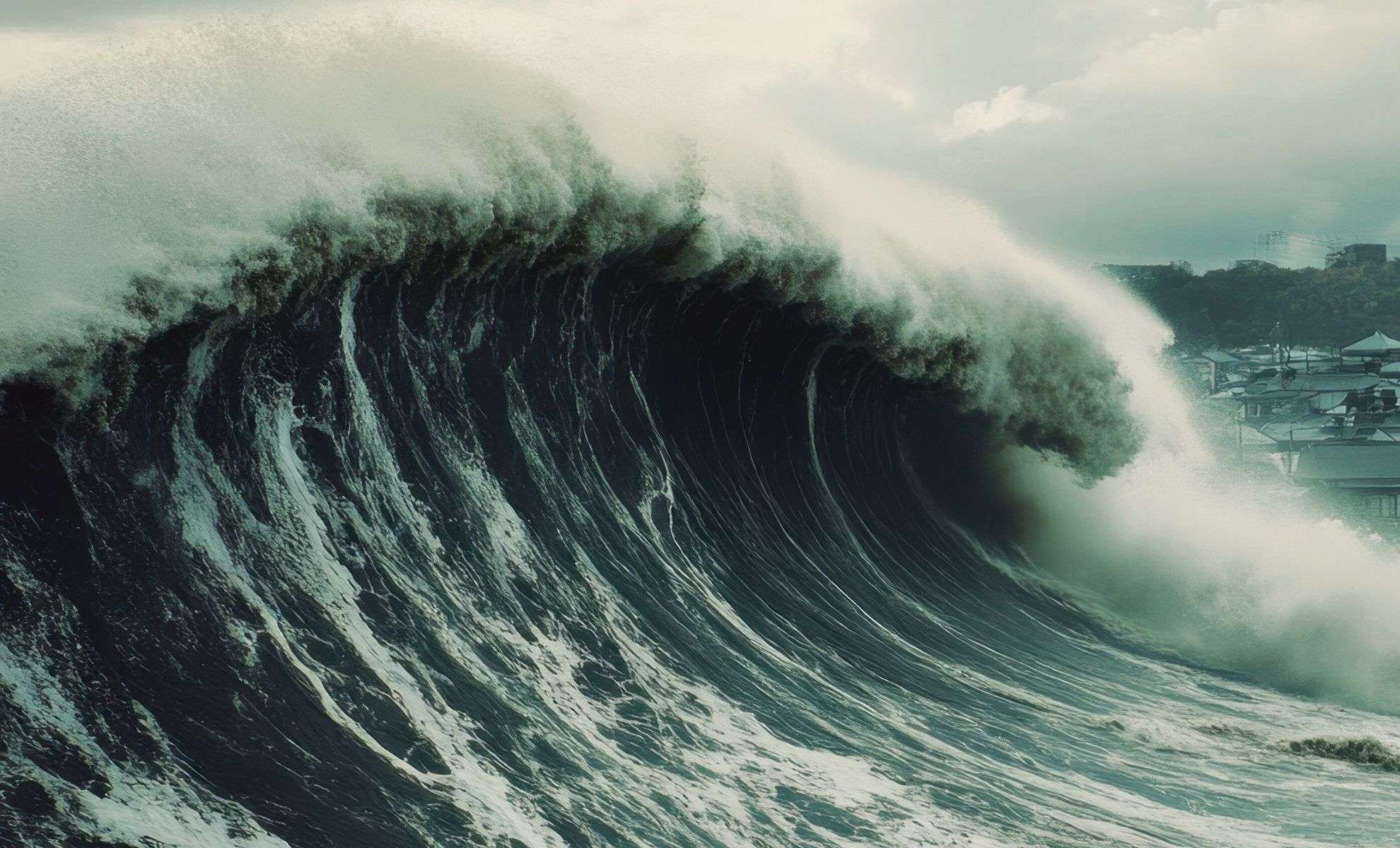
About 45 million years ago, a colossal asteroid struck the seabed beneath what is now the North Sea, setting off a tsunami that soared higher than 100 meters. Recent research has finally confirmed that the Silverpit Crater was formed by a high-velocity asteroid impact, overturning earlier theories that blamed volcanic activity or salt layer shifts.
Evidence of an Extraterrestrial Collision Below the Ocean Floor
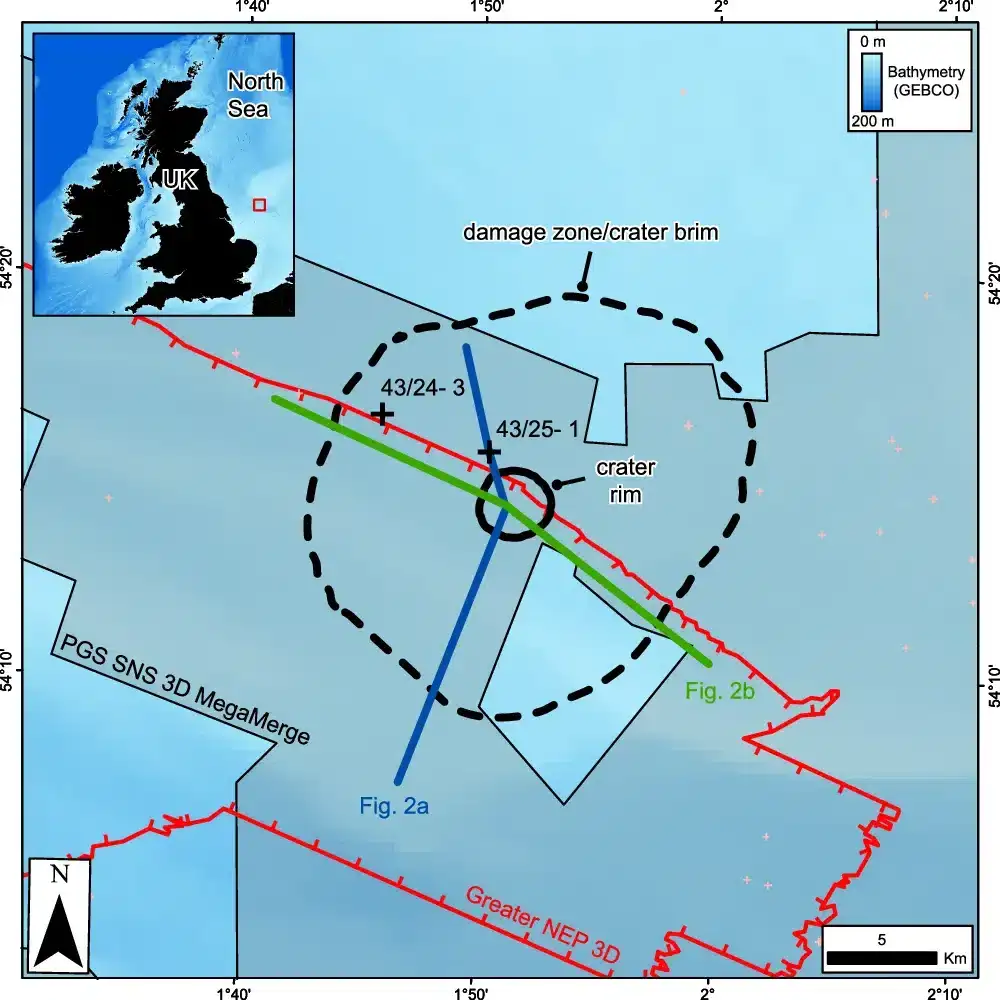
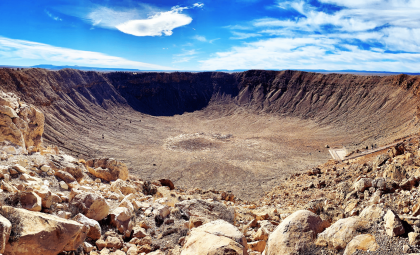
Located approximately 80 miles off Yorkshire’s coast and buried 700 meters beneath the seabed, the Silverpit Crater showcases a distinct circular shape with a central peak and fracture rings. While these features initially pointed to an impact event, some experts argued instead that the formation resulted from salt tectonics or volcanic-induced seabed collapse.
This controversy dragged on for years, including a 2009 informal geologists’ poll published in Geoscientist Magazine, where the majority dismissed the impact explanation. However, a fresh investigation led by Dr. Uisdean Nicholson of Heriot-Watt University, with backing from the Natural Environment Research Council (NERC), has definitively proven the impact origin.

Utilizing seismic surveys, microscopic examinations of rock samples, and sophisticated modeling, the team established compelling evidence supporting the asteroid collision theory. Their results appeared in the September 2025 issue of Nature Communications.
Impact Signatures Encoded in Minerals
Dr. Nicholson revealed the discovery of “exceptionally rare ‘shocked’ quartz and feldspar crystals embedded at the depth of the crater base.” These particular mineral distortions can only form under the extreme pressure of hypervelocity impacts, providing unambiguous proof of the asteroid strike.
“Finding these minerals felt like locating a ‘needle in a haystack,’” Nicholson said. Their detection allowed researchers to exclude alternative explanations, with Professor Gareth Collins from Imperial College London referring to the evidence as the “silver bullet” that finally resolves decades of debate.
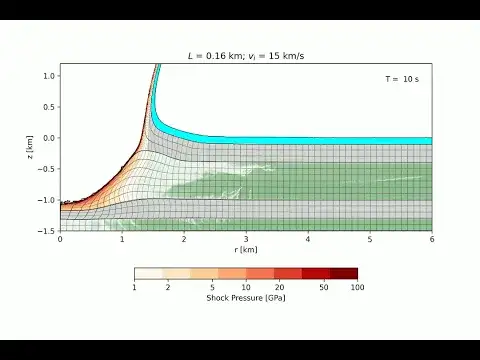
Further improvements in seismic imaging revealed new details about the crater’s structure, enabling the team to simulate the impact event and ensuing effects with greater accuracy.
Tsunami Wave Towering Over Thirty Stories High
The group calculated that the asteroid measured roughly 160 meters across and collided with Earth at a low angle from the west. Instantly following the collision, a massive plume of rock and seawater surged upward to heights near 1.5 kilometers before crashing back down.
This violent rebound generated a tsunami cresting over 100 meters (330 feet). Although this event was not associated with any major extinction, it would have dramatically transformed the marine ecosystems and coastal zones across the region.
Professor Collins, who developed the numerical simulations, remarked, “It is very rewarding to have finally found the silver bullet.” He emphasized that the new insights not only confirm the crater’s extraterrestrial origin but also pave the way for further study into how asteroid impacts influence underwater planetary geology—a domain challenging to explore on other worlds.
An Ancient Impact Preserved Beneath the Waves
The Silverpit Crater is exceptional not only because of its dimensions or offshore location but also due to its remarkable preservation. As Dr. Nicholson explained, “Silverpit is a rare and exceptionally preserved hypervelocity impact crater.” Such well-maintained impact sites are scarce, particularly underwater. While over 200 impact craters have been found on land, fewer than 30 underwater craters have been identified.
Earth’s ongoing geological activity often erases impact evidence through erosion, tectonic movements, and sediment accumulation. Most craters succumb to these forces. Yet Silverpit has endured more than 40 million years beneath the North Sea, providing scientists with a unique glimpse into the aftermath of asteroid collisions in marine environments—a phenomenon rarely witnessed in Earth’s history.
- Categories:
- News






0 comments
Sign in to Comment