
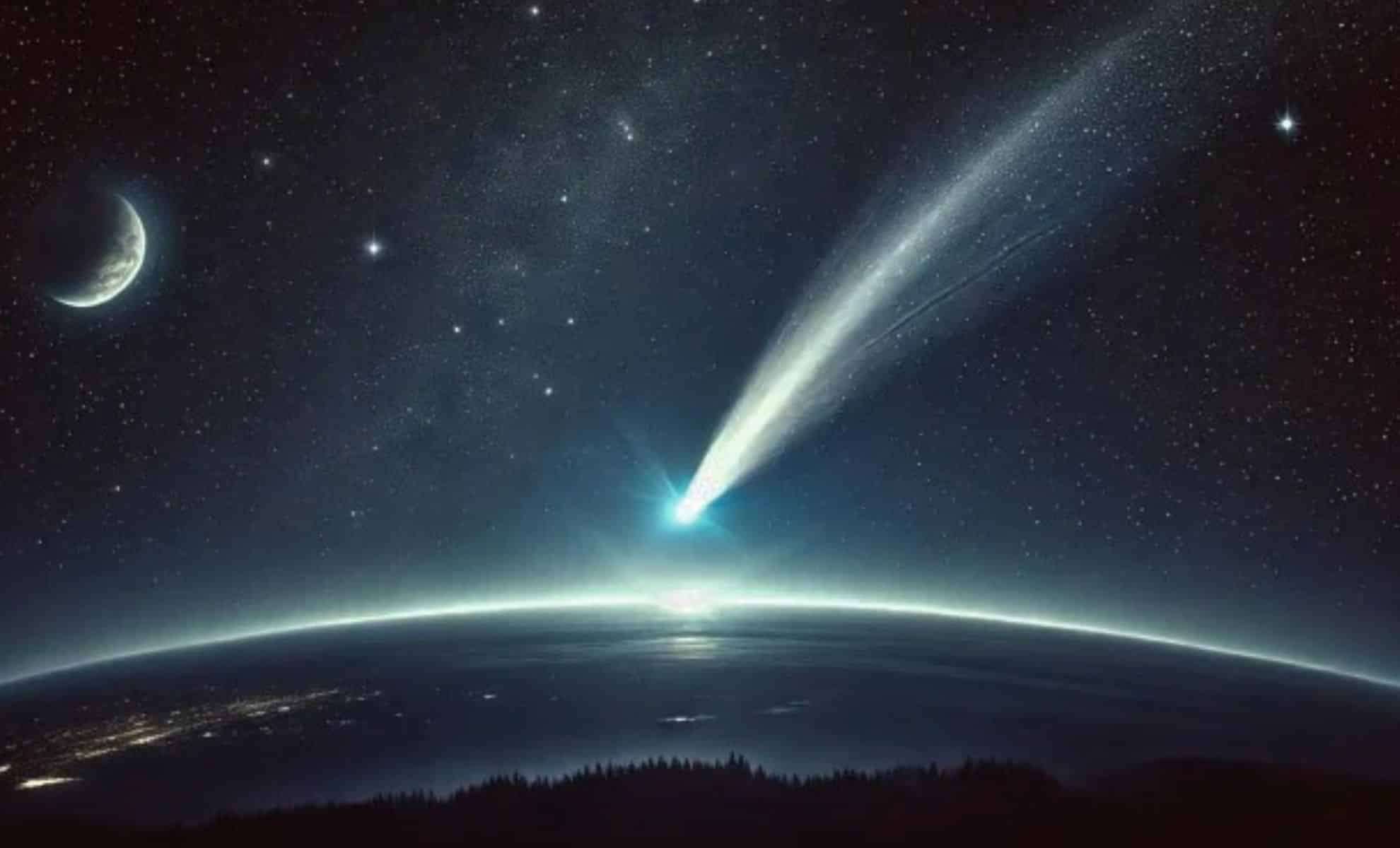
The comet known as C/2024 G3 (ATLAS) is capturing the excitement of astronomers and sky watchers alike as it nears its closest approach to both the sun and Earth set for January 2025. This uncommon event could see G3 become the most luminous comet of the year, though its close encounter with the sun’s fierce heat poses critical survival challenges.
Tracing the Origins of an Ancient Visitor
The comet, C/2024 G3, was identified on April 5, 2024, by the Asteroid Terrestrial-impact Last Alert System (ATLAS) based in Hawaii. It hails from the distant Oort Cloud, a cold, icy region enveloping the outer edges of our solar system. Its previous trip to the inner solar system occurred about 160,000 years ago, a time when Homo heidelbergensis, a now-extinct human ancestor, roamed the planet.
On January 13, 2025, the comet will reach its closest point to the sun, or perihelion, at around 8.3 million miles (13.5 million kilometers) away. In comparison, Mercury orbits at roughly 29 million miles (47 million kilometers) from the sun, which means G3 faces a dangerously close solar approach.

Can Comet G3 Withstand Its Near-Sun Pass?
The comet’s survival as it draws near the sun is under close scrutiny from experts. The intense solar radiation and gravitational forces have led to the destruction of many comets before. Nick James, head of the British Astronomical Association’s comet division, warns, “it will be strongly heated and may not survive.” Yet, G3’s historical encounters suggest there is a chance it could endure the extreme conditions.
If it remains intact, G3 may shine with a brilliance comparable to Venus, achieving an estimated brightness of -4.5 magnitude, visible even from brightly lit urban zones. Its path through the Sagittarius constellation will offer exceptional viewing opportunities, particularly for observers located in the Southern Hemisphere.

Best Practices for Spotting Comet G3
Whether the comet is visible depends on both its survival of the sun’s proximity and one’s geographic position. The Southern Hemisphere will likely provide the best chances for naked-eye sightings, while observers in the Northern Hemisphere will require binoculars or telescopes. Safety is paramount, especially considering the comet’s proximity to the sun.
Essential Viewing Information for Comet G3:
- Peak visibility date: January 13, 2025
- Optimal viewing time: Just after sunset
- Prime viewing location: Southern Hemisphere
- Observation guidelines: Use solar filters if viewing during daytime; binoculars or telescopes recommended for Northern Hemisphere viewers.
Unlocking Solar System Mysteries Through Comets
Comets such as C/2024 G3 are often described as "dirty snowballs," composed of frozen water, carbon dioxide, methane, and ammonia. These icy wanderers are relics from the solar system’s birth, acting as natural archives of the early cosmic environment.
If G3 survives its close solar encounter, it not only promises a breathtaking visual display but also offers researchers a chance to gather valuable data. Whether it dazzles the night sky or dissipates in the sun’s glare, this comet’s voyage highlights the ever-evolving nature of our universe.
- Categories:
- Astronomy






0 comments
Sign in to Comment