
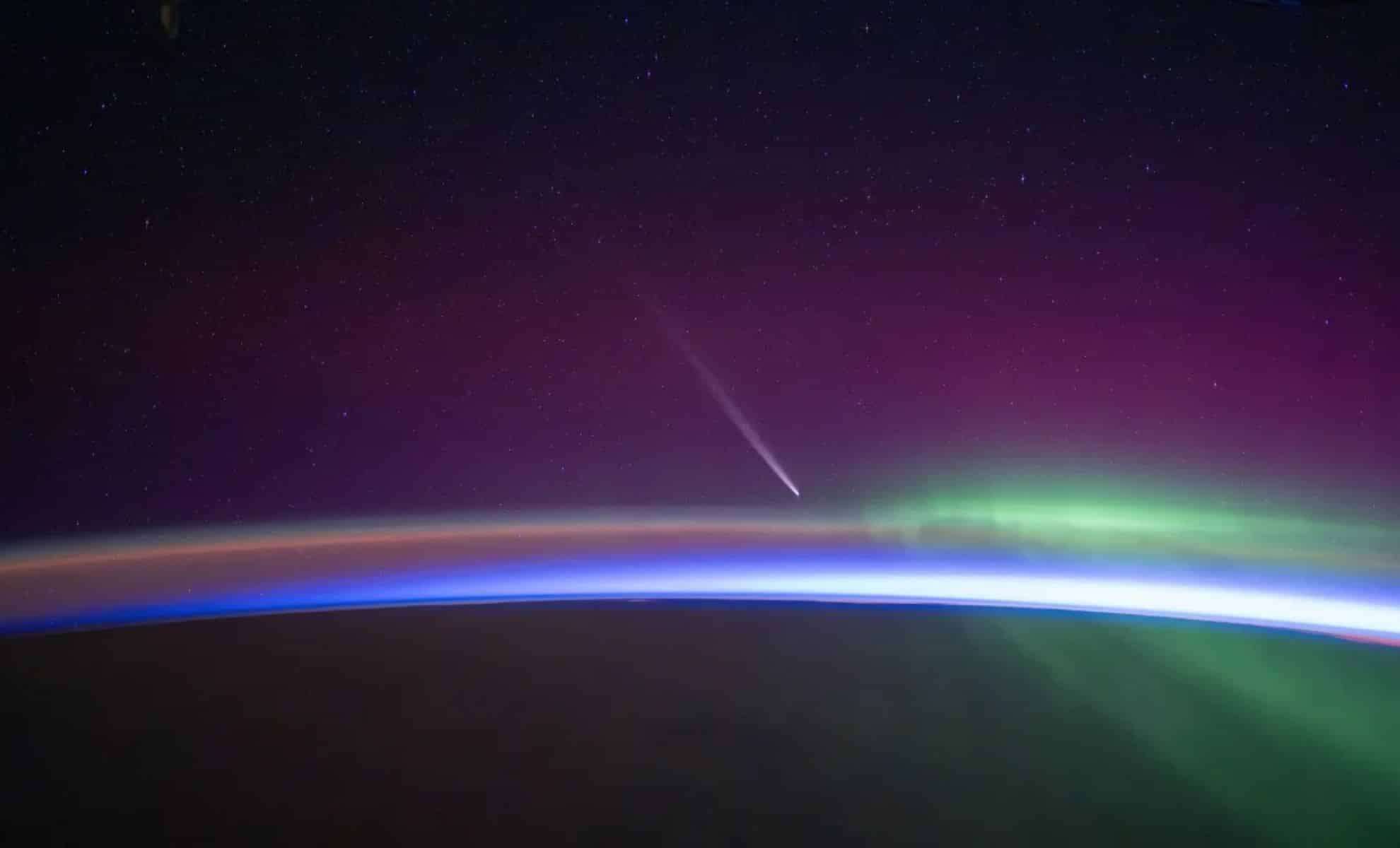
Tonight, stargazers have a unique chance to witness Comet Tsuchinshan-ATLAS (C/2023 A3) at its closest point to Earth, passing approximately 44 million miles away.
Having recently emerged from the sun’s blinding glare, this long-period comet promises to be one of the most luminous objects visible this evening—its first naked-eye visibility since the 2020 appearance of Comet NEOWISE. Experts at Forbes recommend October 12, 2024, as an ideal night for spotting this extraordinary comet as it climbs into view after sunset.
Prime Viewing Hours and Spots for Comet Tsuchinshan-ATLAS
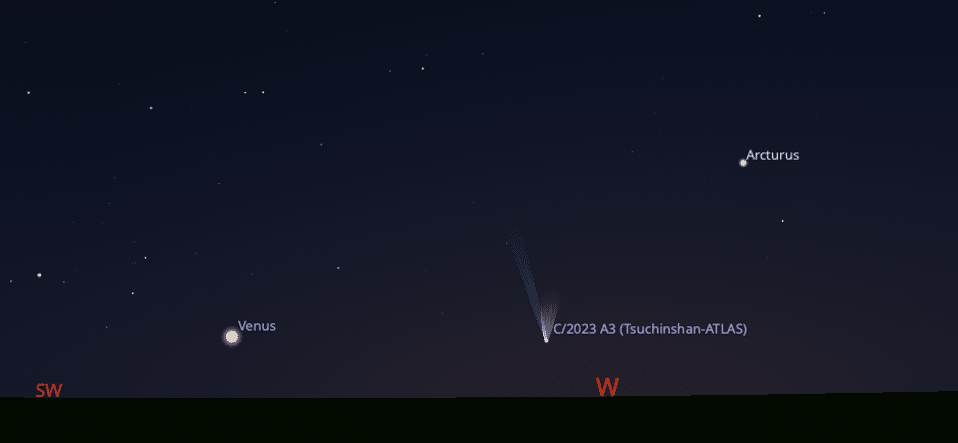
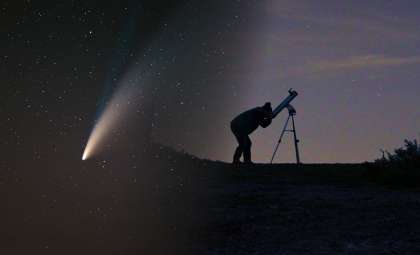
This evening, October 12, offers an excellent opportunity to observe Comet Tsuchinshan-ATLAS. As detailed by Forbes, the comet will appear roughly 45 minutes post-sunset for observers in the northern hemisphere. It will be positioned low near the western horizon, close to Venus and the bright star Arcturus. Locating the comet may require patience due to the lingering twilight glow, but using binoculars or a telescope will make the hunt much easier. With a brightness magnitude around +0.3, it’s also potentially visible to the unaided eye.

To find the comet, seek out an unobstructed view toward the west, spot Venus first, then look just beneath and slightly to its right near Arcturus. Binoculars will greatly improve your chances of catching a clear glimpse. Over the following nights, the comet will ascend higher, moving away from the sun’s brightness and becoming more stable against a darker sky.
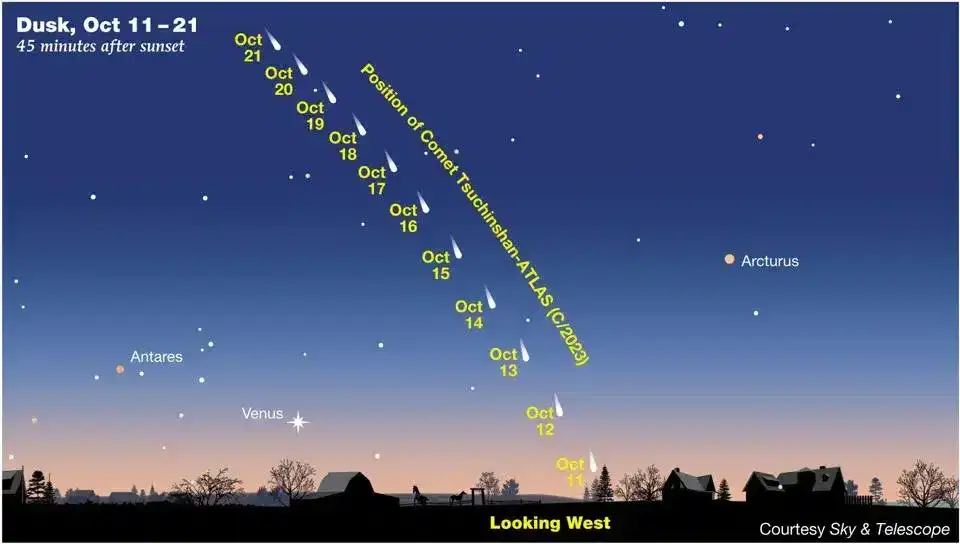
The upcoming ten nights serve as the optimal viewing period, with October 14 and October 15 expected to deliver the clearest and sharpest views. As Sky & Telescope points out, the comet will then appear higher in the sky and set against deeper darkness, making it easier to spot without twilight interference.
What Makes Comet Tsuchinshan-ATLAS a Rare Spectacle
Comet Tsuchinshan-ATLAS stands out as an extraordinary visitor from the farthest edges of our solar system, the Oort Cloud. Being a long-period comet, it returns only once every 80,000 years, making this appearance especially rare. Its journey to the inner solar system is a remarkable event that allows observers on Earth to see it glowing brightly in the evening sky—a rarity among comets of this type.
Forbes highlights this as the most luminous comet since Comet NEOWISE in 2020. Making it even more spectacular, its close approach to Earth on this weekend amplifies its visibility. After reaching perihelion on September 27, the comet emerged from the sun’s blinding light and is now visible post-sunset. As noted by Sky & Telescope, "The comet will appear higher in the sky and become easier to spot through the weekend."
What differentiates Comet Tsuchinshan-ATLAS is its impressive brightness and proximity during this passage. With a magnitude near +0.3, it outshines Halley’s Comet, which last passed close by in 1986. Sky enthusiasts can watch its progress across the night sky as it gradually dims over the coming week. Given the comet’s extensive orbit, catching this dazzling visitor is truly a once-in-a-lifetime chance.
Tips for Viewing Tonight and Beyond
To maximize your viewing experience of Comet Tsuchinshan-ATLAS tonight and in the days ahead, choose a location with a clear, unobstructed view of the western horizon and minimal light pollution. While binoculars or a telescope will enhance details, those in dark sky locations may even catch the comet with the naked eye.
Though tonight offers a prime opportunity, visibility improves throughout the week as the comet climbs higher against a darker sky. The best nights are expected to be October 14 and 15. The comet will remain visible through October 21, fading thereafter as it continues its journey away from Earth.
Even though the waxing gibbous moon will be 73% illuminated this evening, it will set early enough to leave the sky dark during prime viewing hours. The main challenge remains spotting the comet amidst the twilight, but once found, it promises to be a dazzling spectacle shining brightly in the night sky.
- Categories:
- Astronomy ,
- News









0 comments
Sign in to Comment