
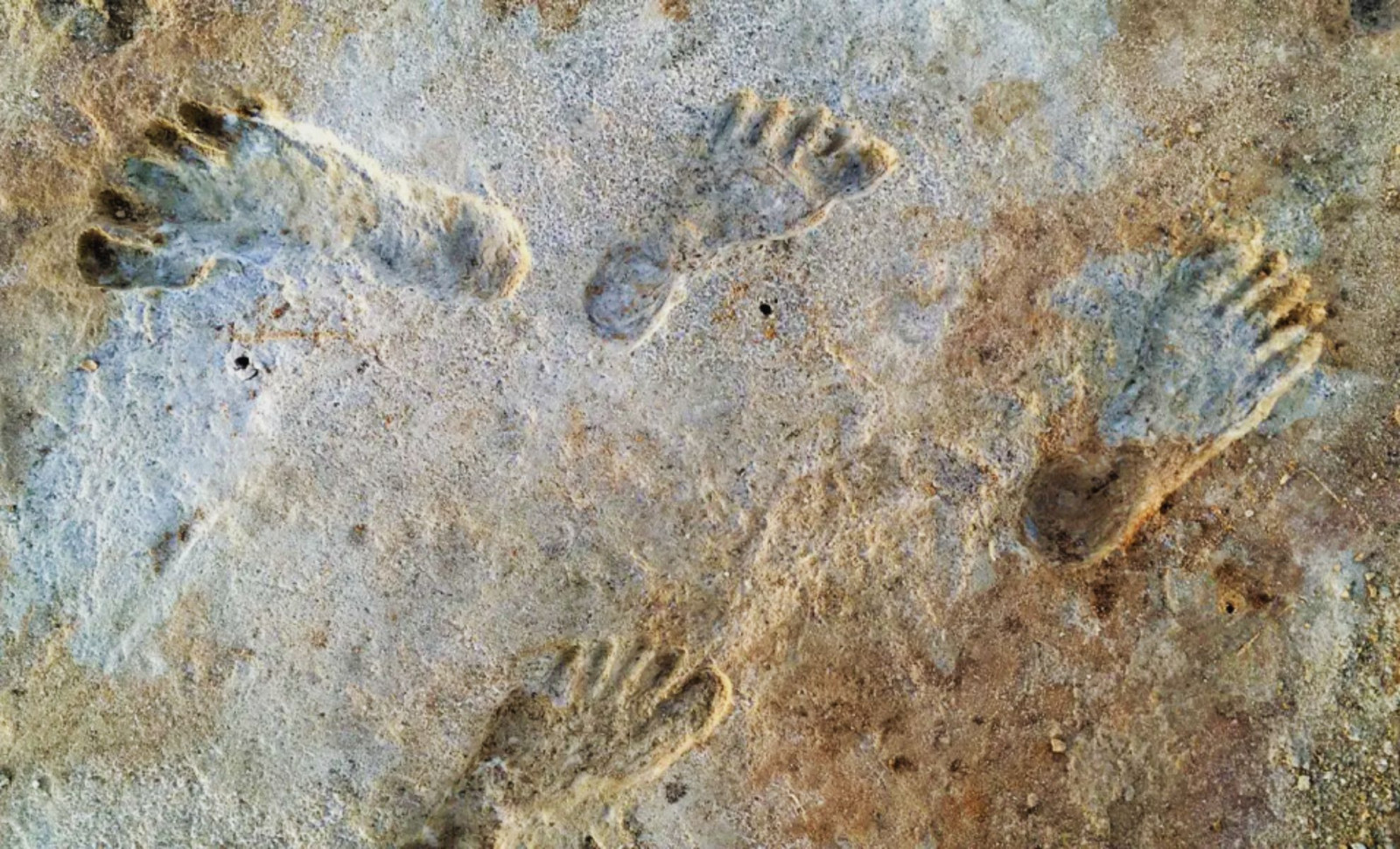
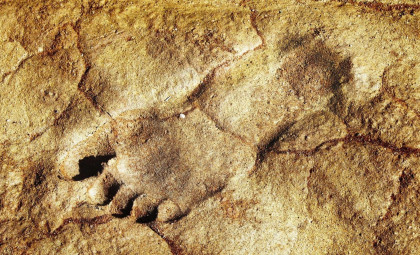
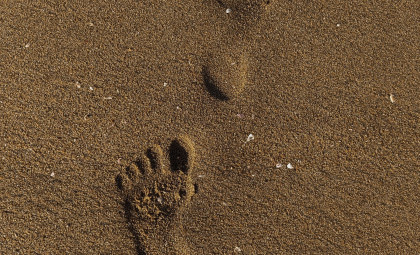
Impressions left by early humans in White Sands, New Mexico are overturning long-held beliefs about when people first set foot in North America. These footprints, embedded in prehistoric sediment, are over 20,000 years old, indicating human presence on the continent far before previously accepted timelines—right in the heart of the last Ice Age.
The once widely accepted Clovis-first hypothesis held that the earliest humans crossed from Asia into Alaska via the Bering Land Bridge roughly 13,000 years ago. However, this White Sands discovery shifts that timeline significantly, pointing to human occupation thousands of years earlier.
Glacial Era Footprints Frozen in Time
The footprints at White Sands were captured in mud on an ancient lakebed dating back to the Last Glacial Maximum around 23,000 years ago, when the planet was gripped by its coldest period of the Ice Age. During this time, the region was much wetter than today, likely featuring lakes that could have provided sanctuary for early populations.

Initial dating relied on associated plant seeds and pollen, but questions about these methods prompted further analysis. Radiocarbon dating of the mud directly confirmed the footprints’ age, reinforcing evidence of human existence in North America well before the rise of Clovis culture.
Robust Evidence Validated by Multiple Tests
Vance Holliday, leading the research from the University of Arizona, emphasized the consistency across different laboratories. Testing of seeds, pollen, and mud samples all converged on the same timeframe: between 20,700 and 22,400 years ago.
“It’s a remarkably consistent record,” Holliday said, “You get to the point where it’s really hard to explain all this away. As I say in the paper, it would be serendipity in the extreme to have all these dates giving you a consistent picture that’s in error.”
An unresolved issue is the absence of other types of human-made artifacts, such as tools or shelters, accompanying the prints. According to the report published on Science Advances, these footprints likely formed rapidly in a fleeting moment, which may explain why no additional cultural evidence remains. The remote nature of the location further reduces the chance that physical artifacts were left behind.
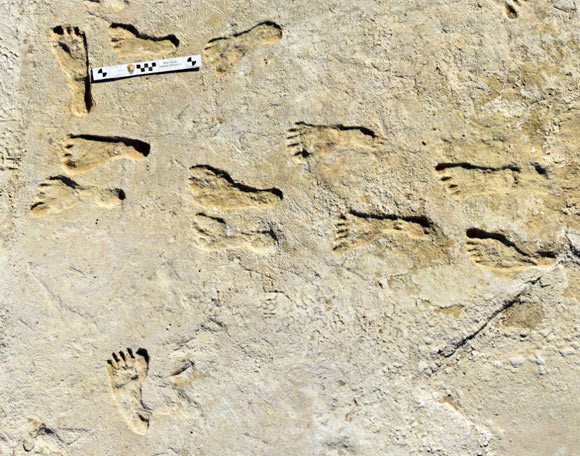
Reevaluating the Origins of the First Americans
This groundbreaking find forces scientists to reconsider existing models of how and when the Americas were first inhabited. The Clovis-first theory, which suggested human arrival approximately 13,000 years ago, is now under scrutiny. Evidence of humans living in North America 23,000 years ago hints at more complex migration routes and adaptation strategies in a dramatically different Ice Age environment.
“I really had no doubt from the outset because the dating we had was already consistent,” Holliday said. “We have direct data from the field – and a lot of it now.”
This discovery opens new avenues of inquiry into how early humans survived the harsh Ice Age climate. What landscapes did they navigate, and what survival tactics did they develop? As ongoing research uncovers more data, a more intricate narrative of early American inhabitants is emerging.
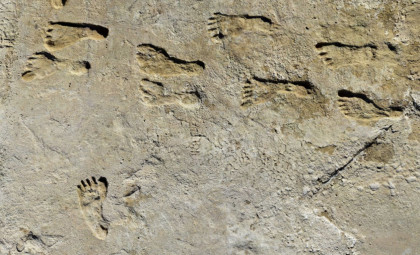
“It’s a fair question. Some of the footprints uncovered for the 2021 study were part of trackways that would have taken just a few seconds to walk,” said the authors.
- Categories:
- Science









0 comments
Sign in to Comment