
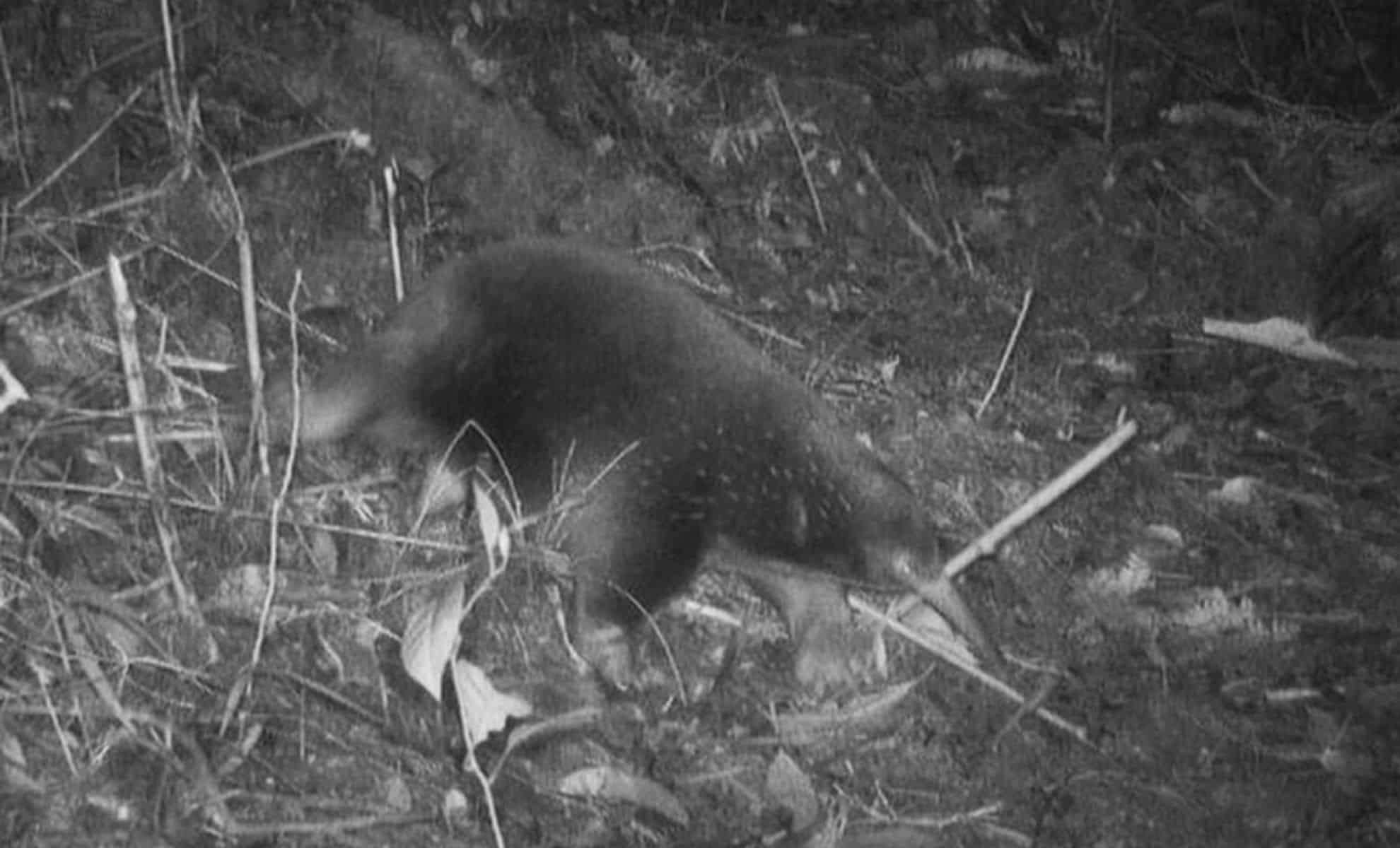
In a stunning breakthrough, scientists recently documented a creature estimated to be around 200 million years old, long thought to have vanished, deep in Indonesian wilderness. The Attenborough’s long-beaked echidna, scientifically named Zaglossus Attenboroughi, was spotted and recorded by researchers from Oxford University, who were on an expedition that yielded far more than expected.
Previously known only from a preserved specimen housed in a museum, this prehistoric mammal—named to honor the legendary naturalist Sir David Attenborough—has now been observed alive in its natural habitat.
Encountering a Living Remnant of Prehistory
The video footage, highlighting the echidna’s trademark elongated snout and dense coat, has thrilled scientists worldwide. Before this, evidence of the species was limited to museum samples gathered many decades ago. Captured near the end of the team’s fieldwork, the images provide undeniable proof that this remarkable species endures today.

Echidnas, among the very few mammals that lay eggs, are commonly dubbed “living fossils.” This term reflects their ancient lineage, tracing back to the era when dinosaurs dominated the planet.
A Triumphant Milestone for the Team
Months of diligent study and fieldwork culminated in this moment of discovery. Dr. James Kempton, a biologist with Oxford, described the exhilarating instant they viewed the footage: “It was sheer jubilation for everyone involved,” he shared with BBC News.
“Remarkably, it was the last SD card from the final camera, reviewed on the expedition’s closing day, that revealed this treasure.”
This is the first ever video of Attenborough's long-beaked echidna, a species that has not been seen since 1961 but was recently caught on camera in New Guinea. Echidnas (aka spiny anteaters) and the platypus are the only mammals that lay eggspic.twitter.com/9WQOD9j3rW
— Ferris Jabr (@ferrisjabr) November 10, 2023
Implications of the Species’ Rediscovery
The appearance of the Attenborough’s long-beaked echidna is highly significant both scientifically and culturally. Ecologically, it highlights the urgent need to safeguard such ancient species, which can provide key insights into Earth’s biodiversity. Considered quite rare, this echidna’s survival is a vital piece of the planet’s ecological puzzle.
In addition to the echidna, the researchers uncovered several new insect and amphibian species, emphasizing how much remains to be discovered in the world's least explored regions.
Beyond science, the species holds cultural meaning for communities in Papua, where the echidna symbolizes peace and reconciliation. This adds rich cultural value to the biological discovery, demonstrating how species can intertwine with human traditions and histories.
- Categories:
- News









0 comments
Sign in to Comment