
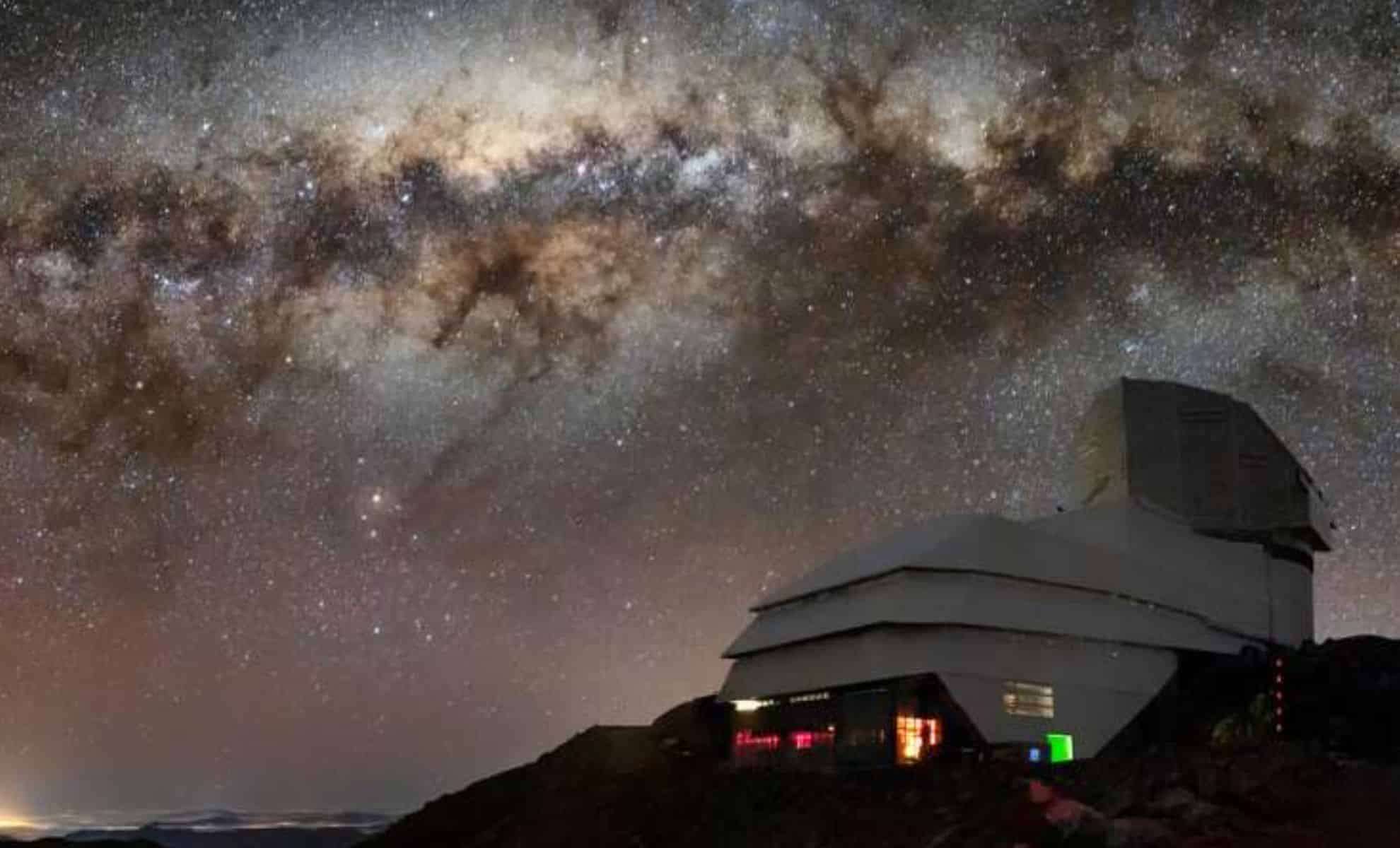
The Vera C. Rubin Observatory in Chile is poised to revolutionize our view of the solar system by detecting millions of previously unseen asteroids, comets, and minor planets. As it approaches full operational status, this innovative observatory is expected to provide astronomers with the most comprehensive and detailed survey of celestial small bodies yet, transforming our knowledge of near-Earth asteroids as well as distant solar system regions like the Kuiper Belt. For more details, see the Rubin Observatory’s upcoming operations.
The Vera C. Rubin Observatory: Unlocking Countless Cosmic Secrets
Located atop Cerro Pachón in northern Chile, the observatory houses the Simonyi Survey Telescope—a cutting-edge 8.4-meter instrument featuring a unique three-mirror design. Complemented by the LSST Camera, which captures 3.2 gigapixels across a field about 45 times wider than the full moon, the Rubin Observatory will scan the night sky extensively over the next decade. Generating around 20 terabytes of data per night, it will provide extraordinary insights into the population and properties of the solar system’s small bodies.
Introducing Sorcha: Simulating the Future of Discovery
Astronomers have created Sorcha, an advanced open-source simulator, to forecast the discoveries Rubin will make. By modeling the observatory’s observing schedule and applying state-of-the-art solar system distribution models, Sorcha helps anticipate the types and numbers of objects Rubin is likely to detect. Meg Schwamb of Queen’s University Belfast, who led Sorcha’s development, stresses its importance: “Accurate simulation software like Sorcha is critical. It tells us what Rubin will discover and lets us know how to interpret it. Our knowledge of what objects fill Earth’s solar system is about to expand exponentially and rapidly.” This tool aids scientists in preparing for and analyzing Rubin’s unprecedented influx of data.

Revealing the Solar System’s Ancient Records
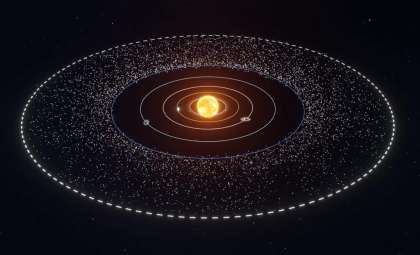
The solar system contains far more than its eight planets and moons: tens of millions of smaller objects, such as asteroids and comets, act as remnants from its infancy. These bodies hold vital clues about early planetary formation and the origins of Earth’s water and organic compounds. Rubin’s extensive surveys are expected to vastly improve our inventory of these minor bodies. Jake Kurlander, a doctoral candidate at the University of Washington, points out: “Rubin’s unparalleled combination of breadth and depth makes it a uniquely effective discovery machine,” adding, “It took 225 years of astronomical observations to detect the first 1.5 million asteroids. Rubin will double that number in less than a year.” This accelerated detection pace will deepen our understanding of the solar system’s makeup and history.
Enhancing Planetary Defense Capabilities
Beyond expanding scientific knowledge, the Rubin Observatory will be vital for planetary defense by identifying previously unknown near-Earth asteroids. It is expected to catalog more than 127,000 such objects—over three times the current count—and detect more than 70% of all potentially dangerous asteroids larger than 140 meters. This comprehensive tracking will be crucial for future efforts to protect Earth from asteroid impacts. Kurlander explains, “With this data, we’ll be able to update the textbooks of solar system formation and vastly improve our ability to spot – and potentially deflect – the asteroids that could threaten Earth.”
A Vivid New Perspective on Small Solar System Bodies
One standout feature of Rubin is its ability to capture objects in color, a major improvement over previous monochromatic surveys. The LSST Camera will reveal detailed color information about surface composition and variety among small bodies, enriching our understanding of these objects. Joe Murtagh, a PhD student at Queen’s University, likens the upgrade to going “from black-and-white television to brilliant color.” This enhanced imaging capability promises unprecedented detail and context for solar system studies.
Exploring Jupiter Trojans and the Kuiper Belt
Among Rubin’s exciting objectives is the study of Jupiter Trojans—ancient bodies sharing Jupiter’s orbit within stable Lagrange regions. Rubin is expected to detect up to 109,000 Jupiter Trojans, increasing the known sample by a factor of seven and providing fresh insights into primordial solar system matter. The observatory will also extensively survey the Kuiper Belt, uncovering about 37,000 trans-Neptunian objects—ten times more than currently cataloged—shedding light on the formation of Neptune and the outer solar system’s dynamics.
Tracking Centaurs on their Journey to Become Comets
Rubin will monitor Centaurs, transitional objects with unstable orbits between the giant planets, many of which eventually evolve into short-period comets. This will be the first comprehensive study of these mysterious bodies, enhancing understanding of their orbital evolution and the forces shaping their paths through the solar system.
The Dawn of a New Chapter: First Images and Future Prospects
On June 23, the Rubin Observatory will debut its initial public images in the “First Look” event, signaling the start of full scientific operations. Armed with tools like the Sorcha simulator and the LSST Camera, astronomers anticipate a paradigm shift in solar system exploration. According to Siegfried Eggl of the University of Illinois Urbana-Champaign, “Only by debiasing LSST’s complex observing pattern can we turn raw detections into a true reflection of the solar system’s history – where the planets formed, and how they migrated over billions of years.” With Rubin’s discoveries, we are entering an unprecedented era of mapping and understanding our cosmic neighborhood.
- Categories:
- News







0 comments
Sign in to Comment