
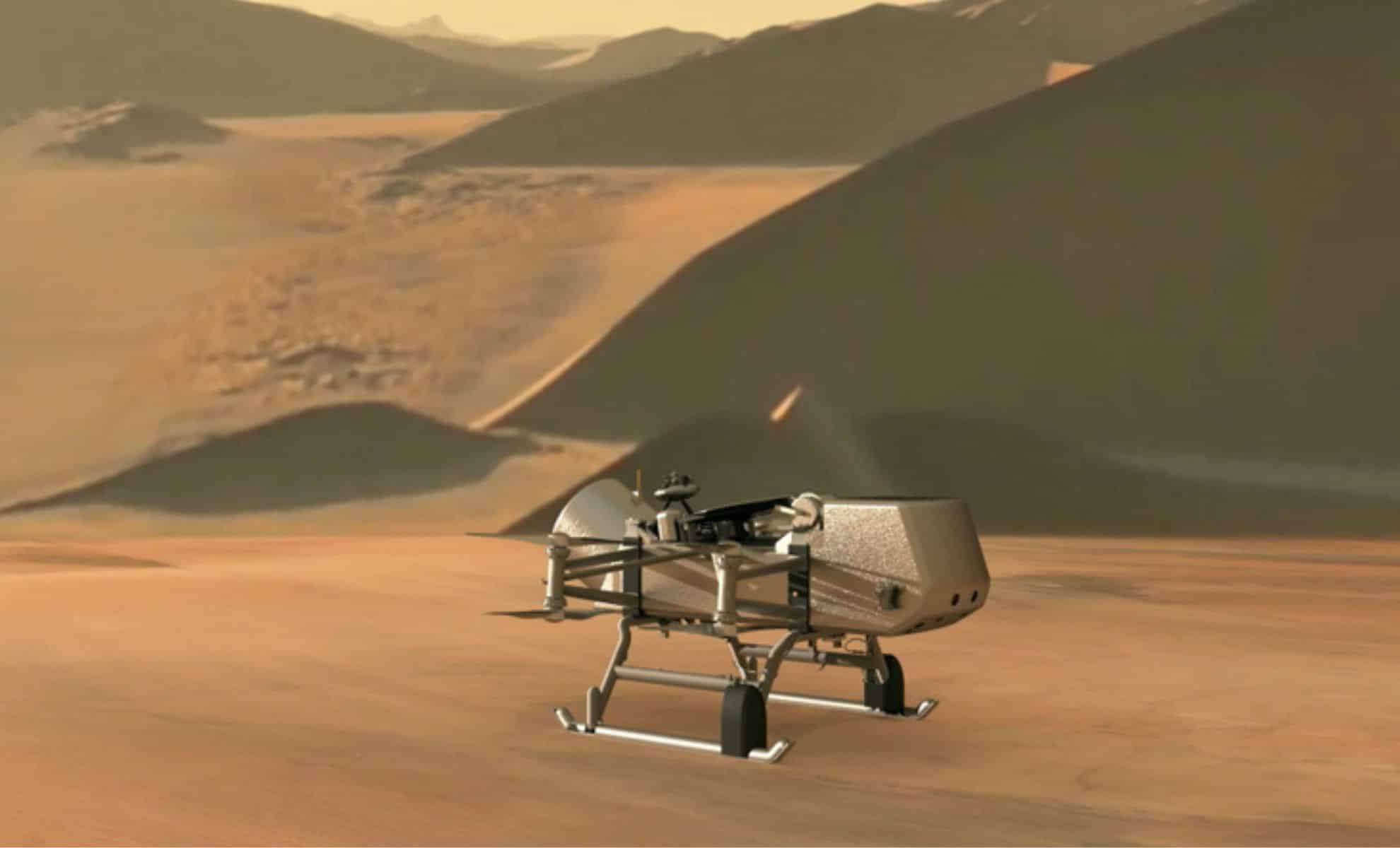
NASA is gearing up to select its fifth New Frontiers mission, known as NF-5, which targets crucial scientific investigations across the solar system. Although the formal announcement won't come before 2026, anticipation is already high within the scientific community. The mission themes under consideration were detailed in a recent article published in the Proceedings of the National Academy of Sciences.
New Frontiers Program: Bridging Mid-Level Planetary Science Missions
The New Frontiers initiative serves as a vital component of NASA’s planetary exploration strategy. It bridges the gap between smaller Discovery-class missions and the highly ambitious flagship missions, featuring mid-scale projects led by principal investigators focused on top scientific priorities. These priorities stem from NASA’s Decadal Survey, a community-endorsed report highlighting key areas for investment.
The NF-5 mission selection will incorporate advancements in technology and updated scientific goals informed by cutting-edge planetary discoveries. According to Dr. Lori Glaze, head of NASA's Planetary Science Division, these enhancements enable investigations targeting destinations and mission designs that were previously unattainable.

The overlapping timelines between NF-5 and the subsequent NF-6 cycle offer mission teams more leeway to develop innovative, multi-faceted proposals capable of making substantial scientific contributions.
Exploring the Outer Solar System's Icy and Volcanic Worlds
A primary focus of NF-5 is the outer solar system, featuring some of the most interesting and dynamic celestial bodies known to NASA. Among the proposed ideas is the Io Observer mission, which aims to study Jupiter’s volcanic moon Io. Scientists are eager to understand the intense geological activity there, including tidal heating processes, internal mechanics, and the continuous reshaping of its surface.
“The broad objectives of Io Observer continue to address multiple decadal survey priority science questions,” wrote the National Academies of Sciences, Engineering, and Medicine, underscoring the scientific value of such a mission.
Other proposals are set on Enceladus, a moon orbiting Saturn known for its water vapor plumes suggestive of a hidden ocean beneath its icy crust. Investigating these plumes could reveal vital clues about the moon's chemistry and its potential to harbor microbial life.
There is also significant interest in examining Centaur and comet-like objects, particularly with missions capable of performing landings or returning samples. These primordial icy leftovers from the formation of the solar system could help unlock secrets about the earliest planetary conditions.
Probing the Depths of Gas Giants: Saturn in Focus
Beyond moons, NF-5 encourages mission concepts that involve sending probes into the atmospheres of gas giants, especially Saturn. A dedicated Saturn Probe would collect crucial information on atmospheric composition, thermal structure, cloud dynamics, and more.
This type of mission would build on the legacy of Cassini, filling gaps left since Cassini's atmospheric dive in 2017, and enhancing our understanding of giant planet atmospheres.
Renewed Earth-Moon Investigations Under NF-5
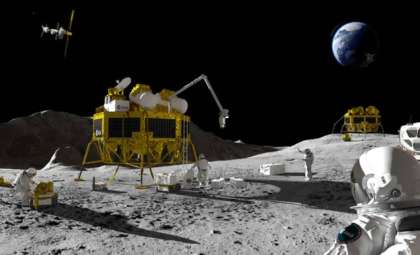
The upcoming NF-5 mission cycle is also expected to include strong lunar science proposals. A key example is the Lunar Geophysical Network, which envisions deploying scientific instrument arrays across the Moon’s surface. These instruments would gather data on seismic activity, heat flow, and magnetic fields to produce detailed maps of the Moon’s interior.
This knowledge would inform understanding of the Moon’s origin and geologic history while supporting upcoming Artemis missions by identifying optimal sites for habitation and resource extraction.
The synergy between these robotic investigations and crewed missions underlines NASA's integrated approach to exploration, fusing planetary science with human spaceflight.
Innovations and a Diverse Range of Targets in NF-5
Each New Frontiers round delivers groundbreaking missions, but NF-5 distinguishes itself by incorporating state-of-the-art instrumentation, novel spacecraft technologies, and advanced propulsion methods. These improvements enable longer mission lifetimes, higher precision, and the ability to adapt payloads dynamically to evolving conditions.
Importantly, NF-5 emphasizes a wide array of target destinations—from moon surfaces to outer solar system giants—highlighting NASA’s commitment to capturing the solar system’s intricate diversity. This promotes cross-disciplinary investigations combining geology, chemistry, physics, and astrobiology, broadening the potential scientific impact.
- Categories:
- News






0 comments
Sign in to Comment