
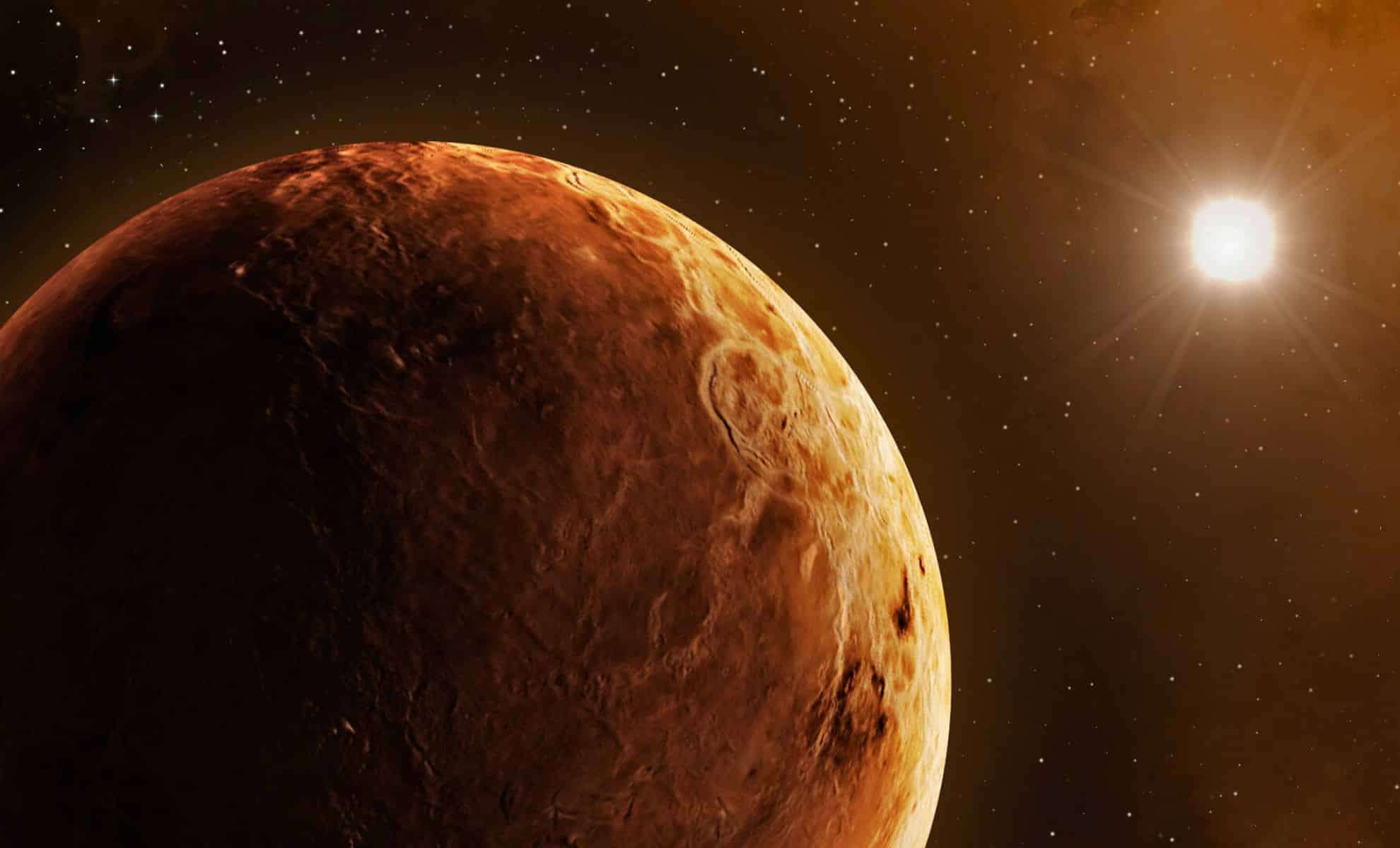
NASA’s upcoming DAVINCI mission aims to address one of Venus' greatest enigmas: Could this scorching planet have once possessed oceans and landmasses similar to Earth’s?
Planned for launch in the early 2030s, DAVINCI will investigate whether Venus, despite its current extreme environment, once supported a climate conducive to liquid water. By unlocking clues from the planet’s past, this mission has the potential to transform our understanding of why Venus diverged so dramatically from Earth’s evolutionary path.
Probing Venus’ Antiquity through Advanced Instruments
The Deep Atmosphere Venus Investigation of Noble gases, Chemistry, and Imaging (DAVINCI) mission involves both a flyby spacecraft and a descent probe targeting Venus’ Alpha Regio—a rugged, mountainous expanse believed to be one of the planet’s ancient highlands. This region could hold critical evidence about Venus’ geological evolution and its potential for having once hosted liquid water. DAVINCI will be the first mission in nearly 50 years to capture images of Venus’ surface from beneath its dense, cloud-covered atmosphere.

NASA researchers have applied contemporary analytical methods to data gathered by earlier missions like the Magellan spacecraft in the early 90s. Leveraging modern technologies such as artificial intelligence and machine vision, they've refined the topographic maps of Alpha Regio, uncovering new geologic formations that raise intriguing questions about the area’s origin. According to Jim Garvin, DAVINCI’s lead scientist, this mission is a piece of the larger puzzle painting “the mosaic that tells the story of Venus.”
Mining Historical Data for New Planetary Insights
In preparation for DAVINCI’s arrival, NASA’s team is revisiting legacy data from missions such as Magellan and Pioneer Venus (1978). With contemporary analysis tools, this archival information has revealed fresh evidence, including signs of active volcanic processes on Venus. Combining these historic data sets with current measurements will help researchers chart Venus's surface and atmospheric transformations over time.
A key innovation in DAVINCI is its application of AI technology to enhance the clarity of descent imagery, enabling creation of detailed 3D maps of the terrain. These maps could unveil finer details such as rocks, channels, and gullies that might provide pivotal insight into Venus’ ancient environment.
Investigating the Unique Tessera Landscapes
Alpha Regio features distinctive tessera terrain—complex, ridged landforms that display patterns resembling geometric tiles on a parquet floor. Found only on Venus, tesserae remain a subject of scientific debate concerning their formation. DAVINCI aims to clarify whether Venus’ tessera landscapes were shaped by geological forces comparable to those that create mountains and volcanoes on Earth.
As the descent probe penetrates Venus’ dense atmosphere, image collection will commence around 40 kilometers (25 miles) altitude. While Venus’ thick atmosphere scatters and blurs light, sophisticated processing techniques are being developed to retrieve sharp images. Analyzing surface features and rock composition could shed light on whether the geological forces sculpting tesserae resemble those on our home planet.
Exploring the Possibility of Past Habitability
The fundamental question driving DAVINCI is whether Venus, often dubbed Earth’s sister planet, might once have had conditions suitable for life. Though now enveloped in a dense sulfuric acid atmosphere with searing heat capable of melting lead, scientists theorize that billions of years ago Venus may have enjoyed a mild climate, featuring oceans and flowing rivers. Investigating Alpha Regio could uncover traces of these past watery realms—an essential ingredient for life.
Discoveries from this mission have the potential to reshape our understanding of planetary development and illuminate why Venus and Earth, despite their similarities, pursued such divergent evolutionary paths. As Garvin emphasized, “This story tells of a planet that might have mirrored Earth but experienced a dramatic transformation.”
Setting the Stage for Future Venus Exploration
DAVINCI is part of a broader suite of upcoming missions to Venus, including NASA’s VERITAS and ESA’s EnVision, that together seek to unravel the planet’s geological and atmospheric secrets. Data gathered by DAVINCI and these missions will provide a detailed look at Venus’ history and its potential past habitability.
By venturing boldly into Venus' shrouded surface, the DAVINCI mission aims to advance our knowledge not only of our closest planetary neighbor but also of the processes that drive planetary evolution across the solar system.
- Categories:
- Astronomy ,
- News ,
- Nasa











0 comments
Sign in to Comment