

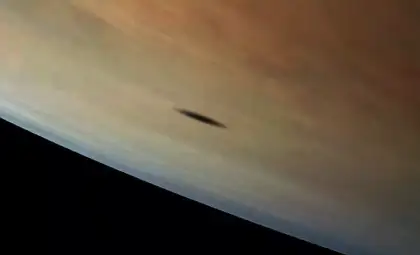
Astronomers have recently identified two intriguing phenomena on Jupiter. One involves an unusual glow seen on the planet’s night side, which might hint at interactions with dark matter.
At the same time, scientists discovered new atmospheric formations above the Great Red Spot, overturning long-held views about this turbulent region. These insights promise to deepen our understanding of Jupiter’s atmospheric dynamics and its role within our solar system.
Infrared Glow on Jupiter’s Night Side Points to Possible Dark Matter Activity
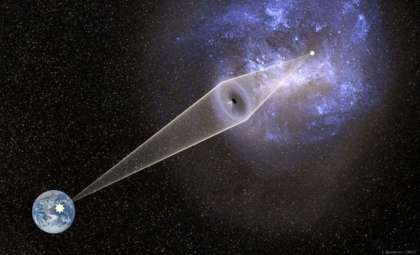
Scientists recently observed a striking infrared illumination on Jupiter’s dark side that could indicate the effect of dark matter. Comprising an estimated 70-80% of the universe’s total mass, dark matter remains invisible via conventional detection methods despite its vast gravitational influence. This research proposes that dark matter interactions could enhance the concentration of trihydrogen cations (H3+) in Jupiter’s upper atmosphere, visible as this infrared light.

Researchers Carlos Blanco from Princeton and Stockholm universities, along with Rebecca Leane affiliated with the Stanford Linear Accelerator Center (SLAC) and Stanford University, explain that Jupiter’s gravitational pull might capture dark matter particles. These particles could annihilate, emitting ionizing radiation that increases H3+ levels, which were recorded by instruments like the Visual and Infrared Mapping Spectrometer (VIMS) aboard NASA's Cassini probe, which passed by Jupiter decades ago.
“Our study shows how dark matter could produce additional H3+ ions in planetary atmospheres,” Blanco and Leane stated. “Captured dark matter annihilation leads to ionizing radiation detectable in these environments.”
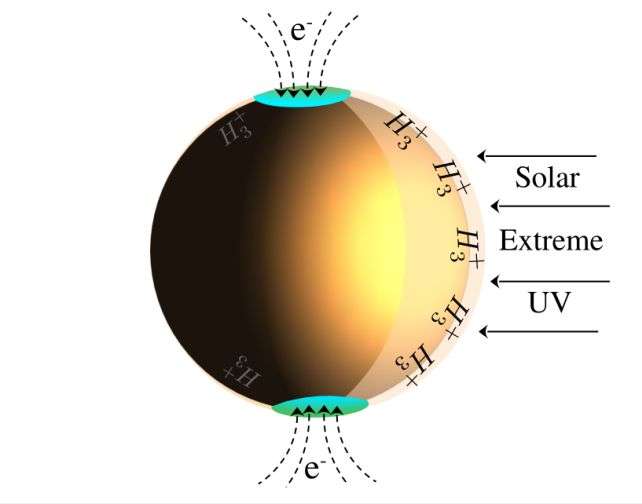
The researchers emphasize that refined spectral measurements of planetary atmospheres could provide critical evidence for dark matter activity beyond Earth. “This discovery opens a new pathway to detect ionizing radiation caused by dark matter in planetary atmospheres, marked by an excess of H3+ ions,” they noted. “Future precise spectroscopic observations of Jovian exoplanets could confirm these effects.”
Jupiter’s Great Red Spot Hosts Surprising Atmospheric Patterns
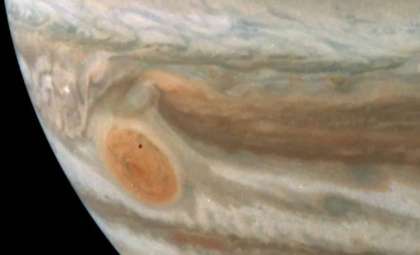
Using data from the James Webb Space Telescope (JWST), scientists uncovered unexpected formations high above the Great Red Spot, Jupiter’s iconic storm. Contrary to earlier beliefs that this region was relatively featureless, the new imagery revealed intricate patterns of luminous spots and dark arcs in infrared wavelengths.
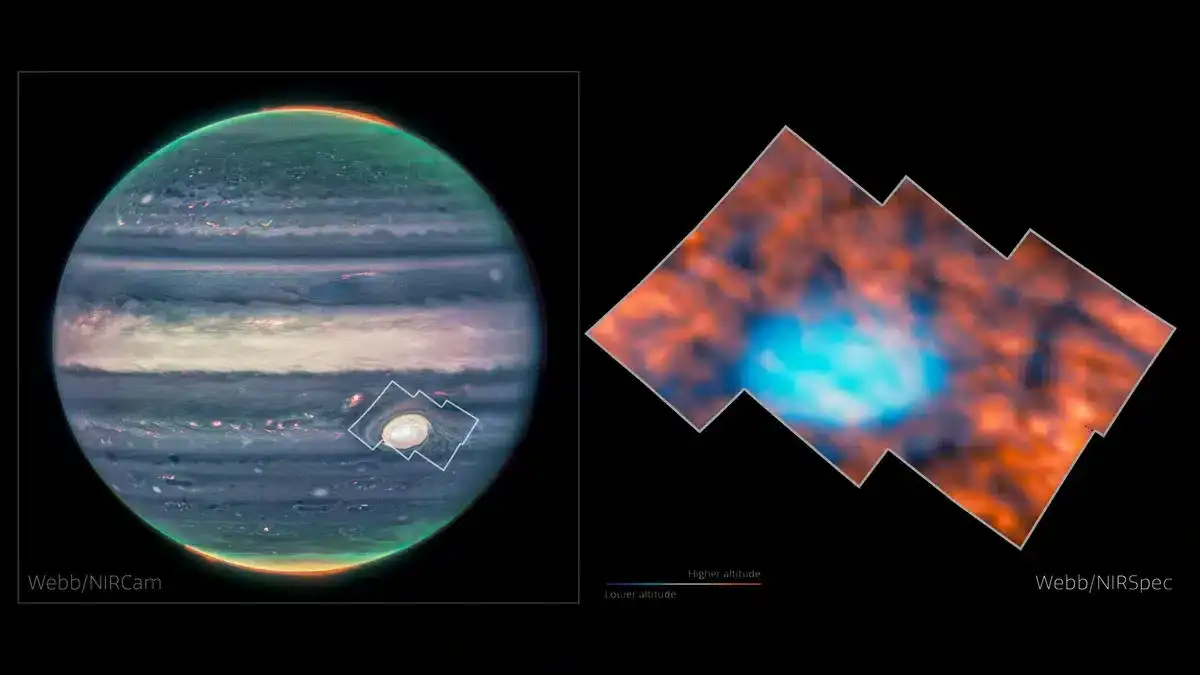
Henrik Melin, leading the research at the University of Leicester, reflected, “We assumed this area would be quite dull, but it proves to be as captivating as Earth’s auroras, if not more. Jupiter continually surprises us.” The unusual atmospheric features arise not from solar illumination but from complex underlying atmospheric turbulence.
The team proposes that these phenomena stem from gravity waves—analogous to ocean waves—originating deep within Jupiter’s churning atmosphere beneath the Great Red Spot. “These waves propagate upwards, altering the upper atmospheric structure and emission patterns,” Melin elaborated. While gravity waves also exist on Earth, their amplitude and effects are far stronger on Jupiter.
This research, part of JWST’s Early Release Science (ERS) initiative, aims to clarify previously observed elevated temperatures above the Great Red Spot. The novel observations offer fresh perspectives, with plans underway for follow-up studies to delve deeper into Jovian atmospheric dynamics. Insights gained will benefit upcoming exploration efforts, including the European Space Agency’s JUICE mission targeting Jupiter and its icy satellites.
- Categories:
- Astronomy ,
- News ,
- Space ,
- Nasa







0 comments
Sign in to Comment