
Emerging research undermines the idea that primordial black holes could make up dark matter, steering investigations toward alternate possibilities.
Summary of the Investigations
Recent analyses have closely examined whether primordial black holes, thought to have originated in the early universe, might significantly contribute to dark matter. These studies, appearing in Nature and the Astrophysical Journal Supplement Series, are based on nearly 20 years of data from the Optical Gravitational Lensing Experiment (OGLE) at the University of Warsaw’s Astronomical Observatory.
The extensive dataset represents the most detailed photometric star monitoring for the Large Magellanic Cloud ever compiled. “This collection is the longest, broadest, and most precise photometric survey of stars in the Large Magellanic Cloud in contemporary astronomy,” said Prof. Andrzej Udalski, OGLE’s lead scientist.

Microlensing Method and Results
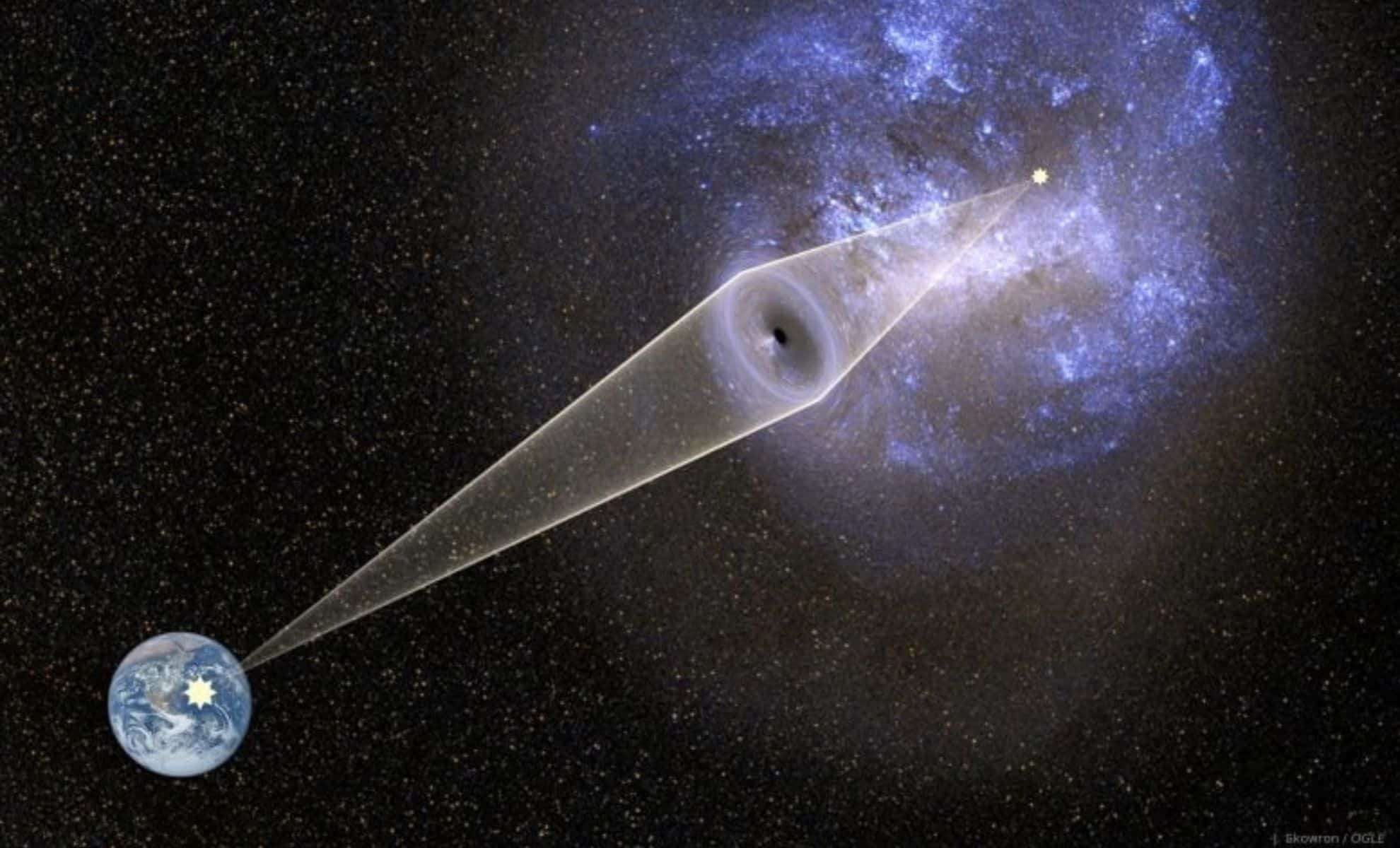
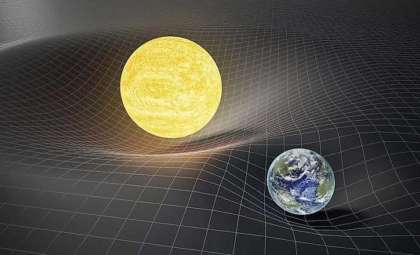
OGLE employed gravitational microlensing to search for black holes within the Milky Way halo. According to Einstein’s relativity, massive bodies can bend and amplify the light from distant stars, creating detectable microlensing events.
The length of these events correlates with the lensing object’s mass, with black holes causing longer duration signals. Typical microlensing events from objects around one solar mass last weeks, while those from black holes around 100 times the Sun’s mass can span several years.
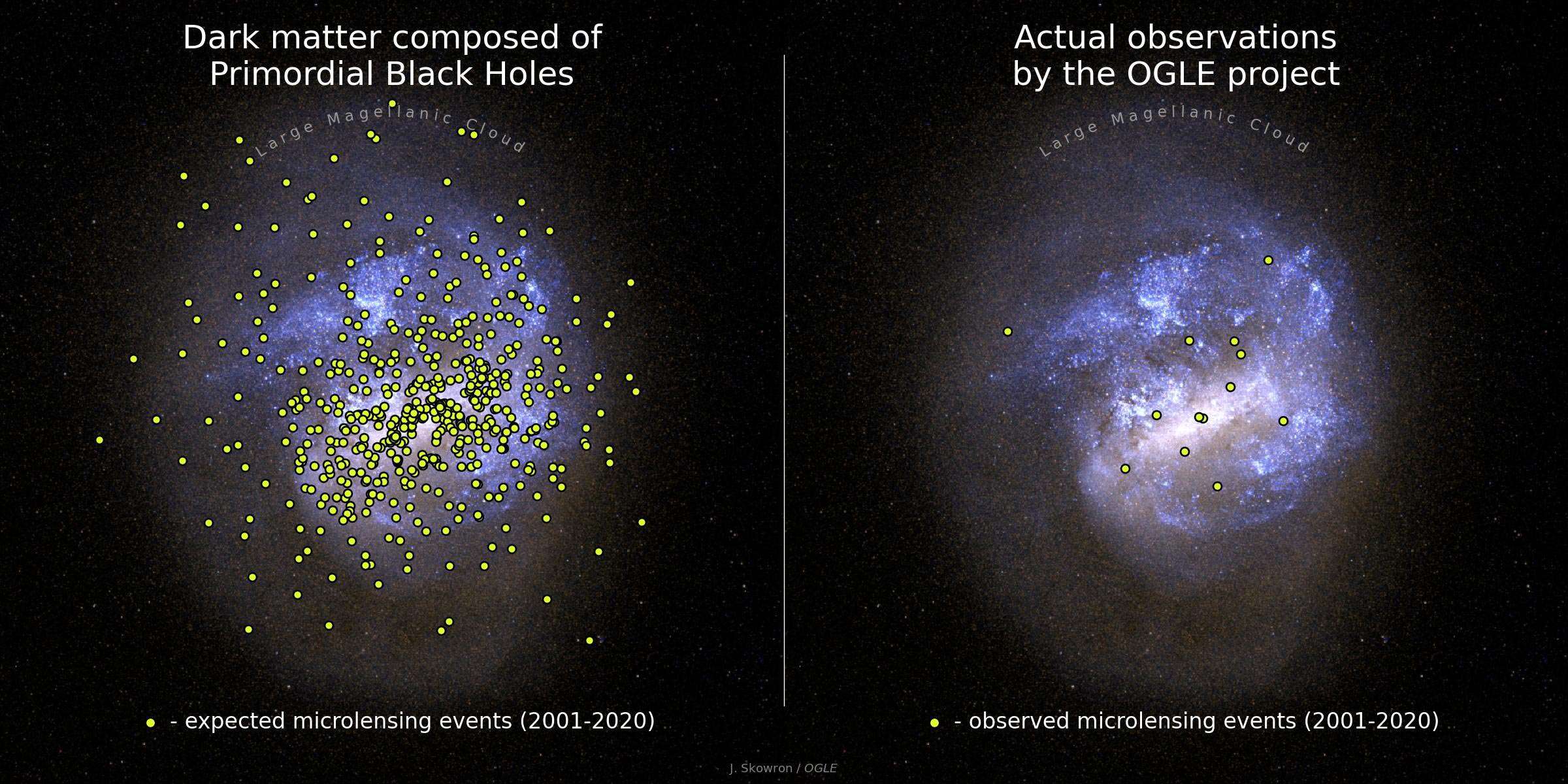
Scientists anticipated hundreds of microlensing detections if primordial black holes were a dominant dark matter form. Yet only 13 events surfaced, and thorough examination indicated these could be attributed to already known stellar objects instead of black holes.
“If all dark matter in our galaxy consisted of black holes with 10 solar masses, we would expect 258 microlensing events,” explained Dr. Przemek Mróz from the University of Warsaw. “For black holes at 100 solar masses, the prediction was 99 events. For those around 1000 solar masses, about 27 events were expected.” The vast gap between projections and actual observations implies that heavy black holes make up only a small fraction of dark matter.
Consequences for Dark Matter Understanding
The results impose significant limitations on the contribution of primordial black holes to dark matter. Calculations reveal that 10 solar mass black holes could represent no more than 1.2% of dark matter, 100 solar mass ones up to 3.0%, and 1000 solar mass black holes about 11%. “Our data shows that primordial black holes are unlikely to be the primary constituents of dark matter while also explaining black hole mergers observed by LIGO and Virgo,” noted Prof. Udalski.
This shifts the spotlight to other dark matter candidates, including unknown fundamental particles or more exotic phenomena. Despite extensive efforts, including experiments with the Large Hadron Collider, no new particles have been found that would solve the dark matter enigma. “Dark matter’s true nature remains concealed. The majority of researchers believe it is made up of unidentified elementary particles,” Dr. Mróz said. This persistent mystery underscores the demand for novel approaches and technology breakthroughs to decode dark matter.
Looking Ahead: Gravitational Waves and Dark Matter
The landmark detection of gravitational waves from merging black holes in 2015 paved the way for over 90 such events recorded by LIGO and Virgo. These black holes typically have masses between 20 and 100 solar masses, notably higher than the 5 to 20 solar masses commonly observed within the Milky Way. This disparity fuels speculation about their primordial origins. “Understanding why these two black hole populations differ so greatly is a major puzzle in modern astronomy,” Dr. Mróz remarked.
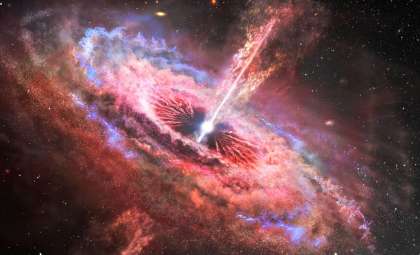
One theory suggests that primordial black holes formed shortly after the Big Bang due to extreme density fluctuations, collapsing directly into black holes. Although such objects were considered potential dark matter candidates, new findings limit their contribution to a minor fraction, highlighting the need to explain the sources of the massive black holes seen through gravitational wave signals. Alternative models propose these massive black holes arise from evolving massive, low-metallicity stars or from mergers within dense stellar clusters like globular clusters.
These discoveries emphasize the deep complexity of dark matter research and the value of diverse astronomical techniques. Continued progress in gravitational wave astronomy promises fresh insights, bringing us nearer to solving one of cosmology’s most captivating questions.
- Categories:
- Astronomy ,
- News ,
- Space





0 comments
Sign in to Comment