
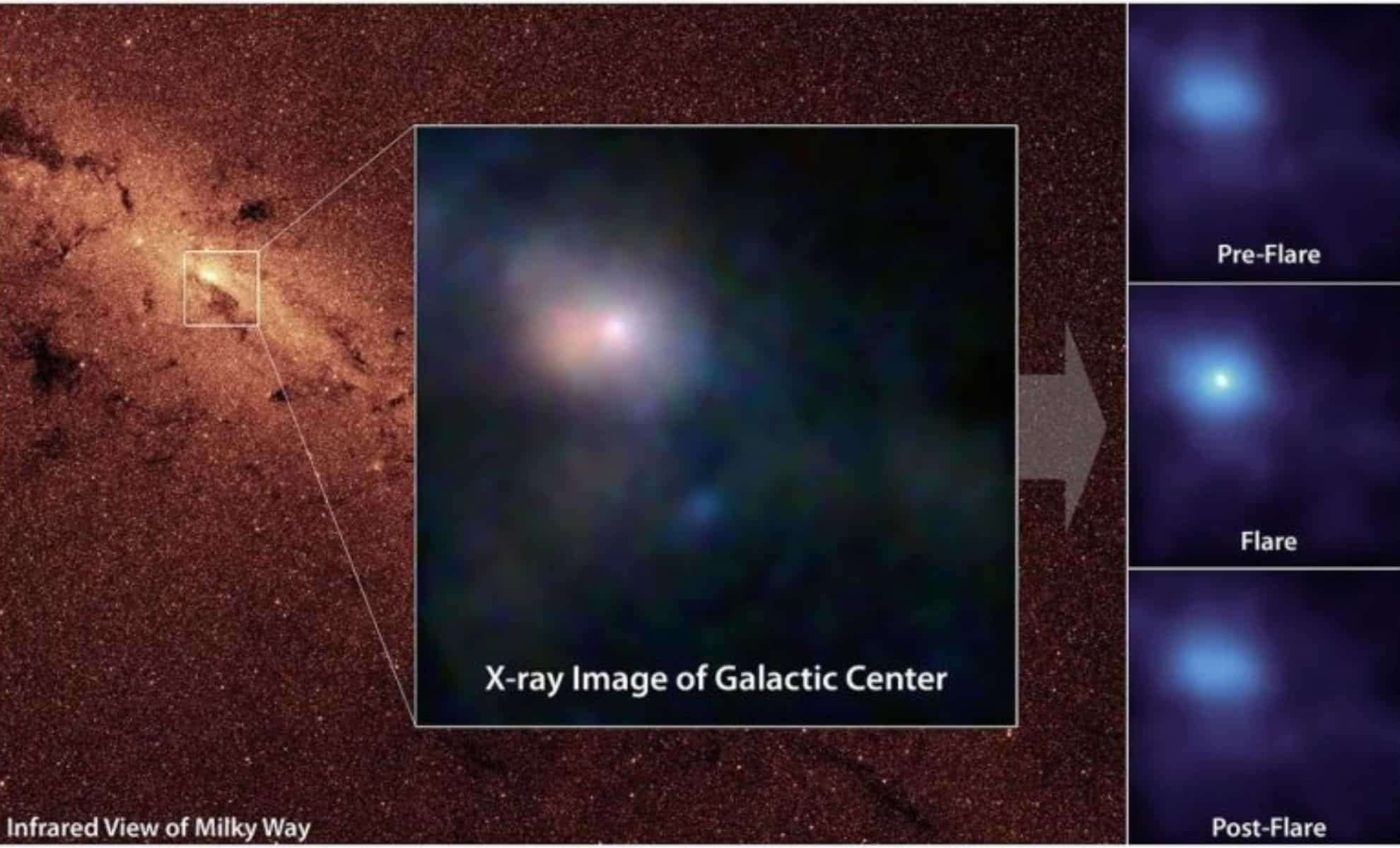
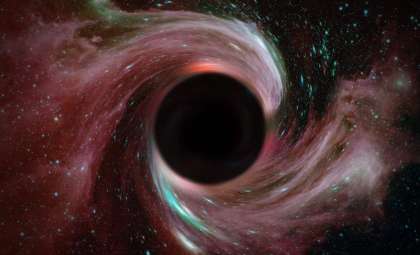
Scientists at Michigan State University (MSU) have achieved significant breakthroughs in understanding the supermassive black hole residing at the Milky Way’s core, called Sagittarius A* (Sgr A*).
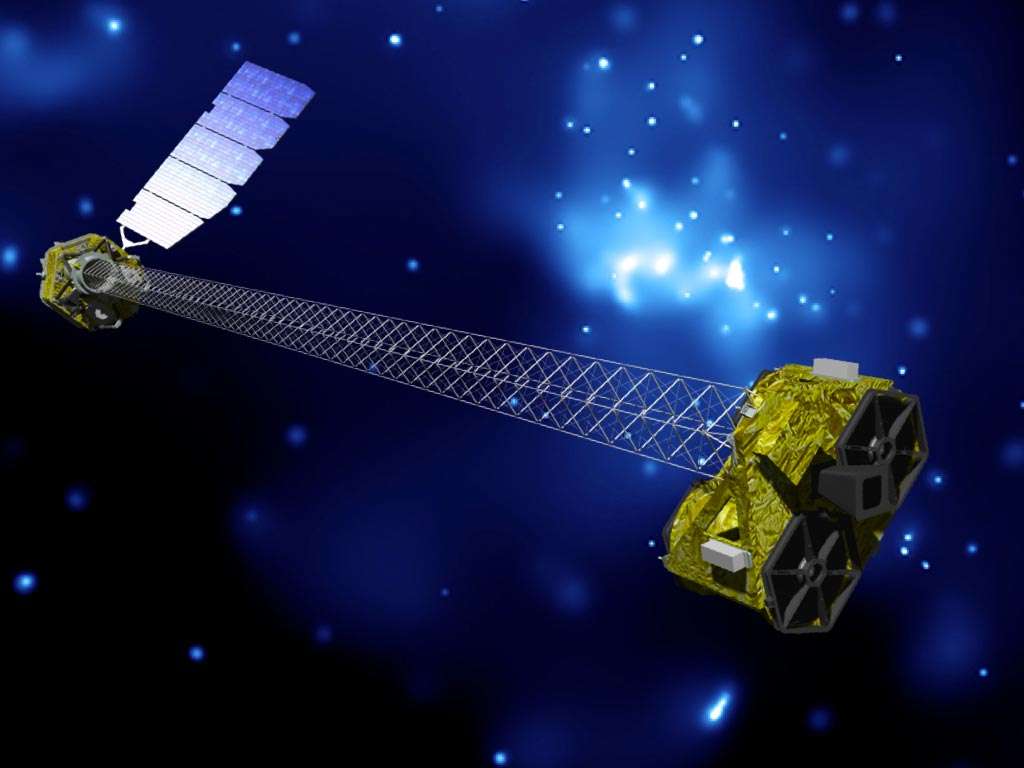
Drawing on an extensive dataset spanning ten years from NASA’s NuSTAR telescope, this research offers fresh perspectives on the mysterious environment around this massive celestial object.
Uncovering Hidden X-Ray Flares and Reflected Signals
Grace Sanger-Johnson, a postbaccalaureate scholar at MSU, identified nine previously unnoticed X-ray flares originating from Sagittarius A* by thoroughly examining a decade of observational data. These high-energy emissions shed light on the region immediately surrounding the black hole, typically concealed from view due to its overpowering gravitational pull that traps even light.

“We have a front-row seat to witness these exceptional cosmic phenomena at the heart of our Milky Way,” noted Shuo Zhang, Sanger-Johnson’s mentor. These flares serve as invaluable windows into the conditions near the black hole and enhance our grasp of the extreme space environment there.
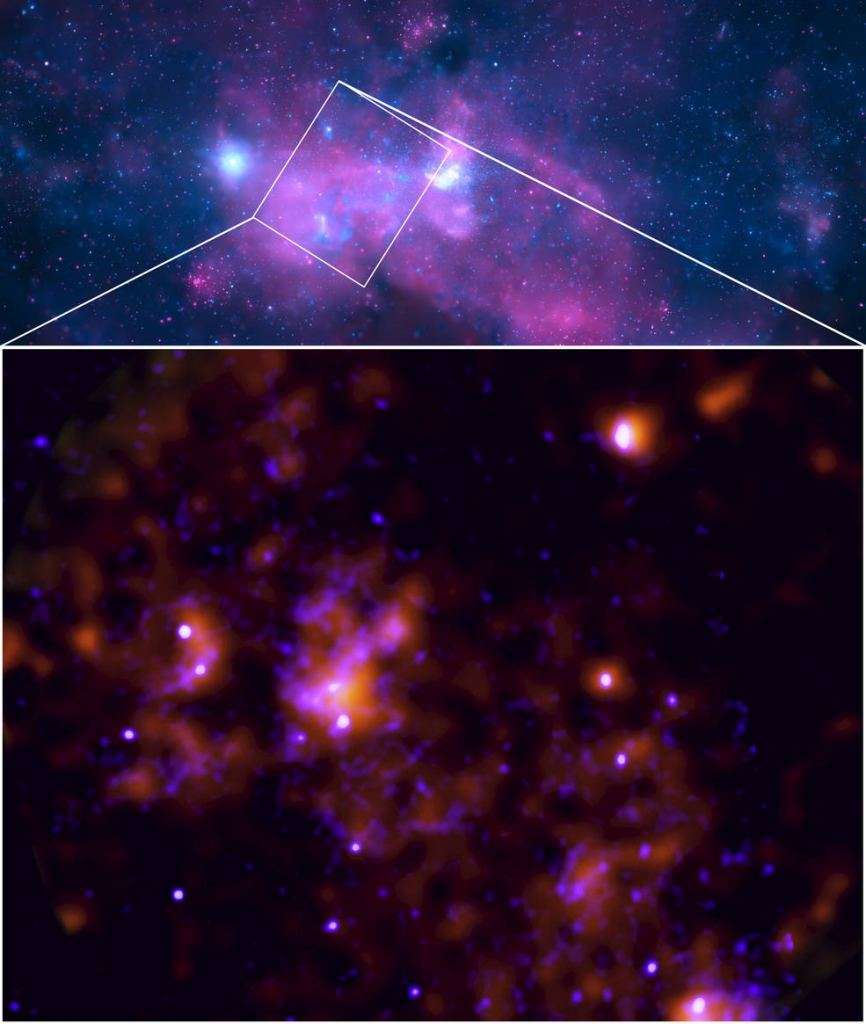
While Sanger-Johnson concentrated on these flares, undergraduate researcher Jack Uteg from the MSU Honors College focused on analyzing X-ray echoes originating from a nearby molecular cloud called “the Bridge.” These echoes provide a historical record of Sgr A*’s activity dating back centuries.
Using nearly 20 years of observations from NuSTAR and the European Space Agency’s X-ray Multi-Mirror (XMM) Newton observatory, Uteg determined that the cloud’s brightening is likely caused by delayed reflections from past X-ray bursts emitted by the black hole.
“The light we detect is probably a time-delayed echo of previous X-ray emissions from Sgr A*,” explained Uteg. This discovery aids in piecing together a timeline of the black hole’s activity, revealing heightened emission phases roughly two centuries ago.
Why These Discoveries Matter
Gaining a clearer picture of the turbulence at our galaxy’s center is essential. Black holes are notoriously elusive due to their immense gravity, which warps light and signals, making direct observations challenging.
Scientists instead analyze the influence of a black hole on surrounding matter to glean details about its behavior. The contributions from Sanger-Johnson and Uteg demonstrate this strategy, revealing both current and historical dynamics of Sgr A*.
“Grace and Jack’s achievements fill us with pride,” commented Shuo Zhang, assistant professor in MSU’s Department of Physics and Astronomy. “Their research highlights MSU’s dedication to cutting-edge science and cultivating tomorrow’s astronomers. This work exemplifies how MSU investigators are unraveling the mysteries of the cosmos, enhancing our understanding of black holes and the energetic environment at our galaxy’s core.”
Examining the Nature of Black Hole Flares
These newly spotted flares are intense bursts of high-energy emission that arise when the black hole consumes surrounding material like gas or stars. They offer vital clues about the conditions near the event horizon, the point of no return for anything caught in the black hole’s immense gravitational pull. As matter spirals inward, it heats up dramatically, releasing X-rays and other radiation visible as flares.
Flares generally last from minutes to hours but unleash vast amounts of energy, equivalent to millions of suns. By examining data collected between 2015 and 2024, Sanger-Johnson characterized these flares, helping establish a detailed catalog for further study. Each flare captures a moment in the highly dynamic processes near the black hole, providing insight into the behavior of the infalling matter and the physics within this extraordinary setting.
“By compiling this extensive archive of Sgr A* flares, our goal is for the astronomical community to analyze their properties and deduce the physical conditions around this supermassive black hole,” Sanger-Johnson stated. Studying the timing, intensity, and recurrence of these flares offers vital information about how fast the black hole feeds and the makeup of its surrounding accretion disk—key elements for modeling black hole growth and activity.
- Categories:
- Astronomy ,
- News ,
- Space ,
- Nasa





0 comments
Sign in to Comment