
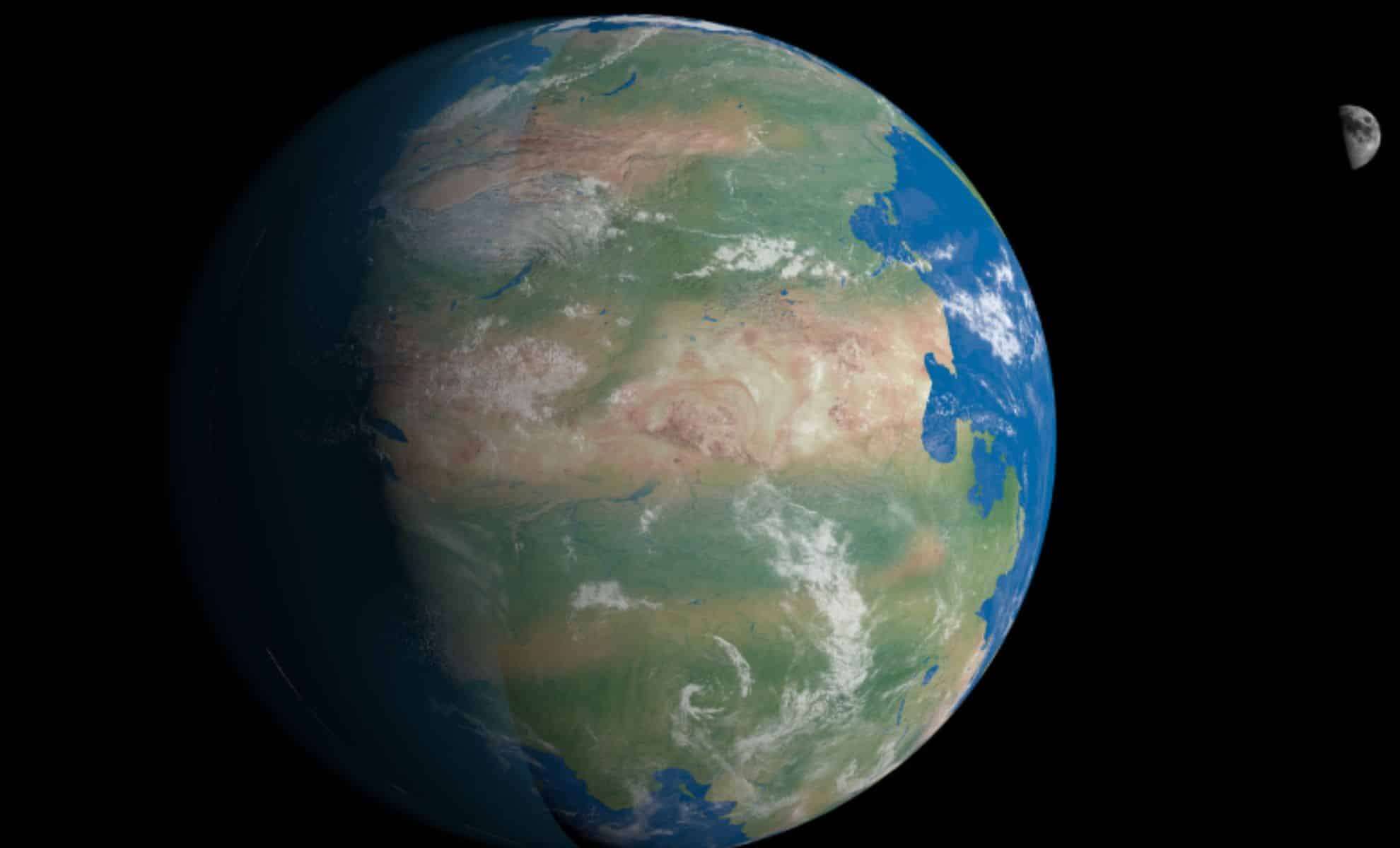
A groundbreaking animation has compressed nearly two billion years of Earth's tectonic plate movements into an engaging two-minute visualization. Spearheaded by Dr. Xianzhi Cao from the Ocean University of China, this video offers a fascinating look at the continual shifting and merging of continents, illustrating the forces that have sculpted our planet over immense spans of time.
A Rapid Tour Through Earth's Geological Transformations
The animation starts with a familiar view of today's continental arrangement before journeying backward in time. It vividly retraces the emergence and breakup of ancient supercontinents such as Rodinia, Gondwana, and Pangaea, highlighting the dramatic rearrangements of Earth's landmasses. Viewers witness tectonic plates drifting apart, converging, and reshaping the globe, showcasing the fundamental processes responsible for mountain formation, ocean basin development, and global geological change.
Each frame compresses millions of years, depicting continents moving steadily due to powerful yet gradual convection currents within Earth's mantle. The animation captures cycles of supercontinent assembly and dispersal, emphasizing how these geological shifts have influenced the course of both Earth’s physical landscape and biological history.

Piecing Together Earth’s Tectonic Legacy
Developing this comprehensive reconstruction involved merging extensive geoscientific datasets. The research team integrated decades of geophysical data with contemporary insights and enhanced computer simulations to accurately chart Earth's tectonic movements over geological time. A key dataset used came from iron-rich rocks preserving ancient magnetic field information. These paleomagnetic records enabled precise determination of past continent locations, refining the timeline for tectonic shifts.
Beyond magnetic clues, the scientists used radiometric dating to establish the ages of volcanic and mountain-forming rocks. These chronological markers were crucial to pinpoint major tectonic events, such as supercontinent fragmentation and the emergence of significant tectonic basins. The combined methodologies culminated in one of the most detailed depictions of Earth's plate tectonics history to date.
The final model paints a complex picture of tectonic evolution driven by mantle convection, illustrating how plates have continually collided and separated. These dynamics have been instrumental in creating mountain ranges and ocean basins, persistently reshaping Earth's surface over 1.8 billion years to produce the continents and oceans visible today.
Plate Tectonics Influencing Climate, Life, and Resources
The implications extend well beyond geological change. Plate tectonics profoundly impact Earth's climate, ocean levels, and biological diversity. As continents drift apart or merge, they disrupt oceanic and atmospheric circulation, which in turn drives shifts in global climate. Tectonic uplift forming mountain chains also affects precipitation patterns and weather systems.
A particularly important effect of continental movement is on species evolution. The physical separation of populations due to drifting continents promotes speciation, fueling Earth's biodiversity. As Dr. Alan S. Collins, co-author from the University of Adelaide, explained to The Conversation, “By understanding how continents have moved and separated, we gain insights into the evolutionary processes that have shaped life on Earth.”
Moreover, tectonic activity dictates the formation and placement of vital natural resources like coal, oil, natural gas, and various minerals. These accumulate primarily in sedimentary basins that arise from tectonic movement. Understanding plate tectonics thus aids not only geological knowledge but also the exploration and management of resources essential to modern society.
Connecting Tectonics with Climate Regulation and Future Studies
This research further highlights the role of plate tectonics in Earth's long-term climate regulation. Over vast timescales, tectonic processes influence the carbon cycle by exposing rock surfaces that chemically capture atmospheric carbon dioxide (CO2). This natural erosion and carbon sequestration have helped stabilize the global climate, preventing runaway greenhouse effects and sustaining Earth’s habitability.
A key achievement of the study is a model that links tectonic activity with climatic and biological phenomena. It provides fresh perspectives on extreme events like the Snowball Earth glaciations and offers insights into how geological shifts have affected atmospheric oxygen levels critical to complex life’s emergence.
Although this study marks a substantial advancement in unravelling Earth’s geological past, Dr. Cao and colleagues emphasize that it lays the groundwork for ongoing research. By refining their models with new evidence, they aim to deepen our understanding of the intricate interplay between Earth's interior dynamics and surface environments, illuminating both ancient and future planetary changes.
This brief yet powerful animation condenses 1.8 billion years of tectonic movement, serving as a remarkable portal into the relentless forces that continuously mold our world. As humanity ventures to explore other planets, grasping Earth’s geological narrative remains vital to discovering what makes our home planet distinctive.








0 comments
Sign in to Comment