

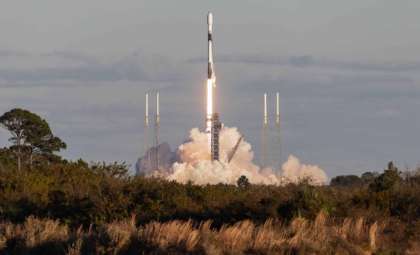
The United States Space Force has named Blue Origin, United Launch Alliance (ULA), and SpaceX as recipients of contracts valued at up to $5.6 billion under the National Security Space Launch Phase 3 (NSSL) initiative.
Revealed on June 13, these agreements will last for five years, enabling the three finalists to vie for launch assignments from fiscal year 2025 through 2029.
This announcement marks a pivotal change in the national security launch sector, welcoming Blue Origin into a field historically led by SpaceX and ULA.

Overview of the NSSL Phase 3 Contracts
The NSSL Phase 3 framework is divided into two categories. Lane 1 focuses on less complex missions to low Earth orbit, while Lane 2 covers heavy-lift launches capable of reaching nine designated orbits, some involving the most demanding national defense payloads.
For Lane 1, the contracts include a minimum of 30 launches over five years, with provisions for additional participants to join as their launch capabilities evolve.
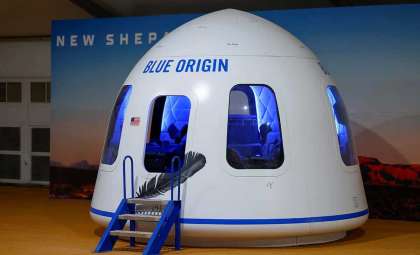
Out of seven proposals submitted, only Blue Origin, ULA, and SpaceX satisfied the Lane 1 criteria. This selection marks Blue Origin’s inaugural contract to carry sensitive national security satellites, a notable achievement for the company founded by Jeff Bezos.
Brig. Gen. Kristin Panzenhagen, program executive officer for Assured Access to Space, commented, “As expected, only a few awardees met our requirements this year since many firms are still developing their capabilities. Our approach includes annual on-ramps to support new competitors and anticipate greater diversity as more providers mature.”
Blue Origin’s Heavy-Lift New Glenn Vehicle
Blue Origin’s New Glenn rocket, a reusable heavy-lift launcher in development for nearly ten years, is scheduled for its maiden orbital flight later this year. The company has received $5 million in initial funding to support mission assurance efforts for the vehicle’s certification.
This financial backing aims to ensure the New Glenn meets the exacting standards required by the Space Force for national security missions. Earlier this year, Blue Origin was awarded nearly $18 million for early evaluation studies of the New Glenn’s integration with NSSL Phase 3.
Meanwhile, SpaceX and ULA, current Phase 2 contractors, each receive $1.5 million to support risk reduction and security upgrades ensuring their launch systems comply with Space Force requirements. This funding reflects the military’s commitment to upholding stringent reliability and security across its launch fleet.
Program Objectives and Prospects
The NSSL Phase 3 initiative is designed to boost competition, drive down national security launch costs, and guarantee redundant access to space. It aims to incorporate the latest advancements from the domestic commercial space sector promptly.
Frank Calvelli, assistant secretary of the Air Force for Space Acquisition and Integration, stated, “These contracts enable incorporation of cutting-edge commercial breakthroughs into our launch architecture as they emerge.”
The plan includes yearly on-ramp opportunities to foster growing competition and market diversity. Prospective participants like Rocket Lab, Relativity Space, and Firefly Aerospace, all developing medium-lift vehicles for Lane 1, are expected to strengthen the program’s competitive landscape as their technologies advance.
Significance and Industry Effects
The contract awards highlight the critical need for a robust, varied set of launch providers to support national security objectives. Space Force leaders emphasize integrating market-leading domestic innovations into their launch operations swiftly. The selection process for the more demanding Lane 2 contracts, supporting heavier missions, is anticipated to conclude this fall with up to three winners.
The NSSL Phase 3 not only targets cutting-edge technology for defense missions but also seeks to lower expenses by stimulating competition. Brig. Gen. Panzenhagen remarked, “Annual on-ramps allow us to encourage new entrants and elevate competition as systems mature.”
This strategy ensures the Space Force benefits from evolving commercial aerospace innovations while safeguarding reliable access to space for vital defense payloads.
Successful execution of these contracts will be essential for advancing and sustaining America’s national security space infrastructure. As these companies continue improving their hardware, the NSSL program expects enhanced performance and cost reductions, providing lasting value to the Department of Defense’s strategic aims.
- Categories:
- Astronomy ,
- News ,
- Space ,
- Evolution







0 comments
Sign in to Comment