
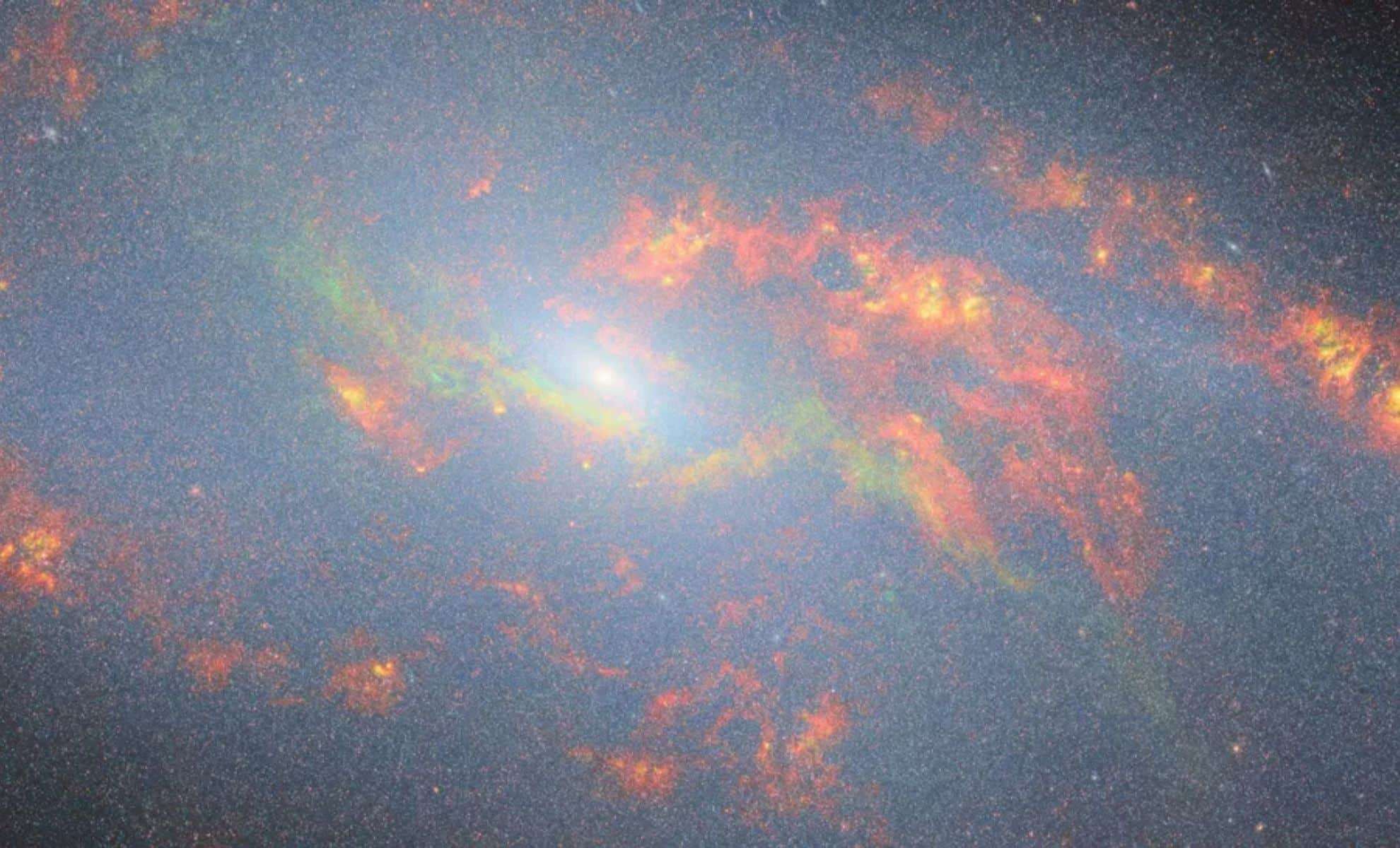
The James Webb Space Telescope (JWST) has unveiled remarkable cosmic insights that may challenge longstanding questions in astrophysics. For years, scientists have grappled with inconsistency in measuring how quickly the universe expands—an issue known as the Hubble tension. This discrepancy arises between local measurements taken by observatories like the Hubble Space Telescope and theoretical predictions based on the standard cosmological framework. Utilizing JWST’s precise observations, researchers are now investigating the possibility of an unknown cosmic factor that might force a major revision in our cosmic theories.
Unraveling the Puzzle of Hubble Tension
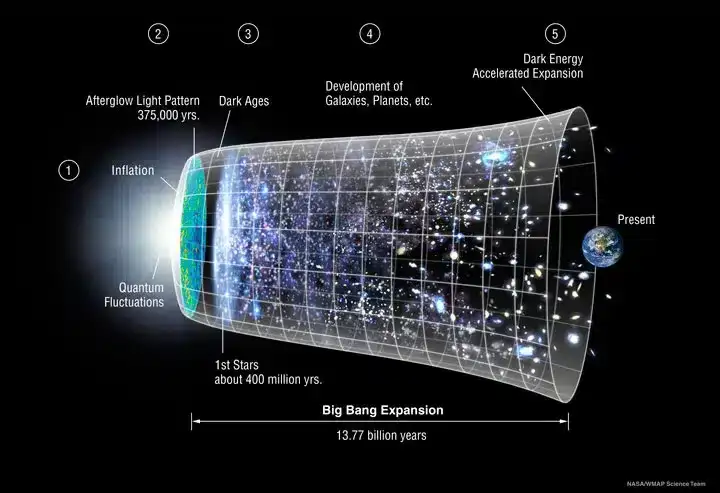
The core of the Hubble tension lies in conflicting values for the Hubble constant, which quantifies the universe’s expansion rate. Local computations, derived from data on faraway galaxies, supernova explosions, and star clusters, indicate a faster expansion than predicted by the Lambda Cold Dark Matter (LCDM) model. This dominant cosmological model relies on observations of the cosmic microwave background (CMB), the primordial radiation leftover from the Big Bang, to estimate a slower growth rate of the cosmos. Attempts to reconcile this gap have so far proven elusive, puzzling astrophysicists worldwide.
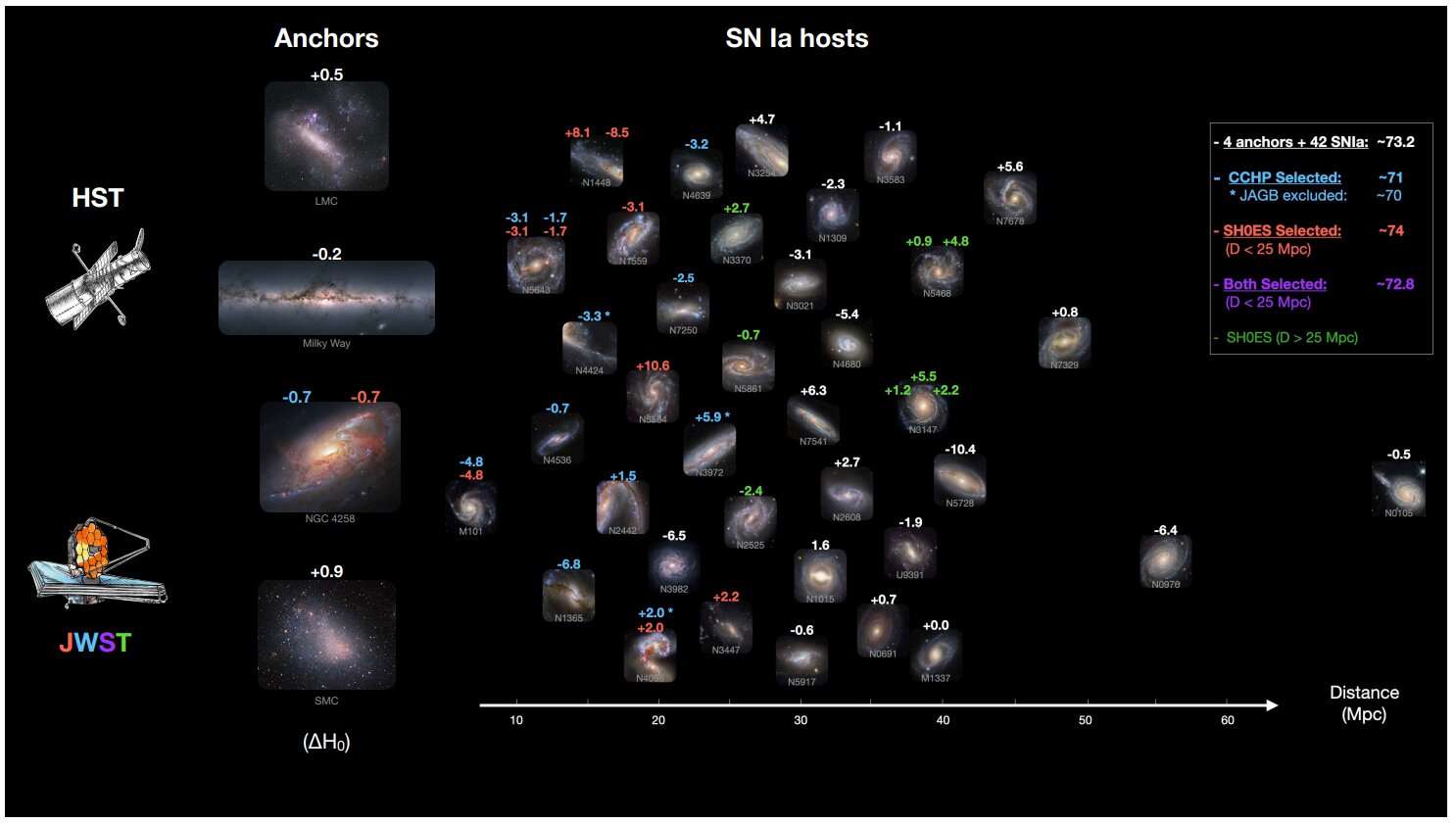
With the advent of JWST alongside other premier NASA telescopes, the urgency to solve the Hubble tension has intensified. JWST’s extraordinary capability to observe the farthest regions of space has confirmed some earlier measurements from Hubble while simultaneously challenging the foundations of cosmic understanding. Both instruments align on the expansion rates they detect, yet the unresolved tension remains a significant scientific challenge.

“The mismatch between observed cosmic expansion and theoretical expectations hints at gaps in our grasp of the universe,” explained Adam Reiss, lead astrophysicist at Johns Hopkins University. “With corroborated results from two top NASA observatories, the Hubble tension takes on a new level of importance—it presents not just an obstacle but a valuable chance to deepen our cosmic knowledge.”
Reiss’s remarks highlight the profound implications of this enigma. The standard cosmological model has long been central to explaining the universe’s large-scale behavior, but the persistent measurement differences suggest it might be insufficient.
JWST’s Contribution: Sharpening Our Cosmic View
JWST’s cutting-edge instruments provide significantly enhanced measurement accuracy. The telescope’s ability to gather refined data on distant galaxies and their dynamics has yielded crucial insights that both support and complicate past observations. Siyang Li, a graduate researcher at Johns Hopkins University and member of the research team, compared the upgrade in data clarity to transitioning from standard to high-definition viewing—greatly improving the details scientists can analyze.
“JWST’s findings offer a high-definition perspective on the universe, greatly boosting the quality of our cosmic measurements,” said Li. This leap in precision sharpens the scientific picture but simultaneously deepens the mysteries surrounding the Hubble tension, revealing the underlying cause remains elusive.
Could Early Dark Energy Hold the Answer?
The clarity from JWST has catalyzed new hypotheses about what might resolve the Hubble tension. One compelling proposal suggests an overlooked component in early cosmic history—potentially a form of early dark energy. This theorized energy might have accelerated expansion immediately after the Big Bang, influencing the universe’s growth in ways not accounted for in current models.
“A missing element in our picture of the early universe, such as early dark energy, could explain the unexpected speed-up after the Big Bang,” suggested Marc Kamionkowski, physics and astronomy professor at Johns Hopkins University.
Early dark energy, if it existed, would have exerted a significant effect during the universe’s infancy, distinct from the dark energy observed today. This energy might have ramped up the expansion rate, potentially reconciling conflicting measurements. Yet, this remains speculative, pending further observational evidence.
Alternative Theories: Rethinking Dark Matter and More
Besides early dark energy, various ideas are being explored to solve the Hubble tension. One notion involves revisiting the nature of dark matter, an enigmatic substance constituting much of the universe’s mass but about which little is definitively known. If dark matter’s characteristics differ from current assumptions, it could influence cosmic expansion rates in unexpected ways.
Other speculative concepts include the existence of unusual particles, variations in electron mass, and effects from primordial magnetic fields. Although these remain theoretical, the persistent Hubble tension urges scientists to broaden their exploration, as it signals that our cosmic models may be incomplete.
“Ideas such as altered dark matter behavior, exotic particles, shifts in electron mass, or ancient magnetic fields could potentially address the problem,” Kamionkowski remarked. Each avenue not only presents intriguing possibilities but also suggests that our comprehension of cosmic phenomena has room for significant refinement.
- Categories:
- News



0 comments
Sign in to Comment