
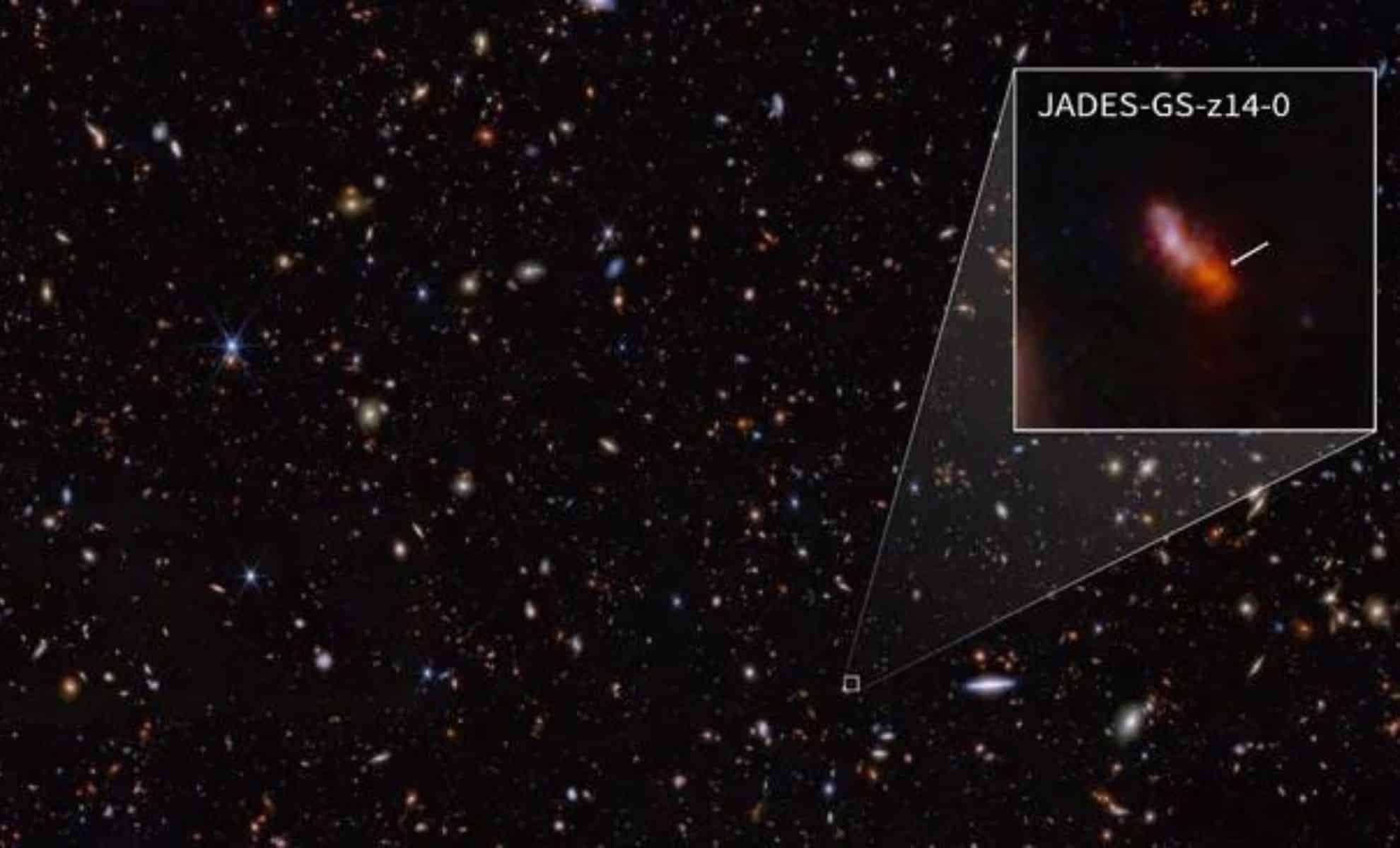
Researchers utilizing the James Webb Space Telescope (JWST) have identified the earliest and most distant galaxies ever detected.
This landmark discovery expands our grasp of the universe’s initial stages and the formation of its earliest cosmic structures, shedding light on the primordial conditions after the Big Bang.
Unveiling the Ancient Giants
Scientists working with the JWST have pinpointed two primordial galaxies, designated JADES-GS-z14-0 and JADES-GS-z14-1, that existed just 300 million years following the Big Bang. This finding outstrips the previous JWST record set last year, which identified galaxies dating to around 330 million years after the universe began.

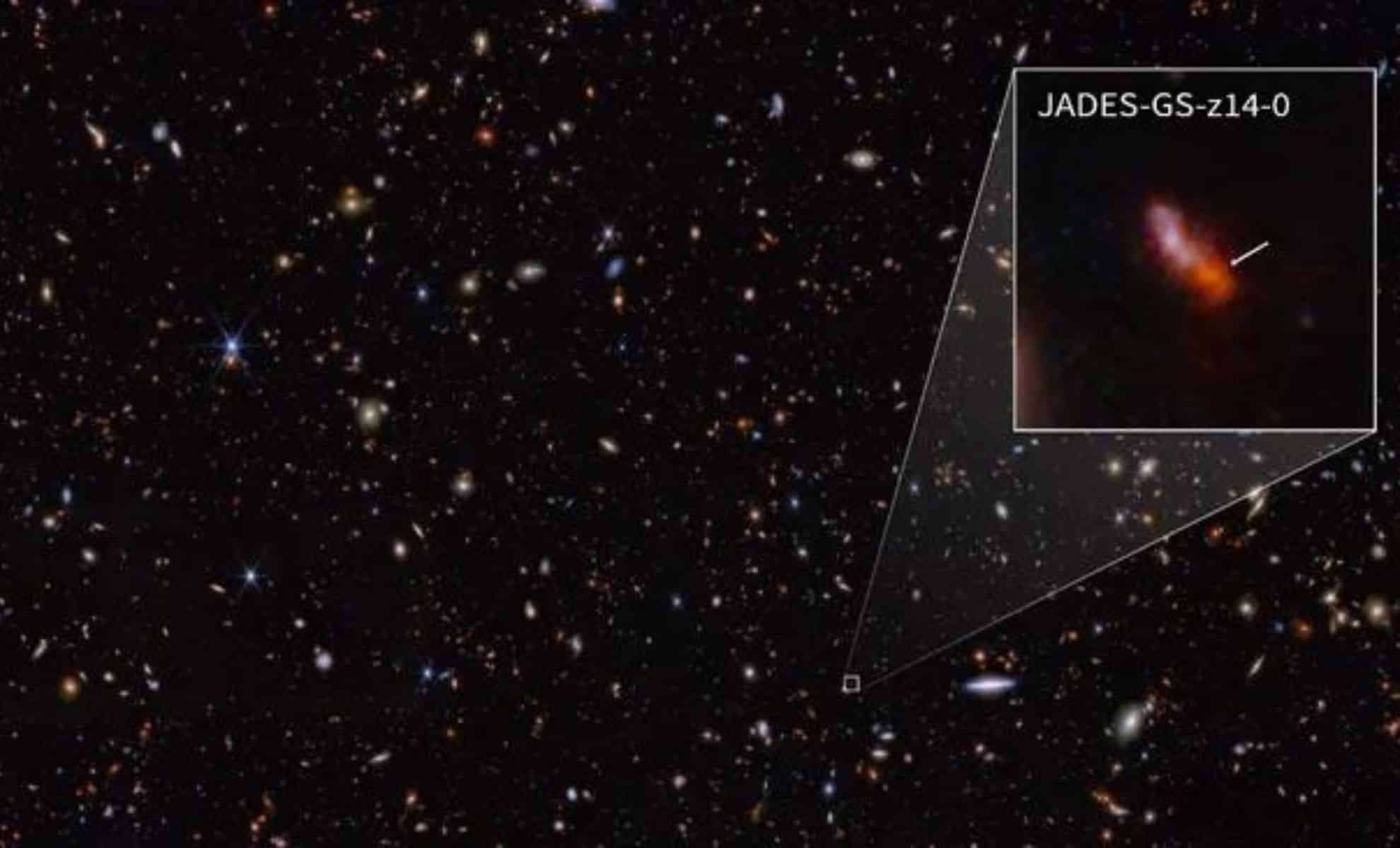
These galaxies are not only remarkably ancient but also larger than expected for such an epoch. JWST’s unprecedented ability to look back to these formative moments offers a direct glimpse into galaxy birth and early growth.
Why This Discovery Matters
The larger galaxy, JADES-GS-z14-0, spans nearly 1,600 light-years, a considerable size for such an early cosmic era. Its brightness suggests vigorous star formation activity occurring within.
This swift development challenges existing cosmological models, which find it difficult to explain such rapid galaxy growth shortly after the Big Bang. It implies that star-forming processes might have been more efficient or fundamentally different than previously assumed, raising new questions about the availability of star-forming material and early universe dynamics.
JWST's Role in Deep Space Observation
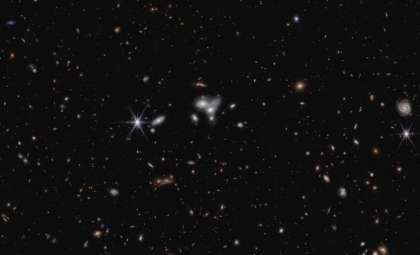
Employing powerful infrared sensors, JWST enabled astronomers to explore the distant Hubble Ultra Deep Field region, detecting galaxies far beyond the reach of the Hubble Space Telescope, which previously spotted galaxies from the first 800 million years.
The team dedicated five full days using the Near-Infrared Camera on JWST to collect detailed, high-resolution data. Observing in infrared is essential because light from these early galaxies is stretched into longer wavelengths due to the universe’s expansion.
Early Galaxy and Star Formation
Studying JADES-GS-z14-0 and JADES-GS-z14-1 offers vital clues about the universe’s infancy. Detection of elements such as hydrogen and oxygen confirms ongoing star formation. The JWST spectra reveal detailed elemental composition and physical activity within these primordial galaxies.
This understanding aids astronomers in reconstructing the timeline of star and galaxy formation. High brightness indicates young stars emitting significant energy, while oxygen presence suggests multiple generations of stars had already enriched their surroundings with heavier elements, demonstrating rapid recycling of materials vital for galaxy evolution.
Advancing Beyond Past Milestones
The JWST keeps breaking barriers by observing galaxies from just 290 million years after the Big Bang, earlier than the prior record of 325 million years. This places these galaxies at a period when the universe was merely 2% of its present age.
Finding JADES-GS-z14-0 and JADES-GS-z14-1 extends our cosmic timeline and provides a benchmark for understanding galaxy growth during the universe’s earliest centuries, deepening our understanding of galactic evolution.
JWST’s Pivotal Contribution
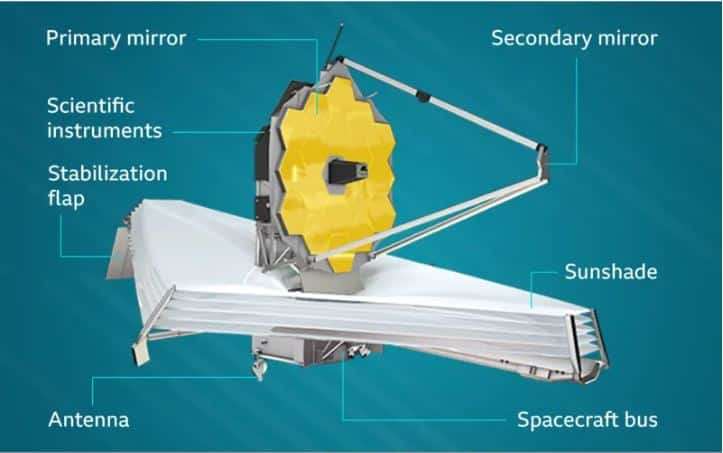
Launched in 2021, the $10 billion James Webb Space Telescope is a collaboration between NASA, ESA, and CSA. It aims to peer further and with greater clarity into the cosmos than past telescopes, targeting the first stars and galaxies.
JWST’s large 6.5-meter mirror along with its sensitive instruments allow it to capture faint ancient light, delivering detailed images and spectral data that reveal the physical and chemical nature of the universe’s earliest objects. Through these observations, scientists seek to unravel the formation processes that shaped the universe’s earliest building blocks.
Revealing Star and Elemental Makeup
The discovery of JADES-GS-z14-0 and JADES-GS-z14-1 has unveiled rich information about the composition of early galaxies. Oxygen’s presence indicates multiple star-forming cycles and supernova events that created and dispersed heavy elements.
This points to star formation and chemical enrichment occurring far earlier and faster than thought, highlighting JWST’s remarkable sensitivity. Such capabilities are crucial for probing the universe’s dawn.
The insights provided by JWST usher in a new period of astronomical discovery, offering never-before-seen views of the cosmos’ earliest galaxies and challenging existing theories on cosmic evolution. These findings underscore the importance of continued space exploration to enhance our understanding of the universe’s origins.
- Categories:
- Astronomy ,
- News ,
- Space






0 comments
Sign in to Comment