
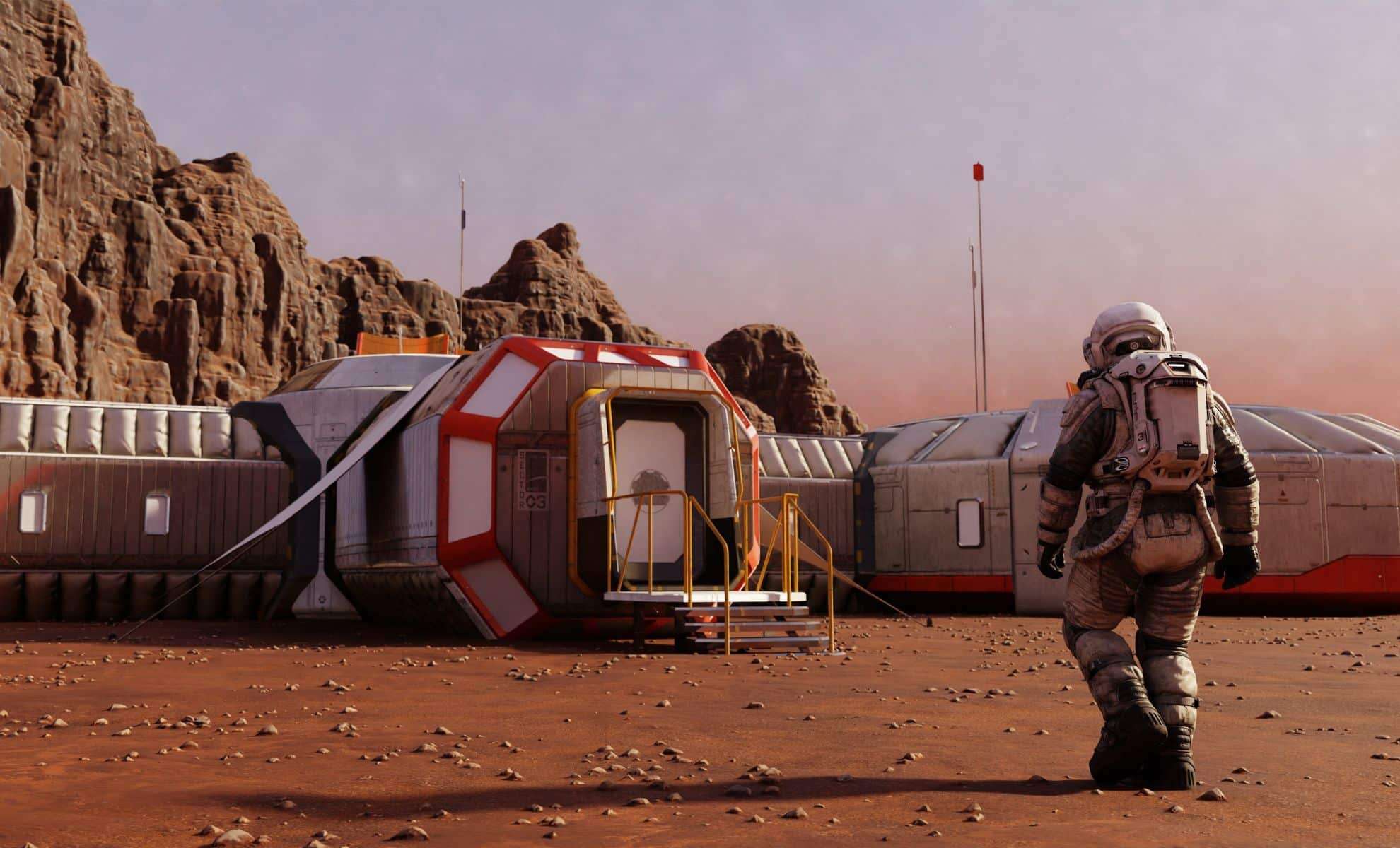
In Andy Weir’s acclaimed novel The Martian, which was adapted into a popular film in 2015, NASA had successfully dispatched astronauts to Mars three times by the year 2035. The story envisioned not only round-trip missions but also cooperation with the China National Space Administration.
More than a decade after the movie's debut and with 2035 approaching, real-world Martian exploration has followed a vastly different course—one driven primarily by robotics instead of human explorers.
Robotic Explorers Take Center Stage
While early 2010s space strategies anticipated crewed Mars missions in the 2030s, priorities shifted in 2017. The implementation of White House Space Policy Directive 1 refocused NASA’s efforts on lunar exploration through the Artemis program, diminishing immediate plans for human presence on Mars.

Reports from LiveScience highlight that robotic missions have been the cornerstone of recent breakthroughs on Mars. Rovers such as Opportunity, Curiosity, and Perseverance have navigated extensive terrain, uncovering sediment layers that reveal Mars’ geological and climatic shifts over eons.
Evidence from these rock formations illustrates a past where Mars possessed volcanic activity, glaciers, lakes, and flowing rivers—mirroring Earth’s ancient landscape. Over time, the planet’s cooling core and loss of its magnetic shield caused atmospheric thinning, leaving an arid and cold surface. These insights continue to deepen our understanding of planetary transformations within the solar system and Earth’s history.
Exploring a Fictional but Geologically Vital Region
The harsh terrain of Arabia Terra, featured prominently in The Martian as the route for protagonist Mark Watney, has gained attention among researchers. In 2022 and 2023, teams from Northern Arizona University and Johns Hopkins University studied this area closely through data from the Mars Reconnaissance Orbiter and Mars Odyssey.
Their work revealed that the crumbling soil composition points to a wetter Mars climate roughly 3.5 billion years ago. Since water acts as a glue in rock formations, the extensive erosion marks a momentous climatic shift. To support ongoing studies, scientists partnered with the International Astronomical Union to assign official names to several craters, including Kozova Crater, a site that Watney would have encountered.
Unraveling Mars' History and Quest for Life
Although robotic missions have unlocked much knowledge, key questions about Mars’ timeline, former atmospheric conditions, and potential biosignatures persist. A major breakthrough was Perseverance’s detection of organic molecules—the carbon-based ingredients essential to life—though their biological source remains uncertain.
The upcoming Mars Sample Return mission aims to bring pristine rock and soil samples back to Earth. Perseverance has already stored these samples in sealed tubes. Future missions will retrieve and transport them for comprehensive analysis using instruments far beyond rover capabilities.
This endeavor holds vast promise for revealing Mars’ suitability for life and its geological past—insights that robotic explorers, working remotely, cannot fully provide. Since the 1960s, NASA and the European Space Agency have invested nearly $30 billion in planetary missions, contributing to scientific advancements and innovations applicable in fields like medicine and autonomous systems.
The Challenges and Aspirations of Martian Settlement
The dream of becoming a multi-planetary species is compelling. Much of the current dialogue on colonizing Mars revolves around SpaceX and its visionary CEO Elon Musk. However, skeptics caution about the practical hurdles, including environmental, logistical, and geopolitical obstacles.
Amid budgetary pressures, with NASA’s science funding potentially slashed by 50%, vital projects like the sample return mission could be jeopardized. Political backing for manned spaceflight, championed by figures such as Donald Trump, risks sidelining robotic endeavors that have been instrumental in our current understanding of Mars.
- Categories:
- News











0 comments
Sign in to Comment