

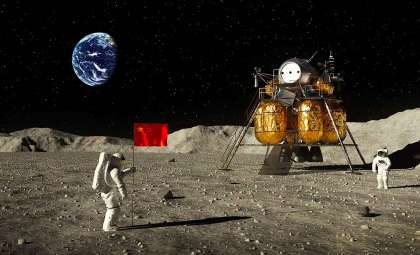
China has revealed comprehensive plans to build a continuous human settlement at the moon’s south pole by 2035, showcasing its rapidly expanding goals in space exploration.
Dubbed the International Lunar Research Station (ILRS), this initiative involves collaboration with Russia to assemble a network of outposts both on the lunar surface and in lunar orbit. The project will unfold in two stages: initially focusing on robotic assembly, followed by the development of a fully-equipped lunar infrastructure designed to sustain human life well into the mid-21st century.
A Dual-Stage Plan for Lunar Settlement
The ILRS is structured around two primary phases, with the completion of the first phase targeted for 2035. During this time, five super heavy-lift rockets will be launched between 2030 and 2035 to deliver and assemble the essential modules required to establish a robotic lunar base at the moon’s south pole. This initial groundwork will lead to a more sophisticated facility suitable for human occupancy, anticipated to be functional by 2050. At the International Deep Space Exploration Conference in Anhui, China, Wu Yanhua, the lead architect of China’s deep space program, shared key insights into this ambitious roadmap.

Wu detailed the vision for an expansive moon station network, with a lunar orbit station acting as the command center and the south pole outpost serving as the main lunar hub. This network would also include exploratory nodes positioned at the lunar equator and on the moon’s far side. Power solutions will integrate solar panels, radioisotope thermoelectric generators, and advanced nuclear reactors, while communications will rely on high-speed lunar surface relay systems to maintain constant links with Earth.
Additionally, Wu stressed that the ILRS is more than just a moon base. It represents a critical proving ground for technologies required for extensive space exploration and crewed missions to Mars. "The lunar base will serve as a platform to develop and validate systems necessary for long-duration spaceflights and future Mars expeditions," Wu explained.
At the same event, Senegal announced its participation, increasing the total number of ILRS member countries to 13. This expansion illustrates China’s initiative to foster global collaboration in space, drawing partners from across Asia, Europe, and Africa. However, the ILRS directly competes with NASA’s Artemis program, which also targets the lunar south pole to establish a human base and aims to return astronauts to the moon before 2030.
Exploring Lava Tubes for Extended Lunar Living
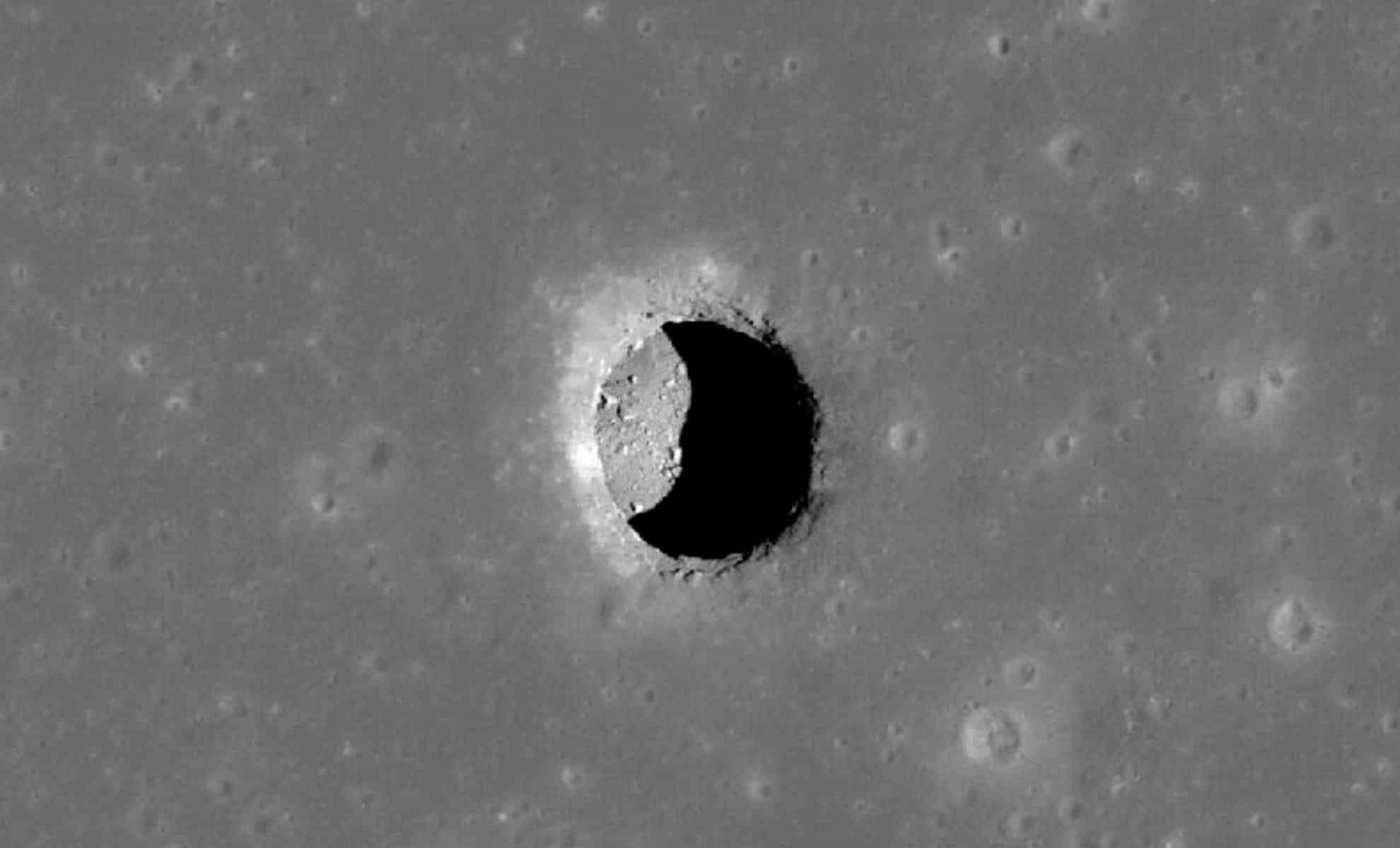
Alongside its moon base agenda, China is examining the potential of lunar lava tubes as natural shelters suitable for long-term human residence. These caves, formed by ancient volcanic flows beneath the moon’s surface, offer protection from cosmic rays, micrometeorite collisions, and severe temperature swings, making them promising candidates for sustainable lunar habitats.
Recent studies published in the Journal of Deep Space Exploration focus on China’s interest in these lava tubes and their adaptability as living quarters. The approach involves deploying mobile robotic explorers equipped with 3D mapping and navigation technologies to survey tube entrances. The exploration strategy includes initial surface rovers for mapping, followed by smaller autonomous robots or drones for penetrating and investigating the inner tunnels.
“Lava tubes represent almost ideal habitats,” said Clive Neal, professor of lunar science at the University of Notre Dame. “They shield against micrometeoroid strikes, moderate thermal extremes, and provide protection from radiation. Any lunar habitat must be buried several meters underground to safeguard human occupants.”
China’s focus on lava tube exploration is integral to its broader aim of sustainable lunar presence. Harnessing in-situ resources, such as lunar regolith, to build shelters inside these natural cavities could be a game-changer. Nonetheless, challenges remain, including the safe ingress and egress of personnel and equipment, plus ensuring the structural soundness of these underground systems for habitation.
Implications for U.S. Lunar Leadership
China’s accelerated lunar agenda has raised concerns about the future leadership of space exploration. Clive Neal suggests that China’s systematic and well-funded approach might prompt a reassessment within the U.S. space community. He noted that with the termination of the VIPER mission—an initiative key to prospecting for water ice at the lunar south pole—the United States has conceded critical ground in accessing lunar resources.
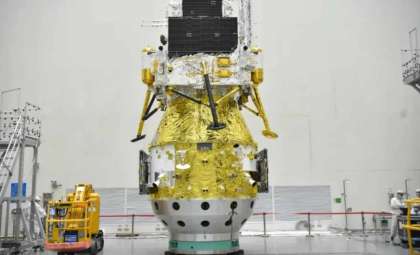
Meanwhile, China is gearing up for its Chang’e-7 and Chang’e-8 missions, slated for 2026 and 2028, which will focus on searching for lunar volatiles and trialing 3D printing to manufacture lunar construction materials. These efforts are integral to China’s long-range vision of establishing a manned moon station.
Neal added, “China will set the standard for lunar resource utilization because they have a detailed plan. To develop a thriving cislunar economy based on lunar mining, the U.S. needs to invest in sustained missions not only probing for water ice but also exploring helium-3, rare earth elements, and platinum group metals.”
The Intensifying Global Lunar Competition
The International Lunar Research Station represents a significant piece in the worldwide movement to reoccupy the moon and establish continuous human activity there. With both China and NASA pushing forward aggressively, the moon has become a hotspot for both rivalry and international cooperation. China’s investment in exploring lava tubes and developing in-situ resource utilization capabilities marks an important advance towards sustainable lunar colonization.
Through strategic planning, global partnerships, and sustainability focus, China is emerging as a leader in the renewed lunar exploration era. As its moon base ambitions unfold, the dynamics of future space exploration and competition will continue to evolve, challenging other spacefaring nations to keep pace.
- Categories:
- Astronomy ,
- News ,
- Science ,
- Evolution






0 comments
Sign in to Comment