
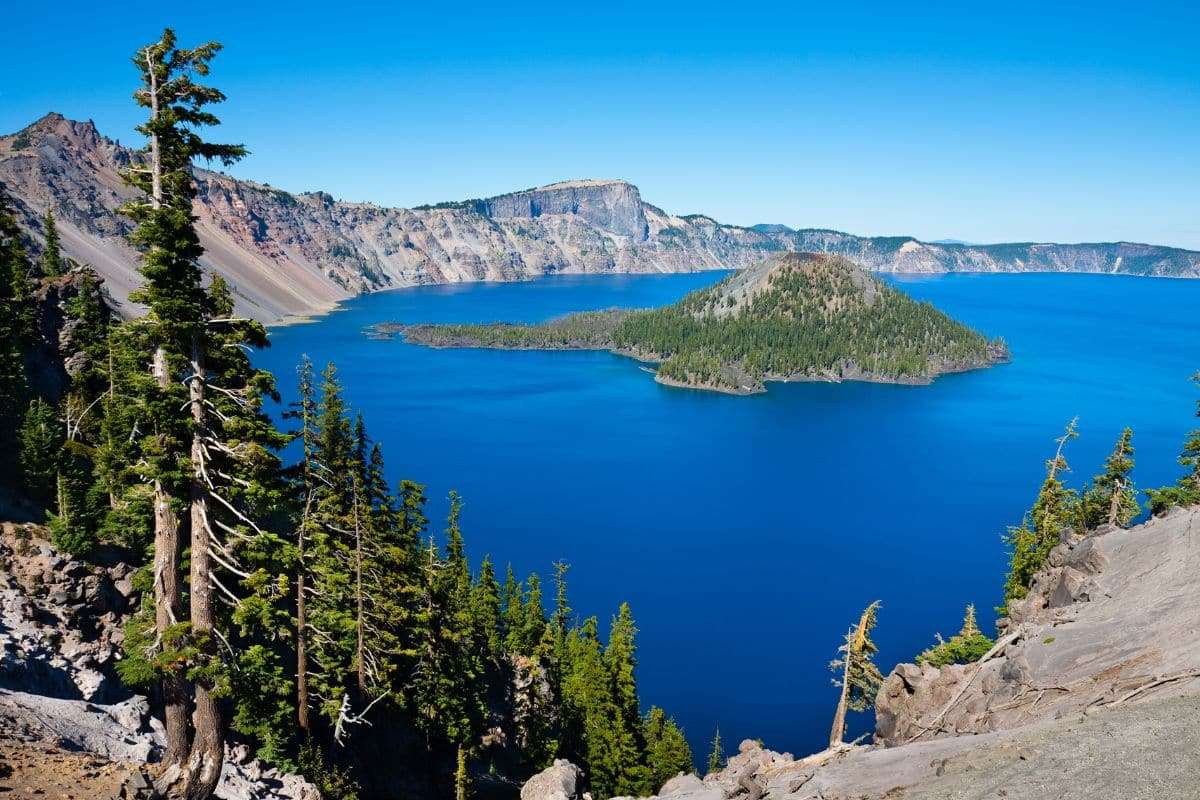
New research reveals that many volcanoes in the Cascade Range, long thought to be inactive, actually house considerable magma reservoirs below their surfaces. Notably, Crater Lake in Oregon, dormant for nearly five millennia, contains a substantial magma chamber. These insights, detailed in Nature Geoscience, promise to transform volcanic monitoring methods and eruption forecasting.
Magma Presence More Widespread Than Previously Believed
By deploying cutting-edge seismic imaging, researchers uncovered sizable magma deposits underneath every examined volcano, including those considered geologically inactive. Lead author Guanning Pang explained that magma reservoirs persist throughout a volcano’s lifespan, not just during eruption periods, as highlighted in a related article on volcanic lifecycles.
Although this abundance of magma might seem to increase eruption hazards, scientists urge caution. While magma chambers are essential for eruptions, their mere presence doesn’t signal immediate threat. The critical factor is the melt fraction—the ratio of molten rock in the chamber—which generally needs to surpass 35% for an eruption to be likely. Most magma bodies identified fall below this eruptible threshold.

Crater Lake’s Subsurface Magma: Dormant but Not Extinct
Among the study’s most intriguing outcomes is evidence of a large magma reservoir beneath Crater Lake, formed by the collapse of Mount Mazama after a colossal eruption around 7,700 years ago. Despite no volcanic activity in the area for approximately 4,800 years, seismic data confirm a significant magma body below the lake.
As reported in an independent article, this suggests that Crater Lake is dormant rather than extinct, retaining potential for future eruptions. Yet, since its magma’s melt fraction remains under the critical level, an eruption is not anticipated soon.
Changing Views on Volcanic Activity and Magma Chambers
The findings challenge the belief that volcanic eruptions deplete magma chambers, leaving them empty. Instead, the data indicate eruptions discharge only a portion of the available magma, with reservoirs replenished gradually over millennia.
For instance, Mount St. Helens holds an estimated 8.5 to 171 cubic kilometers of magma beneath its surface, far surpassing the roughly 0.5 cubic kilometers expelled during the 1980 eruption. This highlights how even significant eruptions mainly relieve internal pressure rather than draining these chambers entirely.
Advancing Volcano Monitoring and Research
These discoveries could redefine how volcanologists track and forecast eruptions, revealing that large subsurface magma quantities are common rather than exceptional. Co-author Geoffrey Abers emphasized improving surveillance of understudied volcanoes worldwide due to limited observational data.
The team plans to extend their analysis to other volcanic regions, including Alaska’s volcanic zones, to explore whether this magma persistence is a widespread geological phenomenon.
Implications for Communities in the Pacific Northwest
Residents near Cascade volcanoes in the Pacific Northwest might feel uneasy given these revelations, but experts stress there is no immediate eruption risk, since none of the magma chambers currently meet eruptible conditions.
Nonetheless, this research underscores the need for ongoing monitoring and readiness. The US Geological Survey (USGS) continues its vigilant observation of the region’s active volcanoes, including Mount St. Helens, Mount Rainier, and Mount Hood.
A New Era in Understanding Volcanoes
These findings mark a shift in volcanology, recognizing that magma storage beneath volcanoes is a persistent and natural state rather than just an eruption precursor.
Such insights could enhance eruption prediction models and early warning systems, enabling communities near volcanoes to be better prepared. As scientists delve deeper into the subterranean dynamics of magma, our grasp of volcanic hazards and monitoring strategies is evolving profoundly.
While Crater Lake and its nearby dormant volcanoes remain calm today, their magma-filled chambers serve as a powerful reminder of the ongoing geological forces shaping our planet beneath our feet.
- Categories:
- News





0 comments
Sign in to Comment